
A school admin deletes a teacher account in order to take away one meetings license. The teacher then loses messages and the identity itself. Which action removes only that service?
Select an answer to reveal the explanation.
Short Explanation
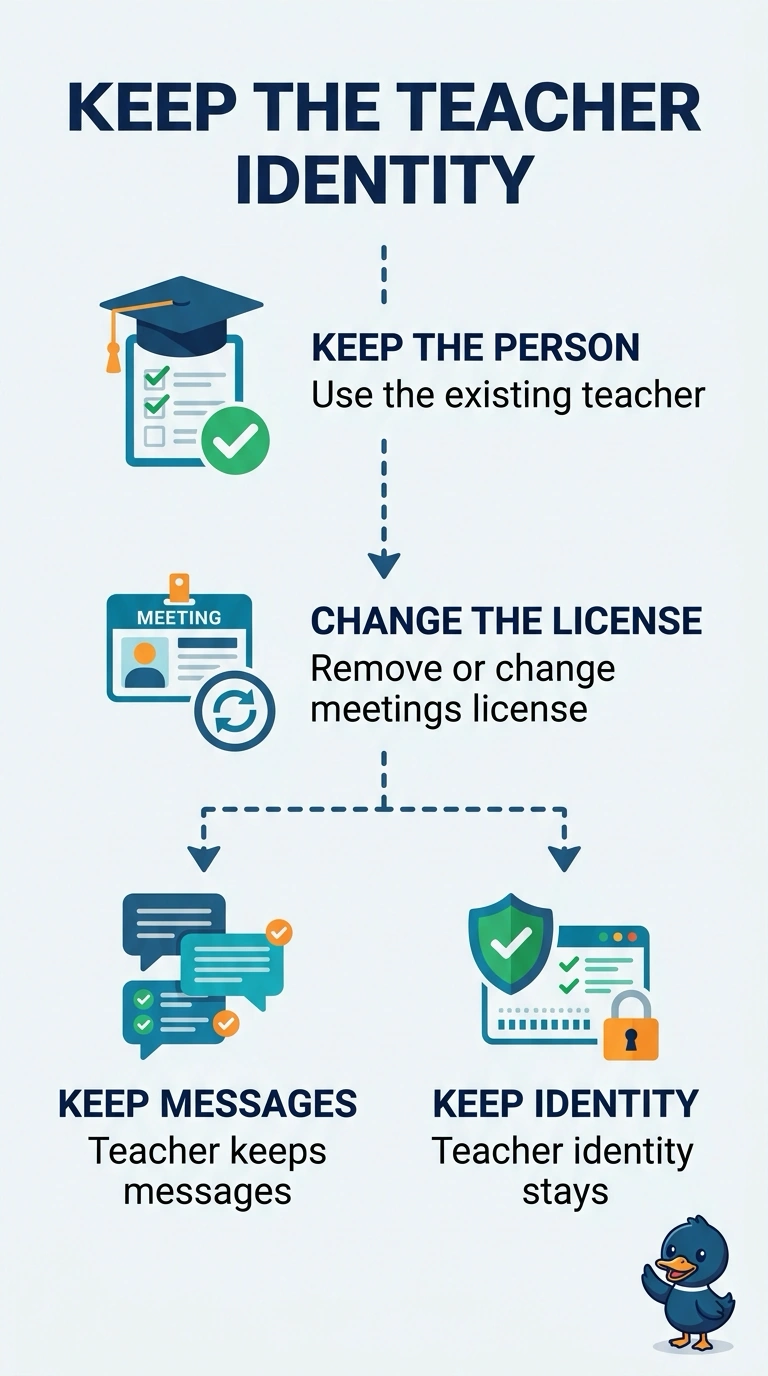
Firing someone to take back a single badge throws away the person along with the badge. You remove or change the meetings license on the existing teacher instead of deleting the account. The trap is destroying the identity, and the messages that belong to it, in order to drop one service.
Full Explanation
Removing a user is not the same action as changing a license on that user. Deleting the user removes access to the account; retained content can remain available under retention or legal hold. The license can be removed or changed while the person stays. Modify only the Meetings entitlement on the existing user. Removing the teacher from the meetings site only, expecting the license to drop while the user and the messages remain, treats a site roster as the license assignment and does not by itself change that license. Disabling single sign-on for the whole school so the teacher cannot sign in, and leaving both the account and the license unchanged, blocks authentication for the school and leaves the license in place. Clearing the endpoint PIN on the classroom device, because that PIN is the meetings license the admin meant to remove, confuses a device lock with a user license, and an endpoint PIN is not a meetings license. On the exam, drop a service by changing the license assignment, and delete the user only when the person should actually leave. In operations, remove the meetings license from a test user and confirm the user, the messages, and the identity remain.