
An airline started using a new email domain on meeting invites, yet single sign-on still ignores accounts on that domain. Which action puts the domain on the sign-on path?
Select an answer to reveal the explanation.
Short Explanation
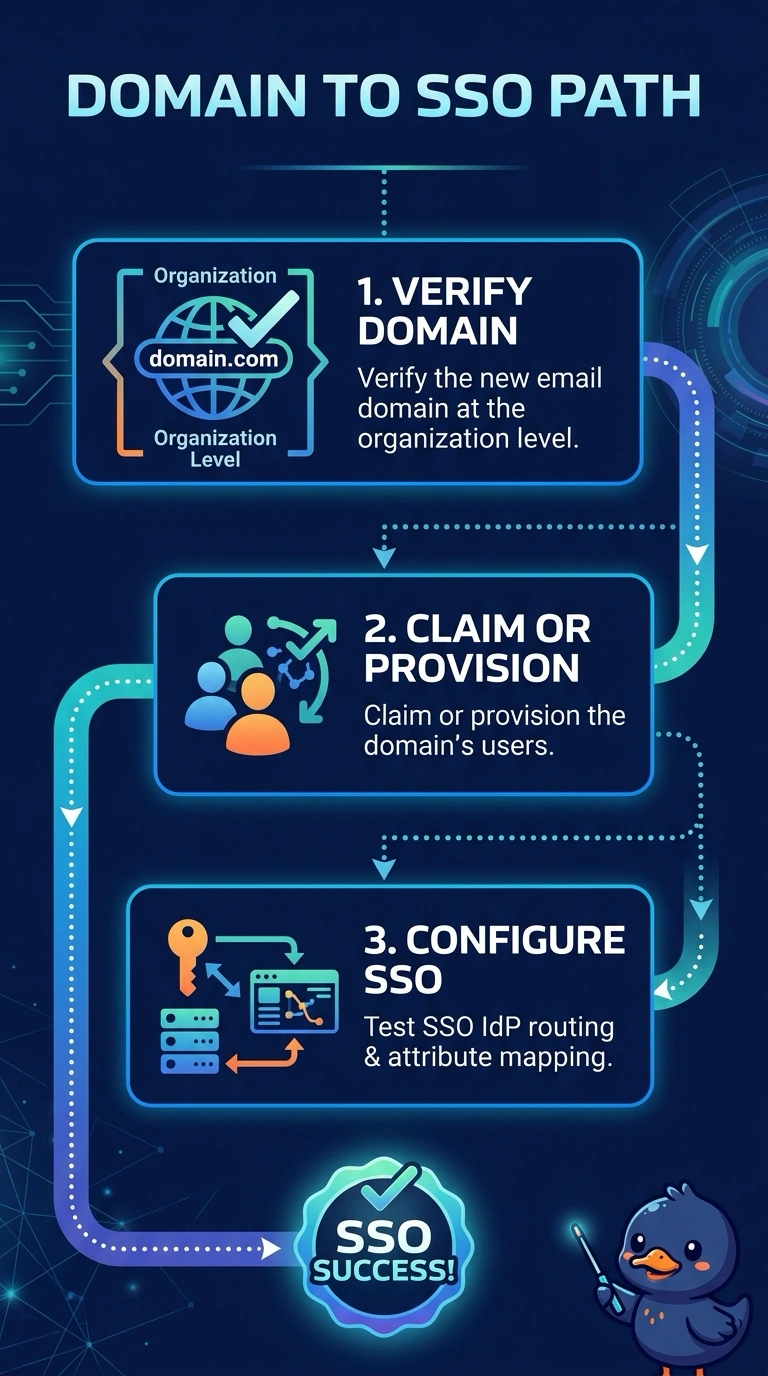
A new street can be on your invitation and still be missing from the city map the courier uses. You verify the new email domain at the organization level so single sign-on will honor it. A phone translation does not verify that domain.
Full Explanation
Domain verification proves ownership; the organization’s SSO configuration determines authentication. Verify and claim or provision the new domain’s users as appropriate, and configure or test the SSO identity provider routing and attribute mapping for those accounts, which places that airline domain on the enterprise sign-on path for invites using it. Verification alone does not route authentication until the SSO configuration maps those accounts to the correct identity provider with correct attributes. Adding a translation pattern for the new domain name rewrites telephone digits in the dial plan and does not verify an email domain for sign-on, so it leaves organization domains untouched. Creating a calling location named after the new domain owns numbers and a trunk for call routing rather than sign-on, so it builds a site for calls, not a verified domain. Assigning a Webex Calling license to one pilot user on the new domain while leaving the domain unverified may enable calling for that user while single sign-on still ignores the domain. Exam caveat: single sign-on is authentication, and it is not actually in the path for a domain the organization has not verified and routed. Operational check: confirm the new airline domain shows as verified at the organization, then sign in with an account on that domain and confirm the identity provider is used.