
A school changed a meeting lobby setting in hopes of keeping Webex messages longer, but the messages still expire on the old schedule. Where should retention be changed?
Select an answer to reveal the explanation.
Short Explanation
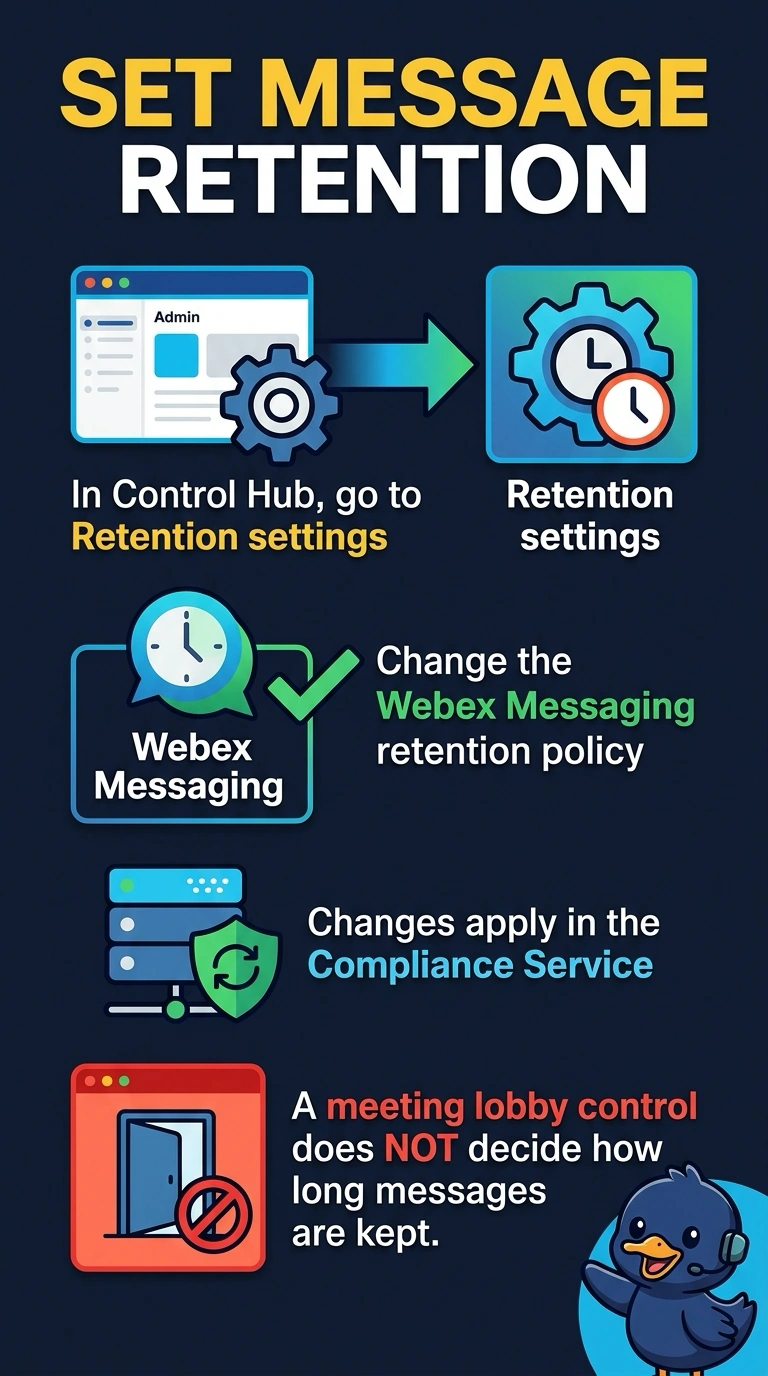
Changing the lobby sign does not make the records room keep files any longer. You set retention in the compliance service, not in a meeting lobby control. The trap is thinking a meeting password or a device PIN is the hold.
Full Explanation
Compliance retention is the control that decides how long messages are kept. A meeting lobby setting controls the meeting join experience, such as who waits before entering, and it does not change retention, which is why the school's messages still expire on the old schedule. You change retention in the compliance service. A meeting password does not retain messages, so requiring a meeting password on every meeting does not hold content for the retention period. An endpoint PIN limits access to a device. Changing the room-device endpoint PIN does not set an organization-wide retention hold for stored Webex messages. A dial plan chooses which pattern and route handle a call. Editing the school dial plan so messages follow a user extension does not move messages onto a longer schedule, because messages are not routed by the dial plan. Exam caveat: meeting controls and compliance retention are different levers, and adjusting who can join does not lengthen how long content is kept. Operational check: record the current retention schedule, change it in the compliance service, and confirm a test message follows the new schedule rather than the lobby setting.