
A lab compliance officer cannot finish a retention hold search while the key management service is down. What has to be restored before that search can decrypt content?
Select an answer to reveal the explanation.
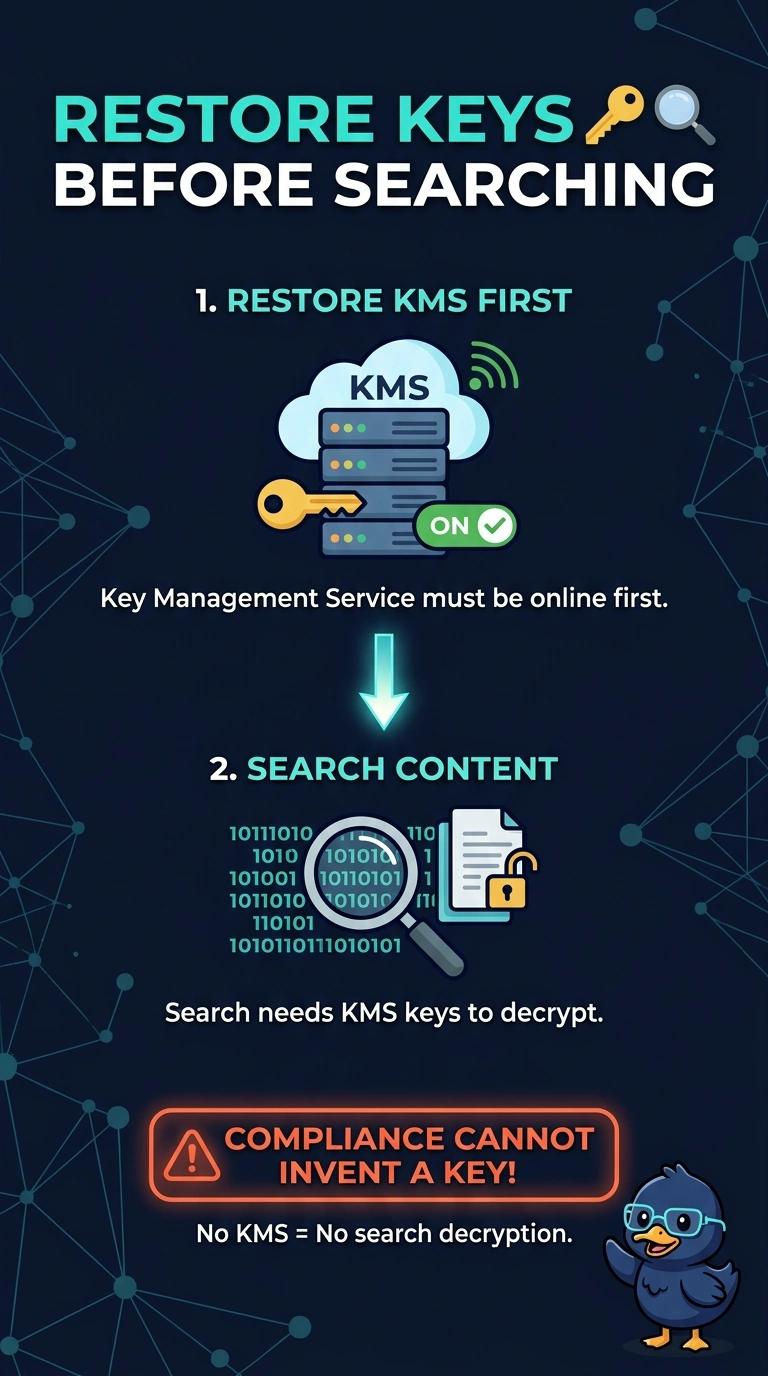
Short Explanation
You need the key management service restored before the hold search can decrypt content; compliance can search, but it cannot create a missing key. Running the search immediately won’t work because compliance has no plaintext copy, and neither rebuilding the dial plan nor moving identity on-premises restores the key service.
Full Explanation
The key management service creates the keys clients use to encrypt content, so you must restore that service before a retention hold search can decrypt the content it needs. Compliance can search content for eDiscovery and retention checks, but it cannot invent a key while the service is down. Running the hold search immediately therefore fails: the compliance service does not keep its own plaintext copy of every message and file, and the indexing service creates encrypted search indexes rather than retaining plaintext. Rebuilding the lab dial plan changes call routing; outbound-call routing is unrelated to restoring a key service because keys are not a dial-plan object. Moving identity on-premises with Hybrid Data Security also does not solve the outage. That design can move key management, indexing, and compliance into the customer data center, but it does not move identity on-premises or restore a key service that is down; identity and encrypted content storage stay in the cloud. Exam caveat: bring-your-own-key still uses a Cisco-operated key service plus a customer main key, so it does not substitute for restoring the key service you already run. Practical check: restore the key service, repeat the retention hold search, and confirm the compliance result returns once the proper service can decrypt the content.