
A hotel engineer rotates the registration-based local gateway digest password and tells the messaging team that space encryption has been strengthened. What did that rotation actually change?
Select an answer to reveal the explanation.
Short Explanation
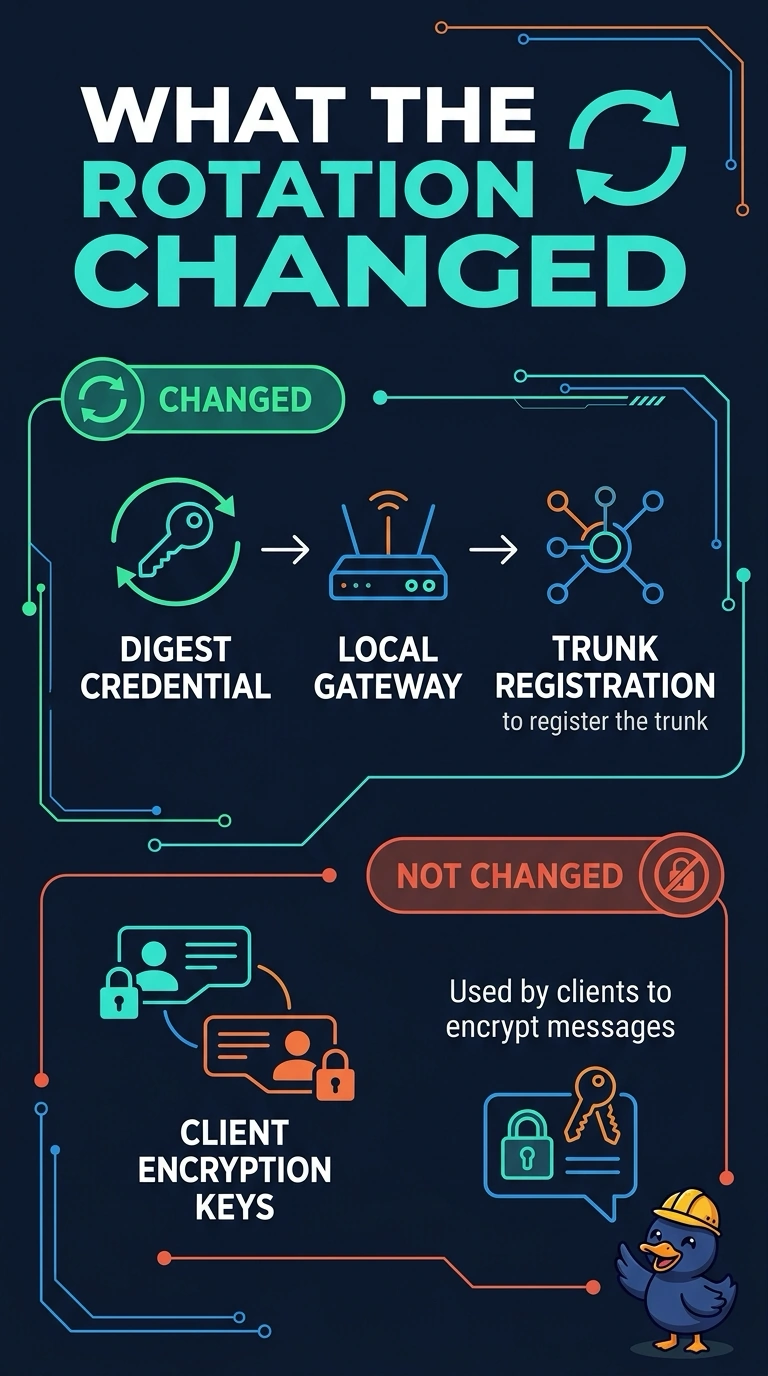
Think of changing the lock on the loading-dock gate and telling the staff their diaries are now harder to read. You changed the digest credential the local gateway uses to register the trunk, not the keys that encrypt messages. The trap is treating that trunk password as the messaging key.
Full Explanation
A registration-based local gateway registers outbound with a digest username and password. Rotating that password changes the digest credential used to register the trunk; it does not rotate the keys the key management service gives clients for message encryption. The digest password is not that messaging key, so space encryption is unchanged. The rotation also does not move indexing and compliance into the hotel data center: that is a separate change involving on-premises key management, indexing, and compliance, while identity and encrypted content storage remain in the cloud. Nor does the rotation publish the organization’s domain-verification token; publishing a DNS token is a separate organization check. Exam caveat: do not infer that changing a local gateway credential changes where data services run or how the organization’s domain is verified; these are distinct functions. Operational check: confirm the trunk registers with the new digest credential and still appears for calling, then verify that a test space continues to encrypt with keys from the key management service rather than with the gateway password.