
A university student cannot send Webex messages, and the identity service rejects the sign-in before any space opens. Classmates who sign in successfully can message. What should be repaired first?
Select an answer to reveal the explanation.
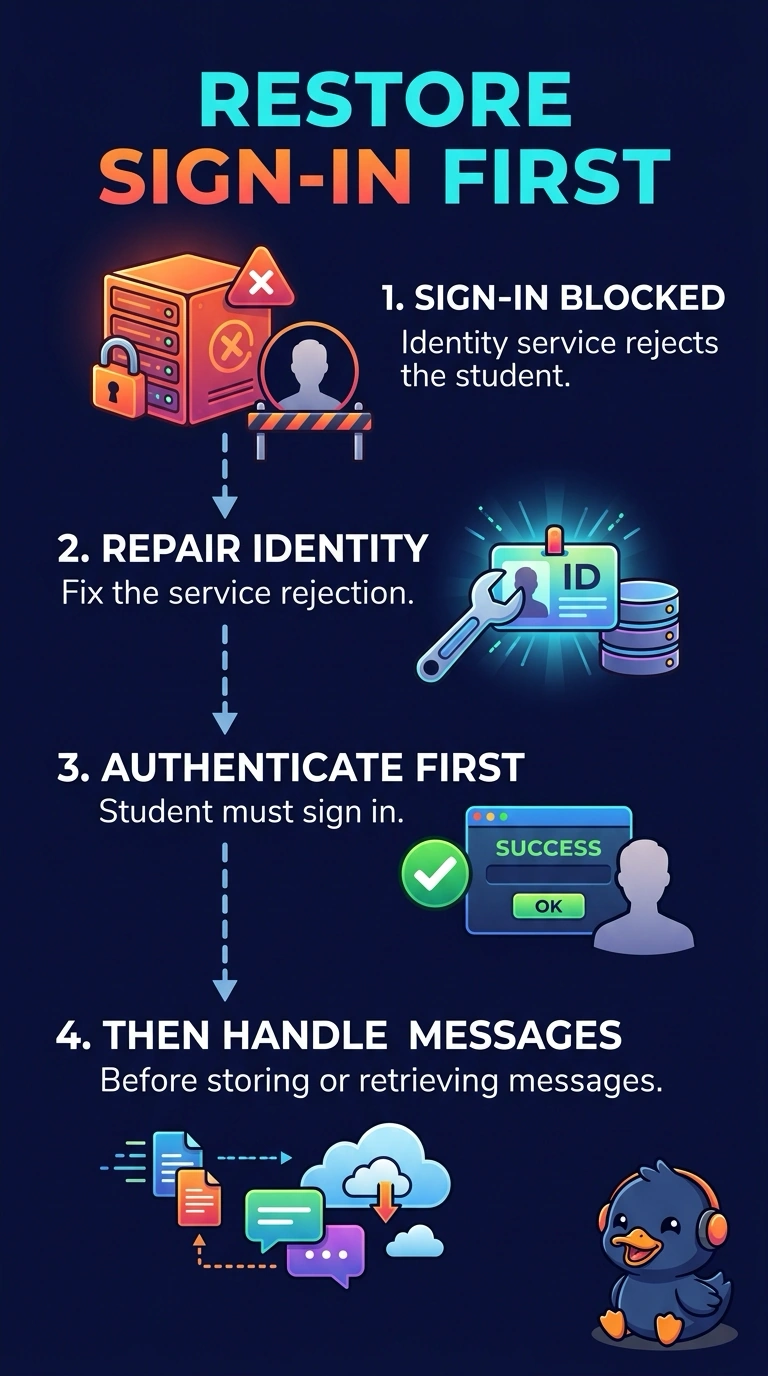
Short Explanation
The filing cabinet stays out of reach when the front door will not open. You repair the identity rejection so the student can sign in before messaging is even attempted. Rebuilding the content server, moving keys on-premises, or changing a meeting lobby does not authenticate that student.
Full Explanation
Repair the identity service rejection so this student can authenticate before any message is stored or retrieved. Identity authenticates the user, so messaging cannot start until that rejection is cleared and the student can sign in. Rebuild the content server that stores encrypted university messages, even though this student never completes sign-in. The content server stores encrypted messages and files, and it is not reached when identity rejects the login. Move key management on-premises with Hybrid Data Security so a new key exists before this student is allowed to sign in. Hybrid Data Security moves key management, and a new key location does not fix an identity service that is rejecting the sign-in. Change the meetings lobby so classmates can admit the student to a meeting without a successful Webex sign-in. A meetings lobby decides who enters a meeting, and it does not authenticate a user for messaging. Exam caveat: Identity, key management, and the content server are different services, and a messaging failure that never gets past sign-in is still an identity problem. Operational check: Confirm this student can sign in, then send a test message and confirm classmates who already sign in still can.