
A hospital security review of the admin audit log shows a full administrator invited a new integration on an afternoon when call audio also dipped. The network team wants that log line handled as a quality problem. Which reading of the audit entry is correct?
Select an answer to reveal the explanation.
Short Explanation
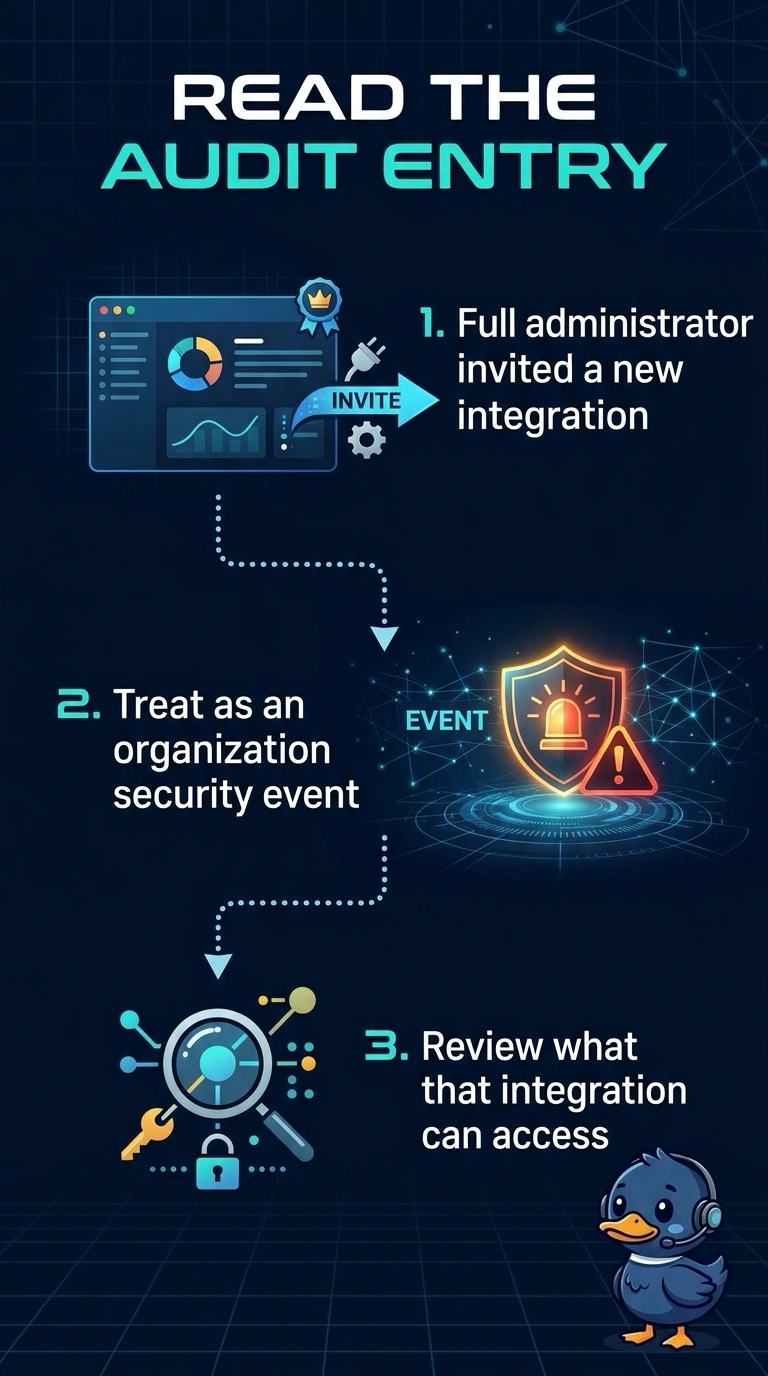
Think of the audit log as a visitor book at the front desk, not a speedometer on the highway. You treat a full administrator inviting an integration as an organization security event and review what that integration can access. The trap is opening a quality case just because call audio dipped on the same afternoon.
Full Explanation
An integration invite from a full administrator is an organization security event, because that admin granted another service a place in the org and the admin audit log is the record of the grant. Audio that dipped the same afternoon can be looked at on its own, but it does not turn this log line into a media fault. Opening a bandwidth and priority case for the afternoon audio dip and treating the integration invite as a quality drop on the congested media path sends the authorization change to the wrong queue and leaves the new integration unreviewed. Deleting the calling location tied to the audio dip removes site numbers and trunk ownership and does not remove the invited integration from the hospital organization. Rotating the local-gateway digest password changes the credential a registration-based trunk uses to sign in, and an integration invite is not stored as that trunk registration credential. Exam caveat: loss on a congested path is a bandwidth and priority problem only when the complaint is about the media, and an admin audit entry about an invite is a different lever. Operational check: open the audit entry, confirm the full administrator and the integration name, and review that integration access in the organization before anyone retunes the network.