
A research lab space still accepts external members after the organization policy said those members must not join. Which control enforces that policy on the space?
Select an answer to reveal the explanation.
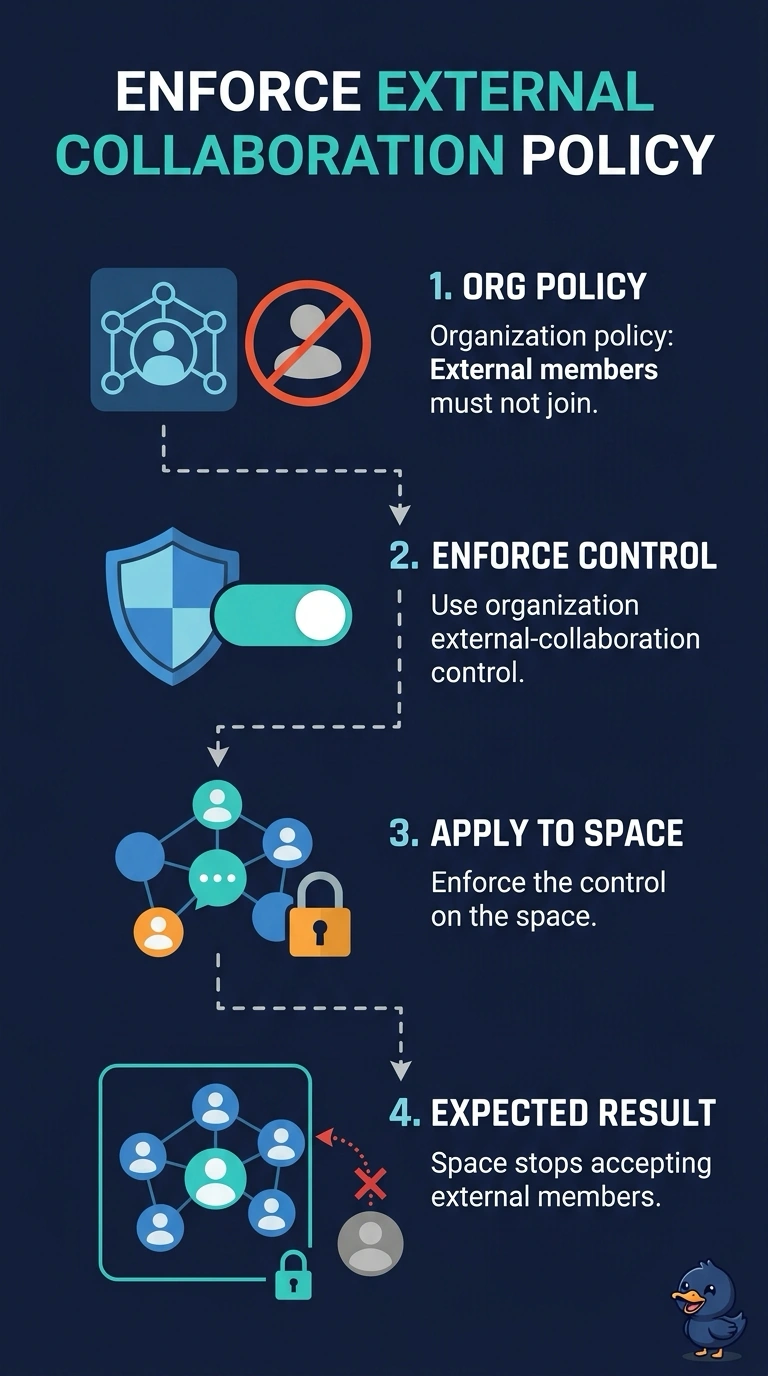
Short Explanation
Think of a lab door that still lets visitors in after the building rule changed to staff only. You enforce the external-collaboration control so the space stops taking outside members. The trap is treating a space membership problem as a congested-path or calling-permission issue.
Full Explanation
External membership in a space is an organization collaboration decision. Enforcing the external-collaboration control stops that space from accepting external members, which is the policy the lab already wrote. Preferring voice and video over bulk transfers addresses loss on a congested path, and an external member in a space is not a bandwidth symptom. Rotating the local-gateway digest password changes a registration-based trunk credential, and those messaging encryption keys are created by the key management service, not by that digest password, so the rotation does not reject people entering the space. Blocking international calling is a call permission on a call type, and that permission does not remove external members from a messaging space. Exam caveat: enforcing the control stops new external adds, and people who were already in the space still have to be removed one membership at a time. Operational check: after the external-collaboration control is enforced, attempt to add an outside test account to the lab space and confirm the add is refused.