
A warehouse worker's single sign-on path is healthy, yet sign-in still fails because the identity store marks the account disabled. Messaging does not open for that worker. What has to change before a new encryption key would matter?
Select an answer to reveal the explanation.
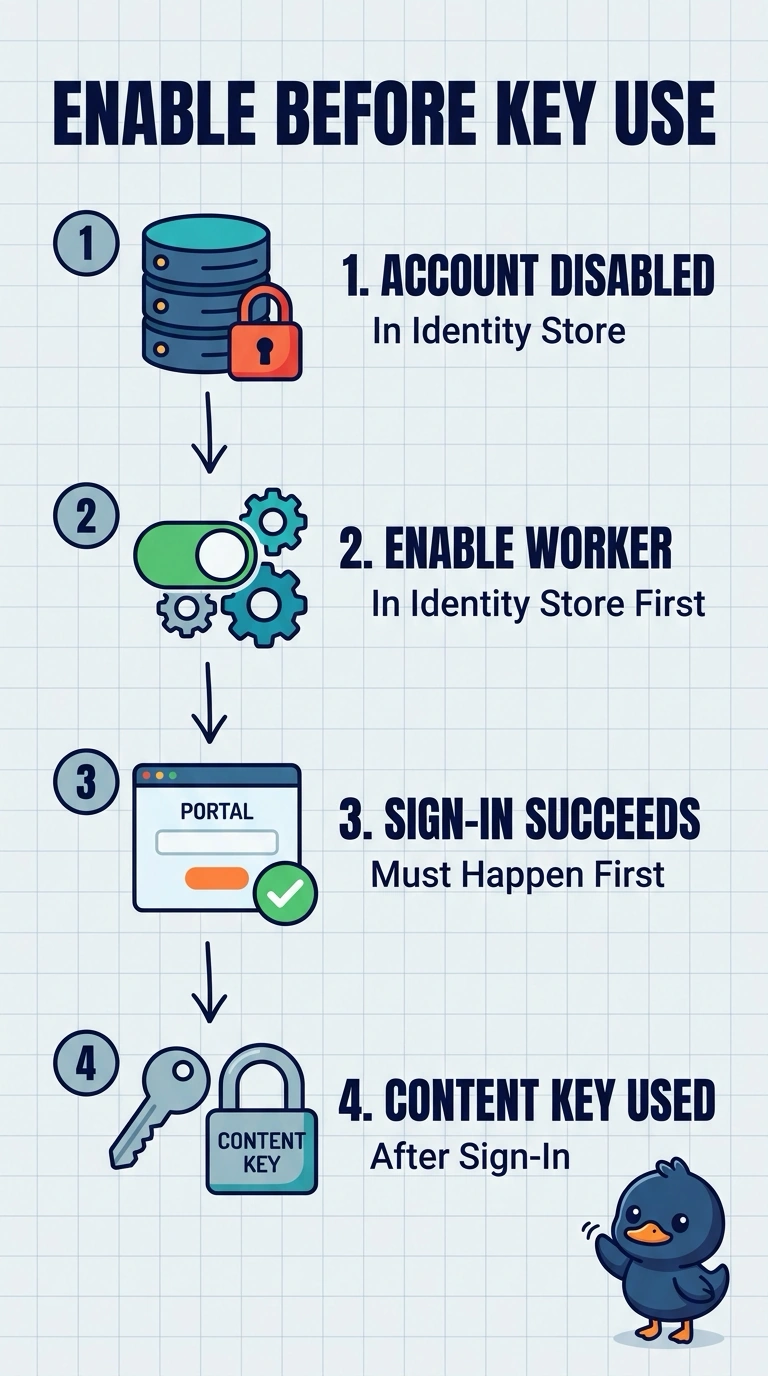
Short Explanation
A new lock on the warehouse does not help a badge the front desk has turned off. You enable the account in the identity store that still marks the worker disabled. A new sign-on certificate, a fresh content key, or moving compliance on-premises does not enable that account.
Full Explanation
Enable the worker in the identity store that still marks the account disabled so sign-in can succeed before any content key is used. Identity is what authenticates the user, and a disabled account fails there no matter how healthy single sign-on is for everyone else. Replace the single sign-on signing certificate even though that sign-on path is already completing for other warehouse accounts. The sign-on path is already healthy, so a new signing certificate does not enable an account the identity store still marks disabled. Issue a new content key from the key management service so the disabled account is able to encrypt a warehouse message. The key management service creates keys clients use to encrypt content, and a new key does not enable a disabled account. Move indexing and compliance on-premises with Hybrid Data Security and leave the disabled warehouse account unchanged. Hybrid Data Security moves indexing and compliance, and it does not flip a disabled flag in the identity store. Exam caveat: A content key is useless until the user can authenticate, and Hybrid Data Security does not move identity on-premises. Operational check: Enable the account in the identity store, confirm sign-in succeeds, and only then confirm the worker can open messaging.