
A clinic sets an endpoint PIN on a shared desk device and then treats that PIN as the model for who may administer the organization. Which statement separates the two controls?
Select an answer to reveal the explanation.
Short Explanation
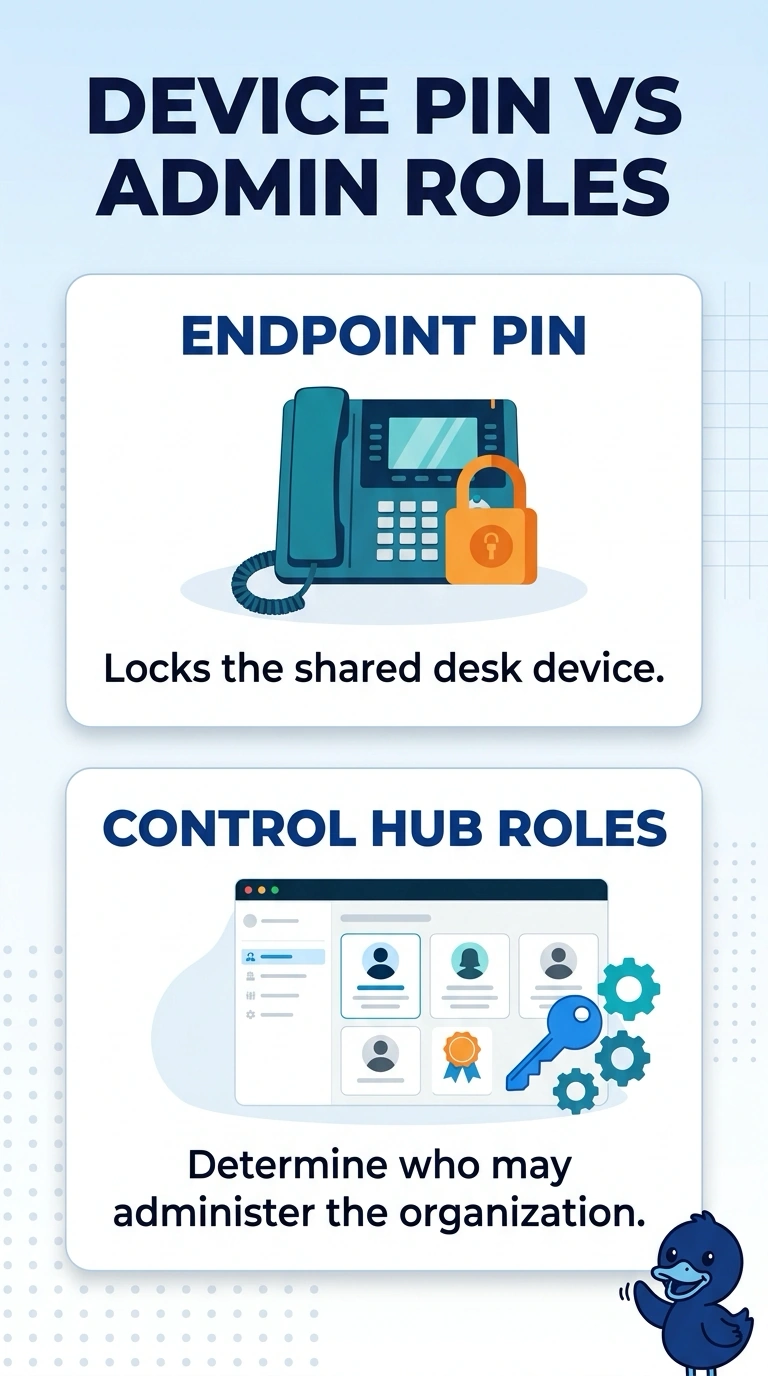
A keypad on a closet does not decide who holds the building master keys. You treat the endpoint PIN as a lock on the shared desk device, and you grant organization administration with Control Hub roles. The trap is using that PIN as the admin model, the retention hold, or the meeting lobby.
Full Explanation
Device access and admin roles are different levers. An endpoint PIN locks the device that asks for it. It does not assign a Control Hub role, set a retention hold, or place guests in a lobby. The endpoint PIN locks the shared desk device, while the right to administer the organization comes from Control Hub roles. The endpoint PIN is the organization retention hold, so changing the PIN changes how long clinic messages and files are kept, mixes a device lock with compliance retention. The endpoint PIN is the meeting lobby, so anyone who knows it is admitted as the host of every clinic meeting, mixes a device lock with a meeting join control. The endpoint PIN replaces single sign-on, so clinic staff who know the PIN sign in with that code instead of the identity provider, treats a device secret as enterprise authentication, which it is not. On the exam, an endpoint PIN is device access, and organization administration stays with Control Hub roles. In operations, confirm the shared desk still asks for the PIN locally and that Control Hub admin rights for the clinic are unchanged by that PIN.