
A research lab compliance officer must run an eDiscovery search, currently holds only a device-administration role, and should receive the narrow role that can run that search. Which grant is the match?
Select an answer to reveal the explanation.
Short Explanation
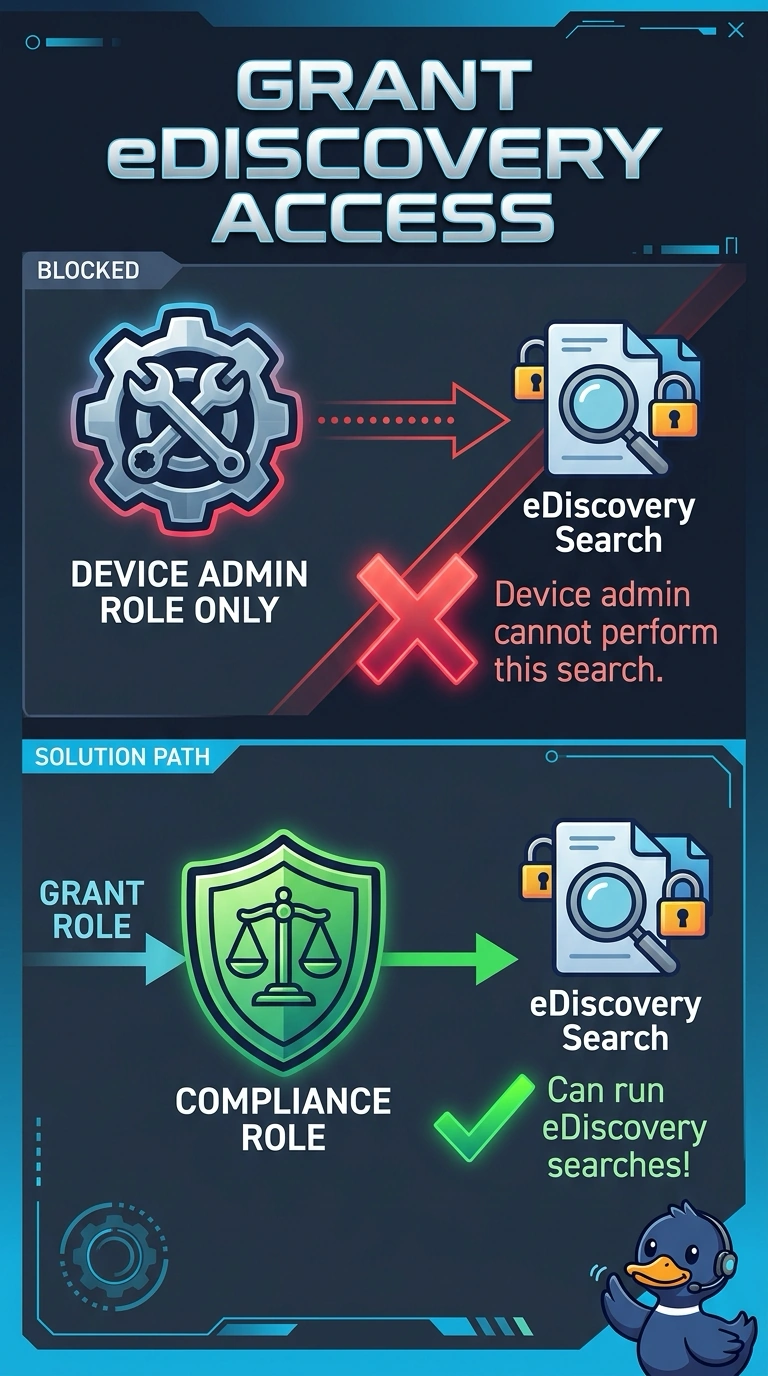
Think of a records clerk who was handed the key to the equipment cage and then asked to search the legal archive. You grant a compliance role that can run eDiscovery, because device administration cannot perform that hold search. The trap is handing full administrator to everyone, leaving the device role in place, or setting a meeting password and calling that a search.
Full Explanation
eDiscovery is a compliance job, and the compliance service is what supports that search and the retention checks around it. The officer has only device administration, which covers devices and does not run the hold search, so the matching grant is a compliance role that can run eDiscovery, because device administration cannot perform that hold search. Giving every lab user the full administrator role so the search can be run from any account across the organization breaks least privilege and is not the narrow role this officer needs. Keeping only the device-administration role, since that role already includes the eDiscovery hold search, leaves the officer in the role that cannot run the search. Setting a meeting password on the lab site, because that password is what opens a compliance search, sets a meeting control, and a meeting password does not open eDiscovery. Exam caveat: a full administrator role is broader than the search, and device administration is a different lever from compliance. Operational check: grant the compliance role to that officer, run a test eDiscovery search with it, and confirm the device-administration role alone still cannot start the search.