
A compliance officer must preserve in-scope chat messages that are still retained beyond the organization’s normal retention period. Which Control Hub feature should be used?
Select an answer to reveal the explanation.
Short Explanation
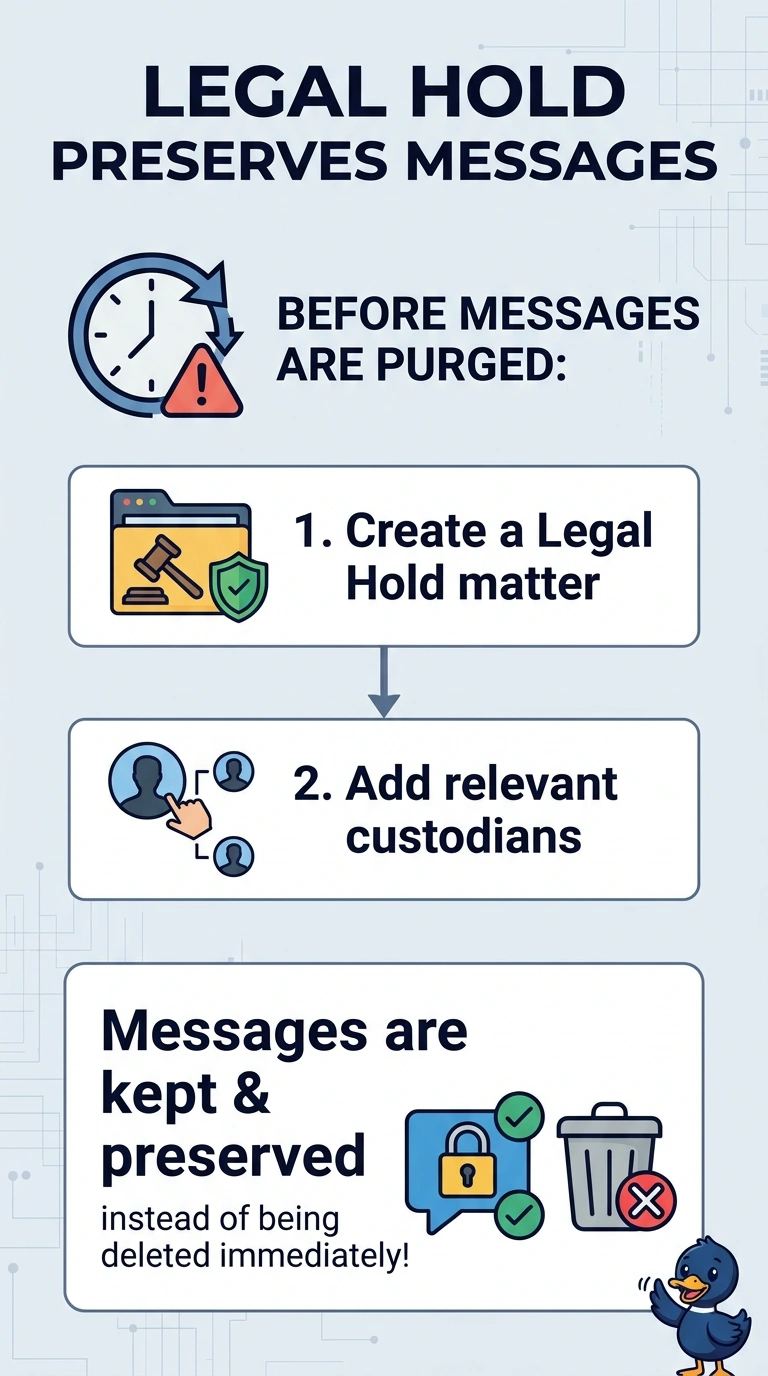
Think of slipping a letter into a safe folder before its shred date arrives. You create a legal hold matter and add the relevant custodians before the messages are purged. That way you keep what is still retained beyond normal retention.
Full Explanation
An active legal hold preserves eligible content beyond retention. It cannot restore already purged messages. A compliance officer with in-scope messages that are still retained uses Control Hub to create a legal hold matter and add the relevant custodians before the messages are purged, which keeps that eligible chat content even after the normal retention period would remove it. Timing matters because the hold only applies while content still exists. Requiring a meeting password on every hospital meeting sets a meeting join control, and a meeting password does not retain messages or extend retention for a hold. Setting an endpoint PIN on every clinical device locks a device, and an endpoint PIN does not set an organization retention hold or preserve chat content. Granting device administration to the legal team grants a device role, and device administration does not keep messages that retention deletes. Exam caveat: meeting controls, device access, and compliance retention are different levers, and only a legal hold matter preserves retained content beyond normal retention. Operational check: create the matter, add custodians, and confirm in-scope messages remain available after normal retention expires.