
A university meeting host asks for a lobby so guests wait to be admitted, and the collaboration team instead changes the organization retention hold. Which control creates that lobby?
Select an answer to reveal the explanation.
Short Explanation
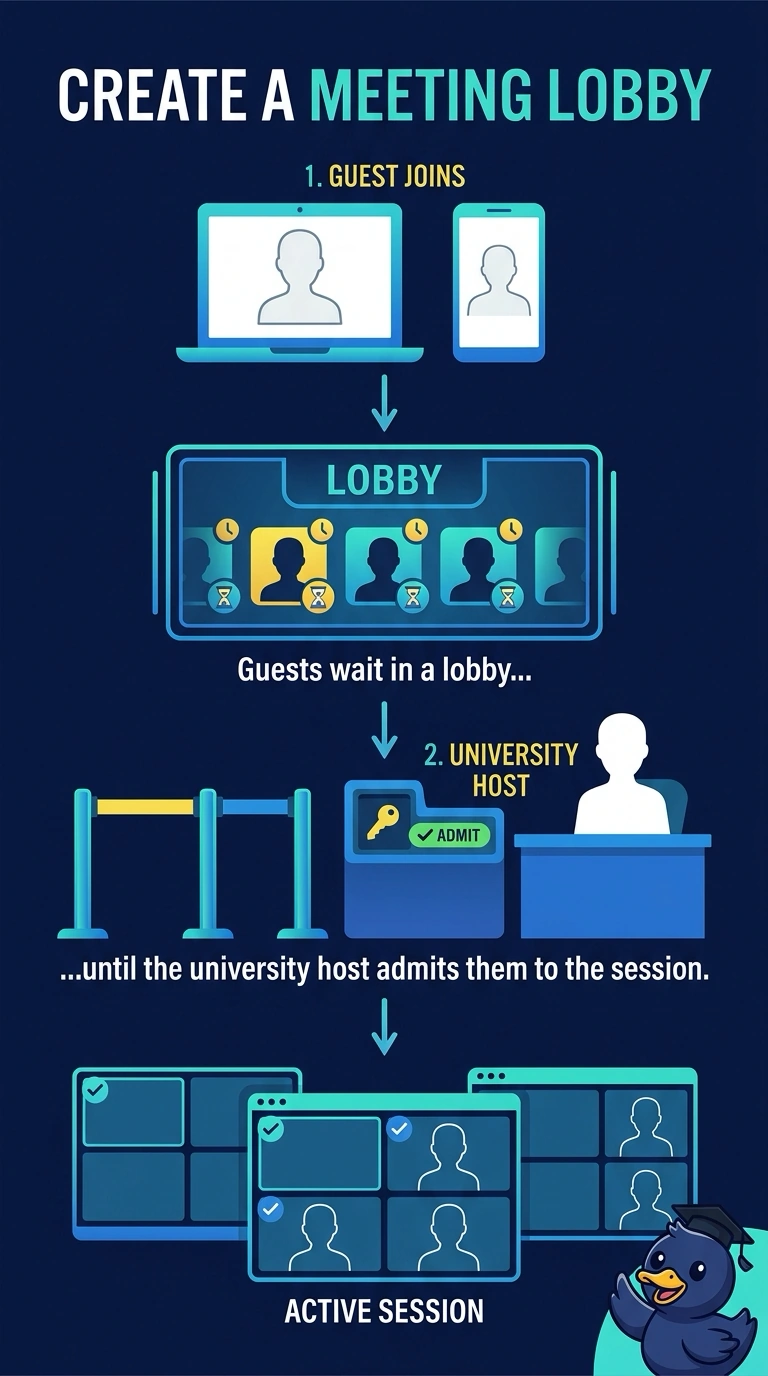
A waiting room and a warehouse solve two different problems. You set the meeting join control that holds guests until the host admits them, which is the lobby the host asked for. The trap is changing how long content is kept and calling that a waiting room.
Full Explanation
Meeting controls that decide who can join are a different lever from compliance retention. A lobby holds guests until the host admits them, so you set the meeting join control that places guests in a lobby until the university host admits them to the session. Lengthening the organization retention hold so the host can review meeting content for a longer period after the session ends keeps stored content longer and does not place anyone in a lobby. Setting an endpoint PIN on the classroom device and treating that PIN as the lobby for every campus meeting the device joins locks a device, and an endpoint PIN does not decide who waits for a host. Requiring a meeting password and expecting that password alone to hold guests outside until the host is ready to start uses a shared secret as if it were an admit step: a password is not a lobby, and it does not retain messages either. On the exam, a request to hold guests for admission is a meeting join control, while a retention hold is about keeping content. In operations, join a test meeting as a guest and confirm you wait until the host admits you, with the retention hold left unchanged.