
Outside guests at a hotel can enter any scheduled meeting before a host arrives, and the meetings site still permits that unattended join. Which change stops guests from entering with no host present?
Select an answer to reveal the explanation.
Short Explanation
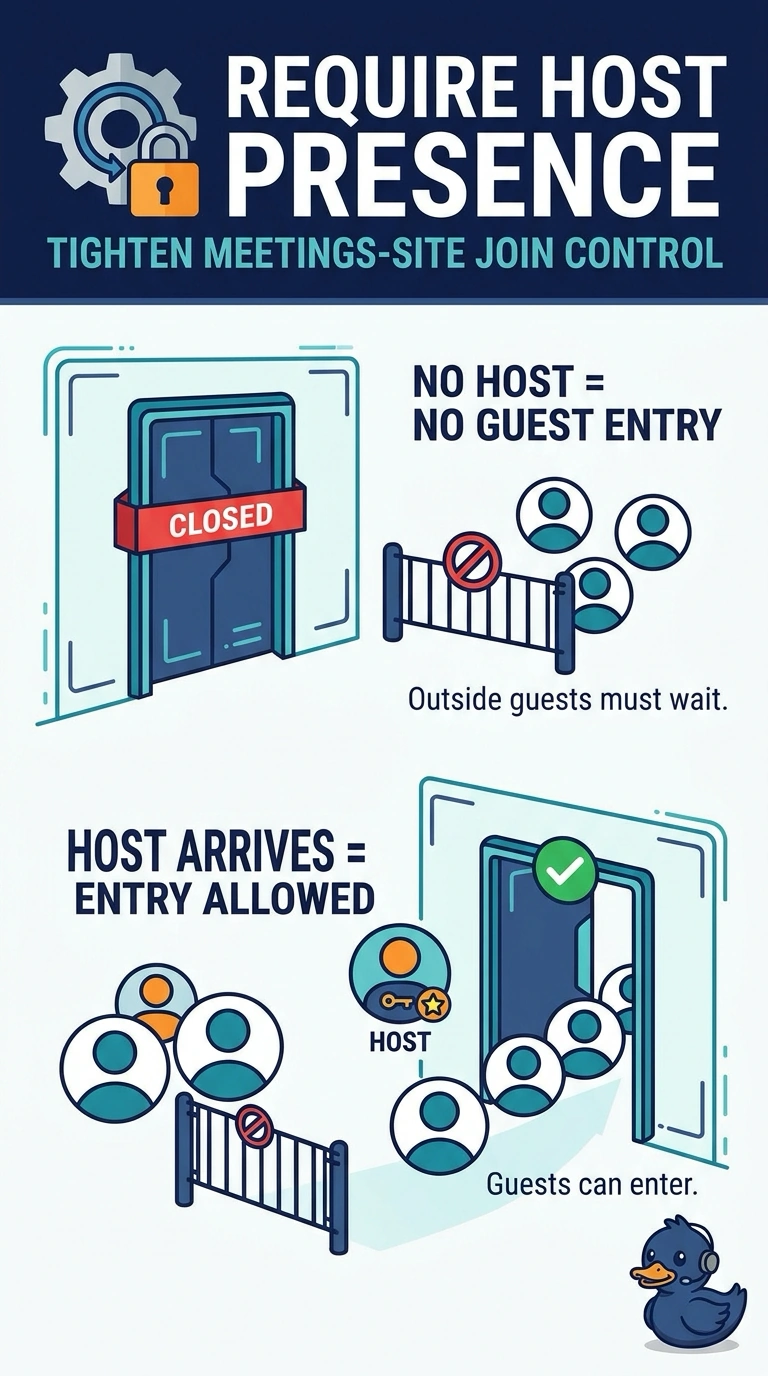
Think of a meeting room whose door stays unlatched for anyone who knows the room number, even while the host is still in the lobby. You stop that by tightening the meetings-site join control so a host must be present before an outside guest can enter. The trap is grabbing a calling dial plan, a chat-deletion setting, or a device PIN, as if one of those decided who may walk into the meeting.
Full Explanation
Who may enter a meeting is a meetings-site control, separate from how telephone calls are routed and from how long chat is stored. Outside guests are walking into hotel meetings before a host arrives because the site still permits an unattended join, so the repair is to tighten the meetings-site join control so a host must be present before an outside guest can enter. Replacing the hotel calling dial plan so outside telephone numbers can no longer reach the front-desk auto attendant changes the path of a phone call into a call menu, and an auto attendant does not decide who may enter a meeting. Setting organization message retention so guest chat is deleted as soon as each scheduled hotel meeting ends only changes how long messages are kept, and deleting chat does not block the join. Requiring a fresh endpoint PIN on every room Board before the next guest meeting is allowed to start locks the device locally, and an endpoint PIN does not set the rule for who can join. Exam caveat: meeting join controls, message retention, and device access are different levers, so a setting that is right for one of them does not answer the other two. Operational check: start a test meeting, try to join as an outside guest before the host arrives, and confirm the site now holds that guest out until a host is present.