
At a multi-campus school district, variable-length extensions overlap the site codes, so a call meant for another campus is consumed as a local extension. How should the dial plan change?
Select an answer to reveal the explanation.
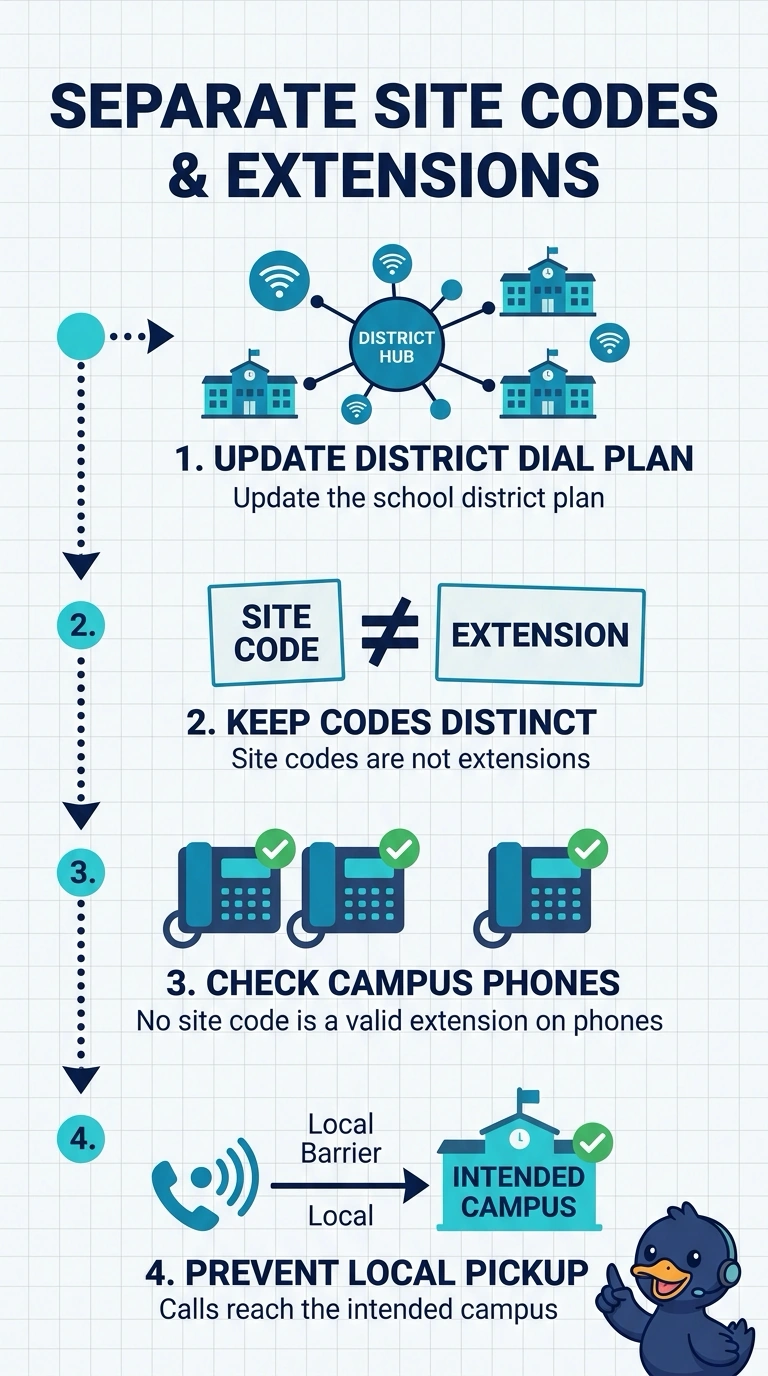
Short Explanation
When you dial another campus’s site code and it is also a valid desk extension, the local match can take the call before it leaves your site. Change the dial plan so the site code is not a valid extension; that separates the two patterns. A shared unrestricted route group or an international-permission change does not resolve the overlap.
Full Explanation
A dial plan chooses which pattern handles the digits you dial. If a site code is also a valid variable-length extension, the local extension match consumes the call, so it never follows the route toward the other campus. Change the school district dial plan so a site code is not also a valid extension on campus phones; the site code can then serve as a routing pattern while the extension remains an extension. Pointing every campus at one unrestricted route group, an ordered set of trunks, does not prevent the local extension pattern from matching the site code first. Removing international call permission mislabels a pattern collision as a blocked call type: permissions allow or block call categories, but do not determine whether digits are an extension or a site code. Pausing directory synchronization until extension lengths match imported display names does not address dial patterns; display names are not dial patterns, and Directory Connector will not separate site codes from extensions. Exam caveat: a translation that works on one campus may strip digits another campus still needs, so test both local extensions and site-code calls after the change. Practical check: from a campus phone, dial another campus’s site code and confirm the call leaves the site.