
A stadium policy marks bulk file copies the same as voice calls, and call quality drops while those copies run. What should the policy do differently?
Select an answer to reveal the explanation.
Short Explanation
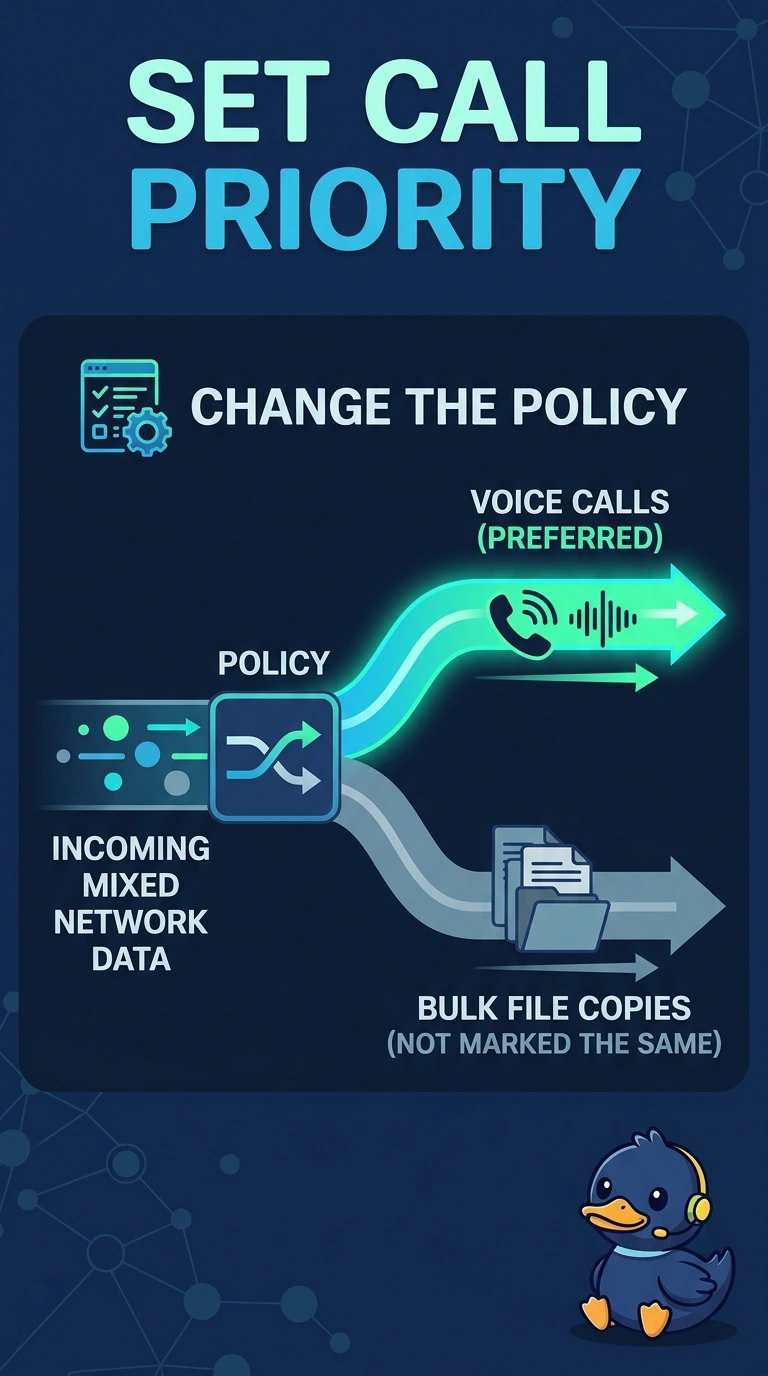
The ambulance and the freight truck were painted the same priority color, so the freight truck crowds your lane. Voice calls have to be preferred, and bulk file copies must not be marked the same as calls. The trap is minting an API token and expecting that token to prioritize packets.
Full Explanation
Voice and video need to be preferred over bulk transfers when the path is busy. This policy marks bulk file copies the same as voice calls, so change it until voice calls are preferred and bulk file copies are not marked the same as calls. Issuing a new API token, even one described as a priority scope, authenticates an application and cannot mark call packets ahead of bulk file copies. Re-register the phones and the marking stays the same, because a new registration does not separate voice marking from bulk file-copy marking. Repairing single sign-on fixes authentication, and identical marking of calls and file copies is not the identity provider classifying both. On exam day, a quality problem caused by bulk traffic sharing the call's priority is a bandwidth and priority problem, and no API token prioritizes packets. After the change, place a call while a large file copy runs and confirm the call keeps usable audio. The path has to prefer voice and video over that bulk transfer, without treating an application token as a packet marker.