
In a warehouse, a capture beside the phone shows clean audio on a call, while a capture of that same call at the WAN edge shows loss. The captures use the same stream direction and a reliable packet capture. WAN queue counters show drops while a bulk transfer saturates the interface. What does that pattern call for?
Select an answer to reveal the explanation.
Short Explanation
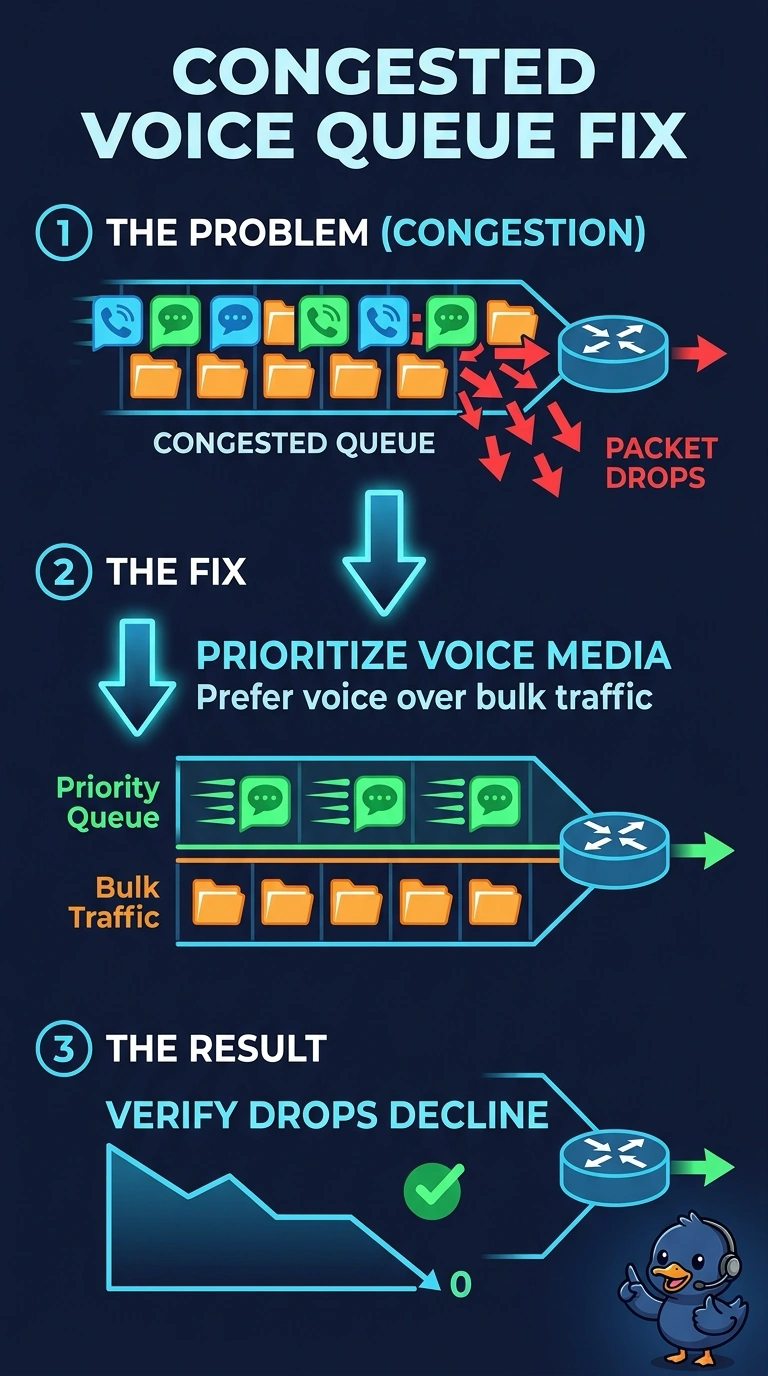
You can trust the comparison because direction and capture are reliable, so you are seeing real loss between the phone and the edge. When you see queue drops during that bulk saturation, prioritize the voice media at the congested queue and verify drops decline.
Full Explanation
Same-direction captures with a reliable capture method make the comparison valid, so clean audio beside the phone with loss at the WAN edge locates the loss between those points. WAN queue counters showing drops while a bulk transfer saturates the interface confirms congestion at that queue, so the correct response is to prioritize the voice media at the congested queue and verify drops decline. Voice media must be preferred over bulk traffic when the path is saturated, and re-capturing after the change should show the gap closing. Re-registering the phone does not help because a fresh cloud registration does not clear queue drops or create priority on a saturated WAN interface. Repairing single sign-on does not help because authentication establishes identity and access, while the identity provider does not forward or drop in-call media packets. Resyncing the directory does not help because user attributes govern provisioning and lookup, not whether edge queue counters mark packets as lost. On exam day, treat this as a bandwidth and priority problem: prove direction and capture validity, prove queue drops under bulk load, then prioritize voice and verify.