
At a hospital branch, two Webex calls are clear and a third call at the same time turns noisy. The shaped rate on that link sits below what those simultaneous calls need. What should be raised?
Select an answer to reveal the explanation.
Short Explanation
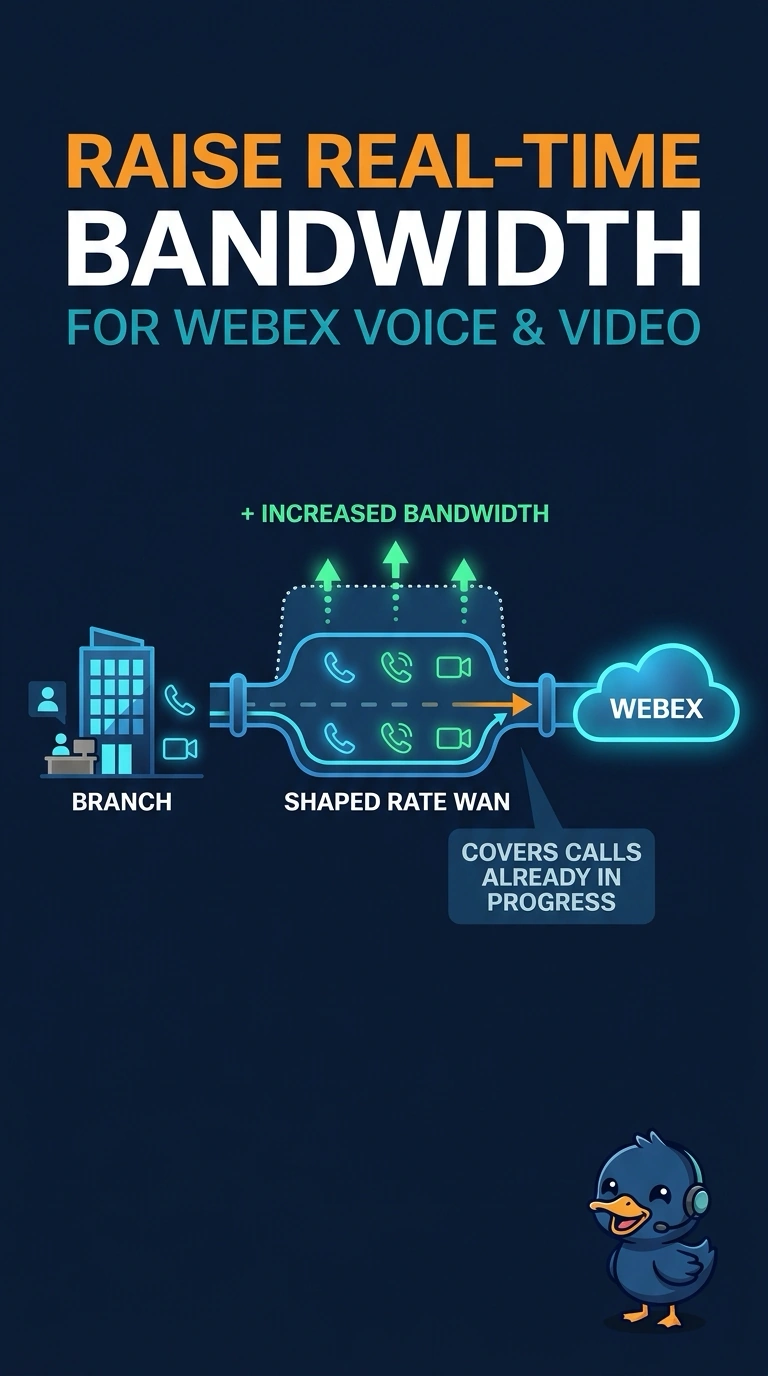
Two people can talk in a hallway that is too narrow for three, and the third voice turns to noise. You raise the real-time bandwidth so the shaped rate covers the calls this branch is actually placing. A translation pattern rewrites digits and does not add room in the hallway.
Full Explanation
When the shaped rate sits below what the simultaneous calls need, the first calls can sound clear and the next one turns noisy because the real-time capacity is exhausted. Raise the real-time bandwidth available to voice and video so the shaped rate can cover the calls already in progress. The single sign-on session length controls how long an authentication stands. A short identity session does not turn the third concurrent call into noise, and users are already in calls. A translation pattern that appends digits to the called number rewrites digits. A longer dial string does not add capacity for the third call on that link. The directory synchronization interval controls how often user records sync. A slower connector cycle does not starve a call of bandwidth, and directory sync is not the shaper. Exam caveat: this is a capacity problem on the media path, not a dial-plan problem and not an identity problem. Operational check: place three calls at once after the real-time bandwidth is raised and confirm the third call stays clear instead of turning noisy.