
A school branch marks nightly backup copies as the priority class and leaves Webex voice and video in best effort. Calls sound poor while the copy runs. What should the branch change?
Select an answer to reveal the explanation.
Short Explanation
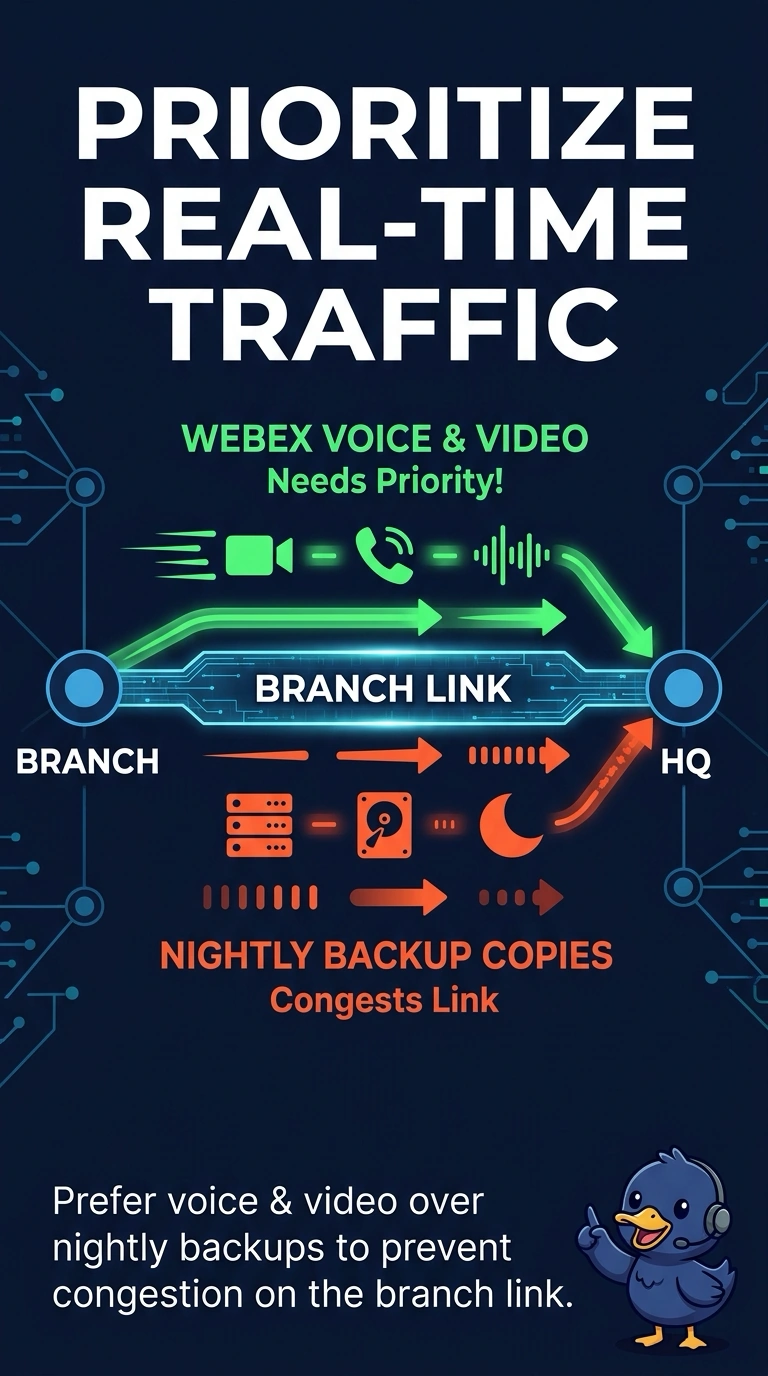
You gave the moving van the fast lane and left the ambulance in the slow one. Voice and video are the flows that need priority, and the backup copies are the bulk traffic that should wait. Flipping that preference is the change, not a new dial pattern.
Full Explanation
Voice and video need to be preferred over bulk transfers when a link is congested. This branch did the reverse: nightly backup copies are the priority class and Webex voice and video sit in best effort, so calls suffer while the copy runs. The branch should prefer voice and video over the bulk backup copies. Rebuilding the single sign-on trust changes authentication. The identity provider does not mark voice packets ahead of backup copies, and poor audio during a file copy is not a sign-in failure. Turning off directory synchronization stops user sync from Active Directory or leaves that sync unrepaired. A connector sync does not place voice and video into the best-effort class. Adding a translation pattern that shortens the numbers people dial rewrites digits. Fewer digits do not raise the priority of voice and video, and a dial plan does not schedule the link. Exam caveat: do not invent a marking value. The decision is which flows are preferred, and real-time voice and video are the flows that need the preference. Operational check: while a backup runs, place a test call and confirm voice and video stay clear once they are preferred ahead of the bulk copy.