
A clinic meetings-site administrator can also change organization-wide security settings that apply well beyond that one site. Site staff should manage only their meetings site. Which role change matches that boundary?
Select an answer to reveal the explanation.
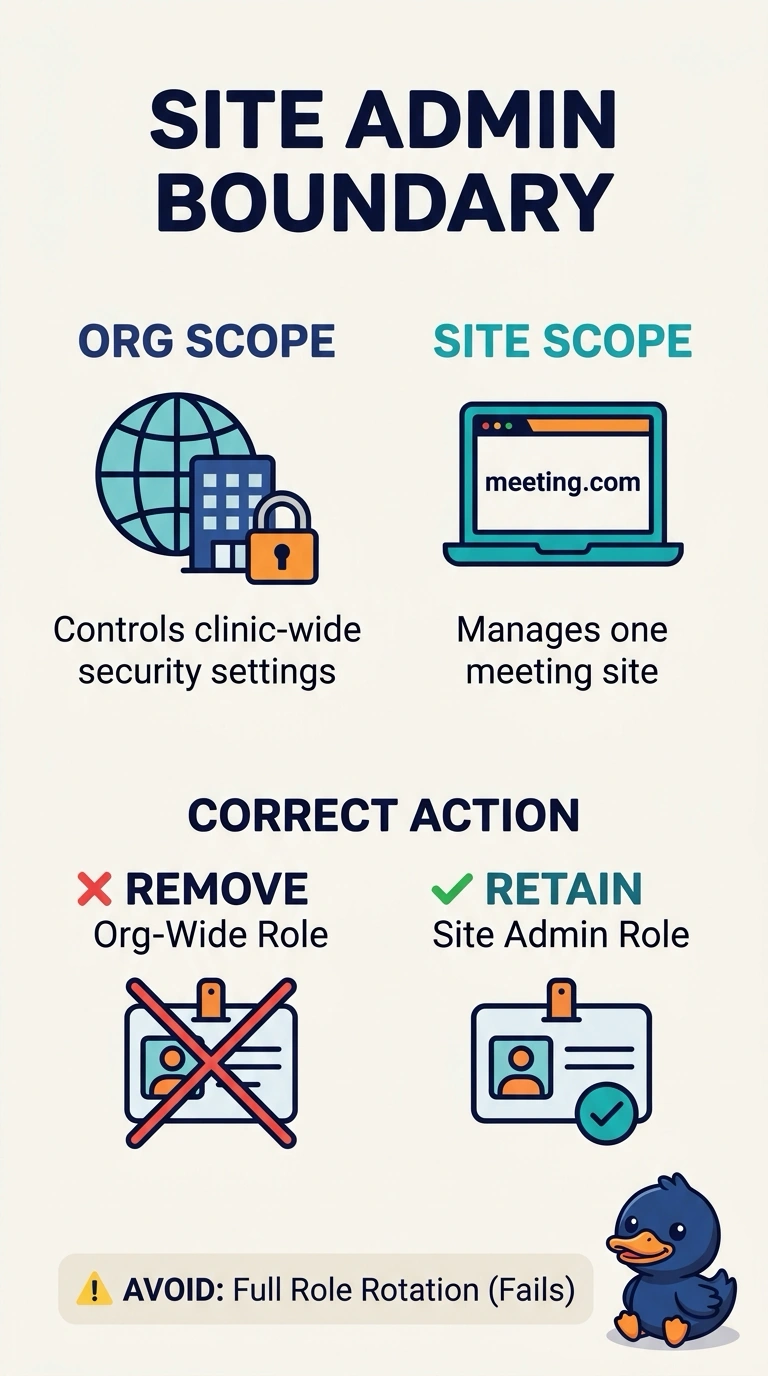
Short Explanation
A receptionist for one floor should not hold the keys to the whole building. You assign a meetings-site role that manages that site and cannot change organization-wide security. Giving everyone full administrator, removing a calling license, or rotating a SCIM token does not draw that boundary.
Full Explanation
Remove the organization-wide role that grants security settings access and retain the appropriate administrator role for that meeting site. Site administration and organization administration are different scopes, so the role should manage the meetings site without organization-wide security rights. Give every clinic employee the full administrator role so site work no longer depends on a narrower site administrator account. Giving everyone the full administrator role widens access, and it is the opposite of least privilege for a single meetings site. Remove the site administrator calling license so the organization security screens are no longer offered to that person. A calling license is not an admin role, and removing it does not define who can change organization security. Rotate the SCIM bearer token so organization security settings become read-only for every clinic administrator account. A SCIM token is a provisioning credential, and rotating it does not set the boundary between a site role and an organization role. Exam caveat: A role does not replace a license, and a license does not grant an admin role, so fix the role scope rather than the calling license. Operational check: Sign in with the meetings-site role and confirm that one site can be managed while organization-wide security settings cannot.