
An airline Okta group of contractors is assigned to the Webex app, and those contractors arrive in Control Hub with full employee services. The contractors need no Webex account. What stops that over-provisioning?
Select an answer to reveal the explanation.
Short Explanation
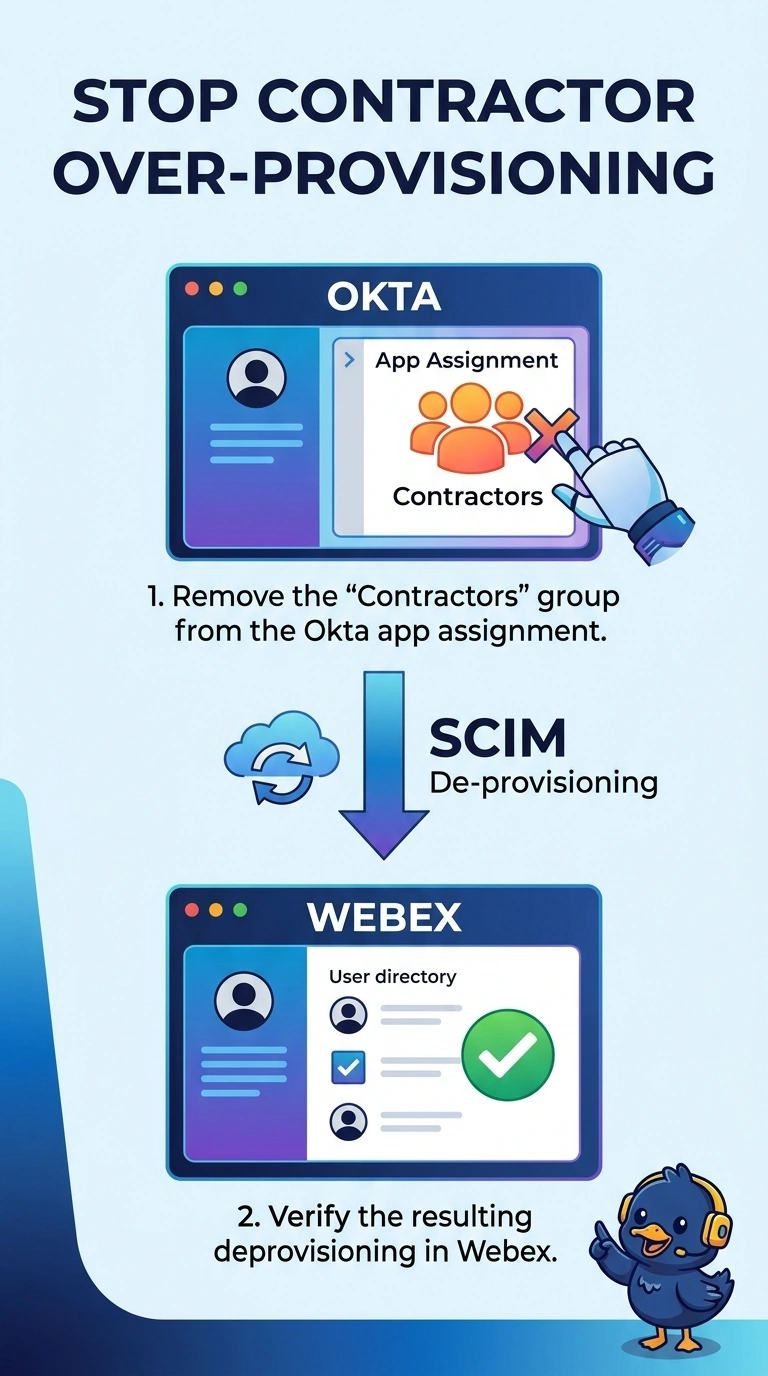
You have visitors who need no Webex account, yet they got full employee badges from the Okta assignment. You remove the contractor group from the Okta app assignment and verify the resulting deprovisioning. Don't let blocking a call type trick you into thinking the extra accounts will disappear.
Full Explanation
SCIM provisioning follows the Okta app assignment, so when the contractor group remains assigned to the Webex app, Control Hub creates those users with the services attached to that assignment. The contractors need no Webex account. Remove the contractor group from the Okta app assignment and verify the resulting deprovisioning. Verification matters because removal stops future provisioning, while deprovisioning behavior determines whether existing contractor users are disabled or deleted in Control Hub. If contractors need Webex, configure a narrower Control Hub license assignment for their group. Blocking international calling fails by concept because a call permission controls a call type after the user exists and does not control which groups SCIM provisions. Installing Directory Connector beside Okta fails because only one directory source should own the organization, and adding a second source does not cancel services on sync. Revoking a Developer Portal bot credential fails because that credential authorizes a bot integration and does not change an Okta group assignment or strip provisioned services.