
A library patron signed in with a passkey at a catalog kiosk. Minutes later the same session cookie was used from a laptop the patron does not have. Which identity control fits?
Select an answer to reveal the explanation.
Short Explanation
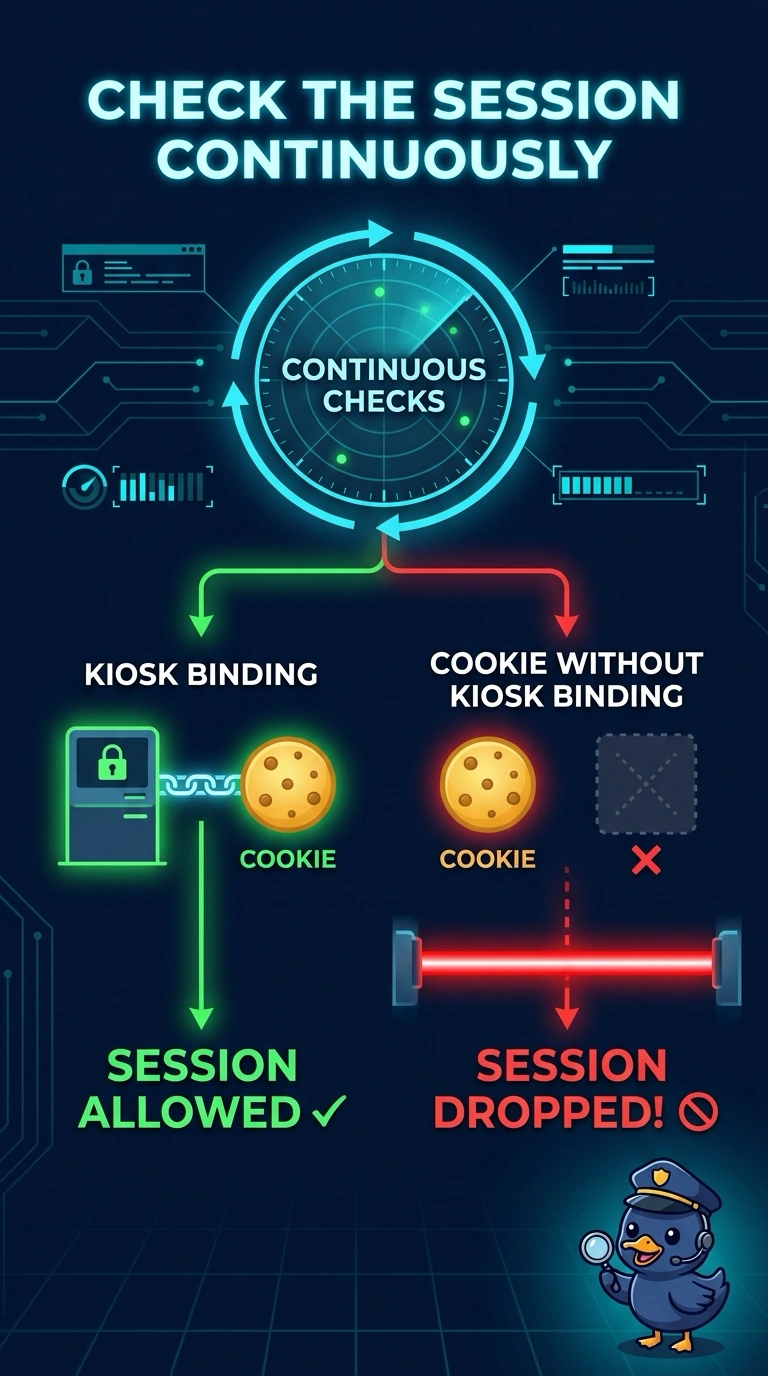
The front door was real and someone copied the stamp on your hand. You drop the session when the cookie shows up without the kiosk it was bound to. A text code, security questions, or a longer password does not catch that copied stamp.
Full Explanation
Login already used a passkey, so the hole is the session afterward, when the cookie was copied and replayed from a different device. Continuous checks that require the original kiosk device binding can drop that replayed cookie. A relayable text code, reusable security questions, and a longer password do not bind a session cookie that already exists. Continuous checks that drop the session when the cookie appears without the kiosk binding is the design that meets this requirement. A text-message code the patron can be talked into reading aloud to a caller is the wrong fit because a relayable text code does not bind this session cookie to the catalog kiosk that started the session. Security questions whose answers are already posted on the patron's public profile is the wrong fit because security questions are static secrets and do not notice the cookie being replayed from a different device. A longer password on an account that has already completed a passkey sign-in is the wrong fit because password length does not describe a session that was already created with a passkey at the catalog kiosk. Exam caveat: Bind the session to a signal the kiosk actually has, or a check the catalog browser cannot present will lock out patrons still standing at the real kiosk. Operational check: In a lab, sign in on a test kiosk with a passkey, replay only the cookie from another client, and confirm that replay is dropped while the kiosk session still works.