
A film-restoration lab must record a fragile archive protocol while it learns the traffic, and an accidental drop would stop the restoration line. Which firewall architecture fits?
Select an answer to reveal the explanation.
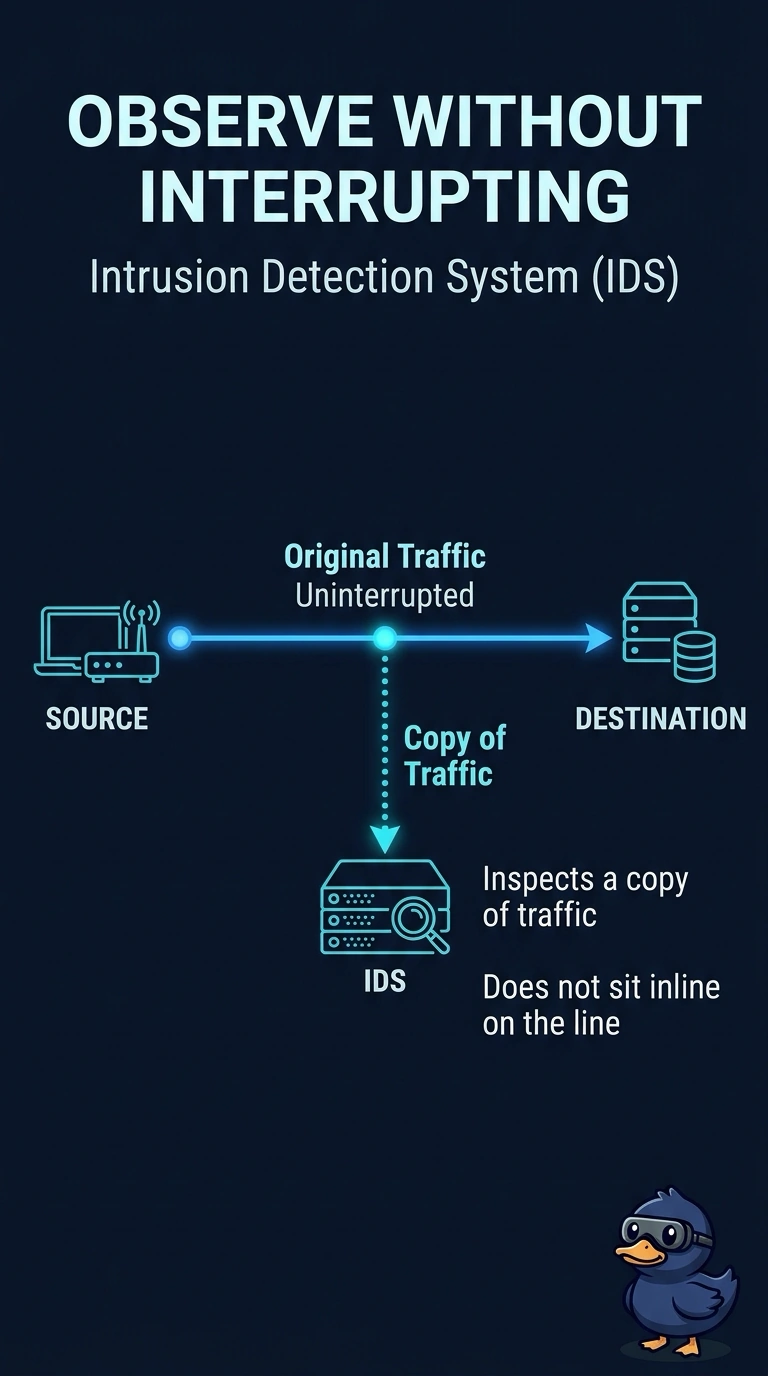
Short Explanation
You want a camera on the hallway, not a gate that slams shut while you are still learning the visitors. You inspect a copy of the archive traffic and you leave the line inline-free. Inline prevention, a web firewall on the exhibit site, or a port permit-or-deny rule misses that job.
Full Explanation
The lab needs visibility without joining the forwarding path, so detection on a copy can alert without letting a bad signature stop the restoration line. Inline prevention is built to drop matching traffic, and a web application firewall only understands HTTP on the exhibit site. A stateful firewall can allow the port and still keep no record of what the archive protocol did. An intrusion detection system that inspects a copy of the traffic and does not sit inline on the line is the design that meets this requirement. An inline prevention system that drops the archive flow as soon as a signature matches is the wrong fit because an inline drop can halt the restoration line on a signature for a protocol the lab is still trying to understand. A web application firewall that only understands HTTP on the public exhibit site is the wrong fit because the archive protocol is not HTTP to the public exhibit site, so a web firewall does not see it. A traditional stateful firewall that can only permit or deny the archive port number is the wrong fit because permitting or denying the port does not record the protocol behavior the lab needs while the line stays up. Exam caveat: Detection on a copy helps only if someone sees the alerts, and a span that falls behind will silently stop recording the protocol you meant to study. Operational check: Pass a lab copy of the archive flow, confirm the detector logs it, and confirm a deliberate mismatch does not break the inline restoration session.