
A city fleet is about to ship inspector laptops back to the lessor. The disks are encrypted, and the laptops are still on the workbench. Which endpoint step fits before they leave?
Select an answer to reveal the explanation.
Short Explanation
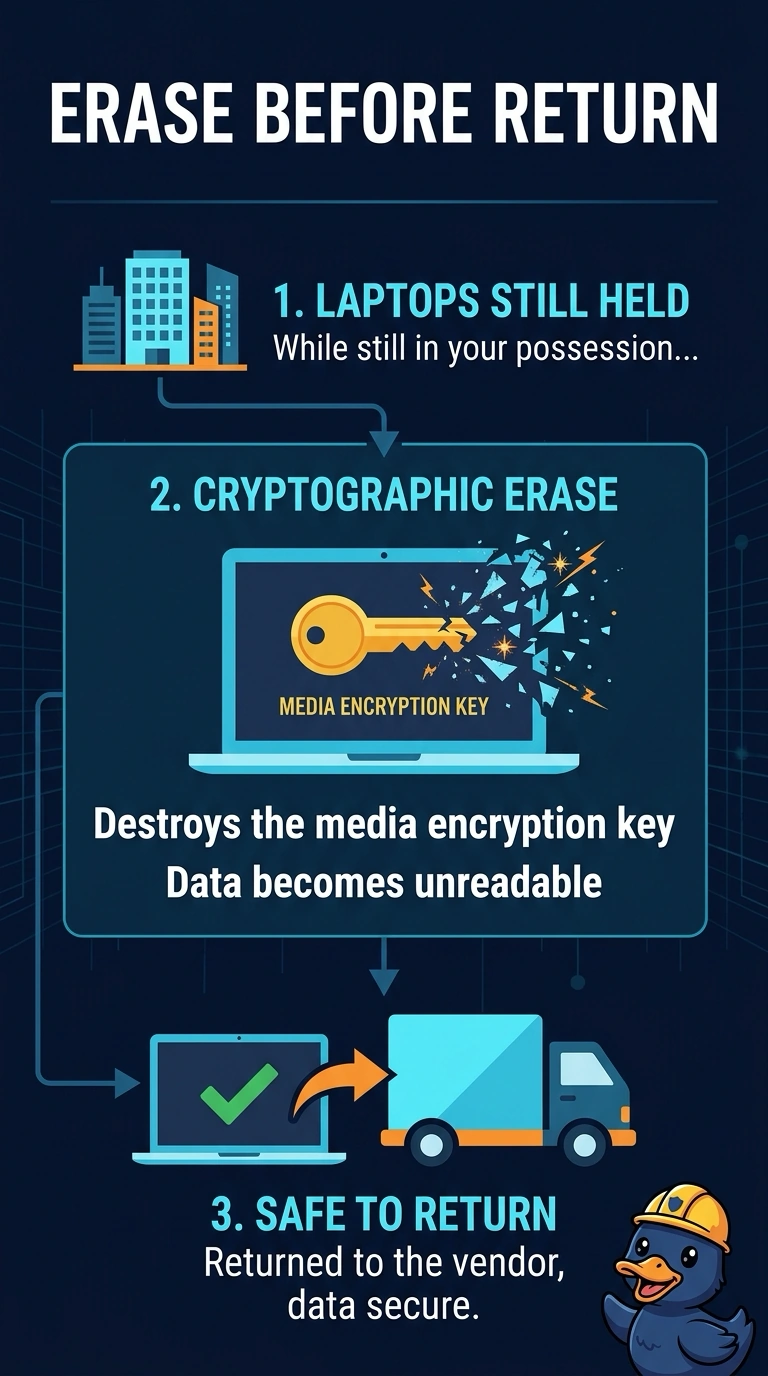
Throwing away the diary key beats crossing out pages you might have missed. You destroy the media key while the laptops are still on your bench. A file-by-file delete, a wipe after the agent is gone, or a posture check for a file share leaves the old photos recoverable.
Full Explanation
The disks are already encrypted and still on the city's bench, so destroying the media key makes the ciphertext unreadable to the next holder without a later check-in. A file delete can leave remnants, and a remote wipe after the management agent is removed may have nothing left to reach. A posture check only decides whether a live laptop may open a share, and it does not clear the disk. Cryptographic erase that destroys the media encryption key while the city still holds the laptops is the design that meets this requirement. A file-by-file delete that leaves recoverable data on the encrypted disks is the wrong fit because deleting files on an encrypted disk can leave recoverable copies, and the key is what actually protects the media. A remote wipe that runs only after the lessor removes the city's management agent is the wrong fit because a wipe scheduled after unenrollment may have no agent left to reach the laptop once the lessor has it. A posture check that decides whether the laptop may open the inspection file share is the wrong fit because a posture check governs access to a share and does not remove city data before the hardware leaves. Exam caveat: Confirm the destroyed key is the one that wraps those disks, because a second recovery key left in escrow can still unlock a returned laptop. Operational check: On a lab laptop, destroy the media key, then boot from external media and confirm the previous inspection files on that disk are not readable.