
A grain elevator leaves one morning session open on a shared terminal, and anyone at the screen can release a shipment. Which sign-in design fits the release action?
Select an answer to reveal the explanation.
Short Explanation
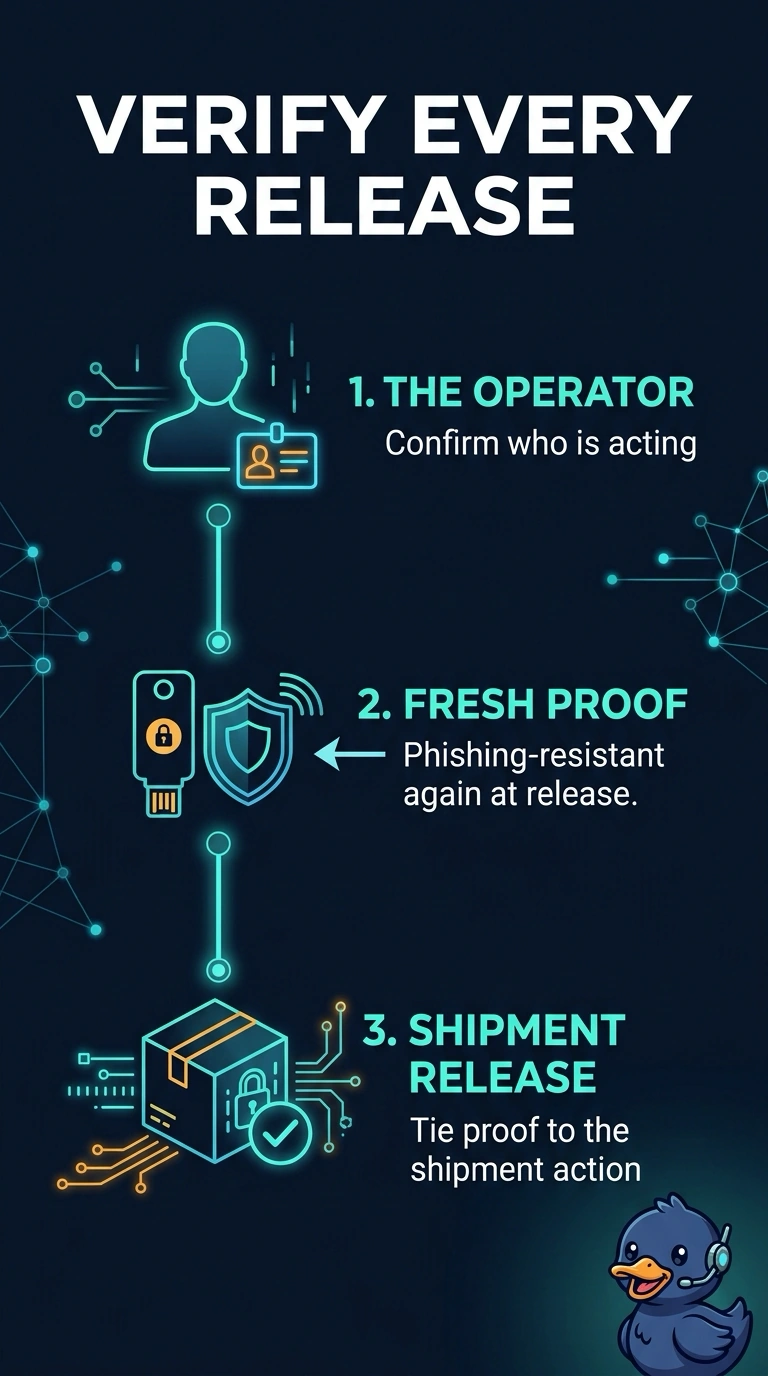
An open cab lets whoever climbs in drive the load. You ask the person at the screen for a fresh phishing-resistant proof before the grain moves. A shared screensaver password, posted security questions, or a longer morning session leaves the cab running.
Full Explanation
The release decision is being made on a session that outlives the person who authenticated. A fresh phishing-resistant proof at release binds that action to the operator who is present, rather than to whoever can touch the open screen. A shared screensaver password, posted questions, and a longer session all keep the original login as a shift-wide capability. A fresh phishing-resistant proof of the individual operator at the moment the shipment is released is the design that meets this requirement. A screensaver password that the whole shift knows and types on the same shared terminal is the wrong fit because a password the whole shift knows does not prove which operator is standing at the screen for this release. Security questions written on the board beside the shared release terminal is the wrong fit because questions posted beside the terminal are shared knowledge and do not identify the person releasing the load. A longer morning session so the first operator's login covers the rest of the shift is the wrong fit because a longer morning session is what lets the next person release grain without a new proof of identity. Exam caveat: Apply the fresh proof to the release action itself, since a strong login at the start of the shift still leaves the screen open for the next operator. Operational check: On a lab terminal, authenticate as one operator, switch people without locking, and confirm the release action demands a new proof before it proceeds.