
A customs broker's file shares were encrypted after a clerk opened an archive from a partner. The message passed sender authentication, and it did not ask for a payment change. Which email design addresses that path?
Select an answer to reveal the explanation.
Short Explanation
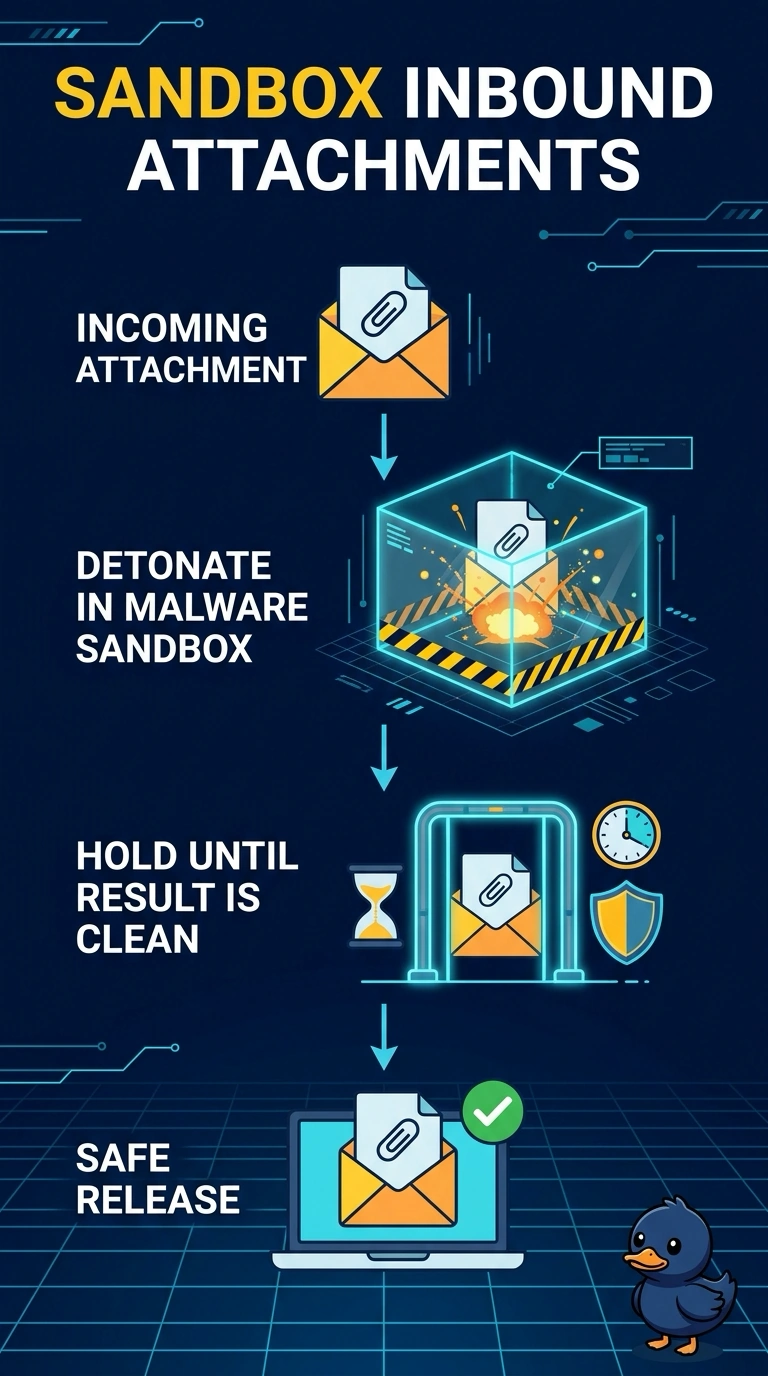
You’ve found the danger inside an authenticated partner’s archive. Detonate the attachment in a sandbox and hold it until the result is clean. An own-domain authentication reject rule, a bank-account callback, or a subject filter that delivers routine-looking mail won’t inspect that archive safely.
Full Explanation
The message was authenticated partner mail containing a harmful archive, not a message from the broker’s own domain that failed sender authentication and not a request to change a bank account. Detonating inbound attachments in a malware sandbox and holding them until the result is clean addresses the threat: the clerk does not receive the archive before it has been analyzed. A reject rule for the broker’s own domain when that domain fails sender authentication does not fit because this message passed authentication, and the rule does not inspect the archive. An out-of-band phone call to confirm a supplier request to change a bank account does not fit because no bank-account change was requested; the callback would not stop an archive that encrypts shared files. A subject-line keyword filter that delivers the archive when the subject looks routine does not fit because a routine-looking subject does not establish that an attachment is safe, and this filter does not execute or analyze the file. Exam caveat: Hold eligible attachments for analysis, and block or strip an attachment if the verdict remains inconclusive at timeout; this does not mean sender checks are unnecessary for other mail. Practical check: Send a lab message that passes authentication with a test archive, confirm it is held before reaching the inbox, and confirm a benign attachment is released after a clean result.