
A regional railroad still manages trackside switches with Telnet and SNMPv1 community strings. Operators already connect only from a management host. Which change protects those management sessions?
Select an answer to reveal the explanation.
Short Explanation
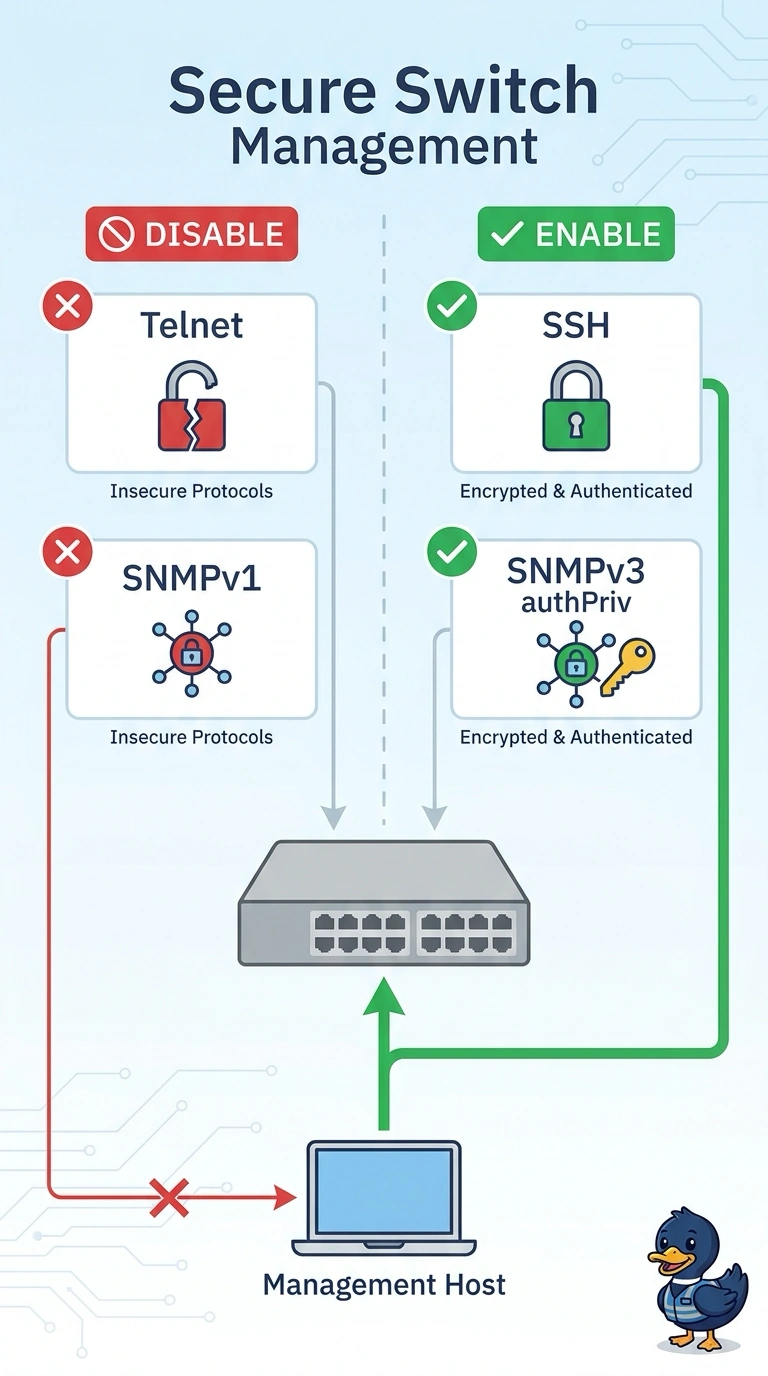
The management login is a postcard anyone on that path can read. You replace Telnet and community strings with SSH and SNMPv3 from the management host. A rider web filter, routing-peer authentication, or a policer that keeps the old protocols still leaves the login readable.
Full Explanation
Telnet and SNMPv1 expose operator credentials on the management path. The operators already use a management host, so the missing protection is encrypted admin protocols: SSH for interactive management and SNMPv3 for polling, with the cleartext services disabled. The authPriv security level authenticates and encrypts SNMPv3 messages. Disable Telnet and SNMPv1, then use SSH and SNMPv3 authPriv from the management host is the design that meets this requirement. A passenger web filter on station wireless that riders use while they wait for trains is the wrong fit because rider web policy on station wireless does not encrypt or limit the operator sessions that reach the switches. Routing-protocol authentication aimed at peer routers rather than operator login sessions is the wrong fit because peer authentication stops a rogue routing neighbor and does not encrypt the operator's management login. A control-plane policer that still leaves Telnet and SNMPv1 as the management protocols is the wrong fit because a policer can save CPU during a scan and still leaves the admin credentials readable on the wire. Exam caveat: Encrypted protocols still need a source limit, so keep the management host as the only source for SSH and SNMPv3 or they stay open to every routed network. Operational check: From the management host, confirm an SSH session works and Telnet is refused, and from another subnet confirm both SSH and Telnet to the switch fail.