
A recruiting firm already signs staff into its company HR tenant and blocks personal tenants. Scripts still export the full candidate table through the vendor API. Which added control fits?
Select an answer to reveal the explanation.
Short Explanation
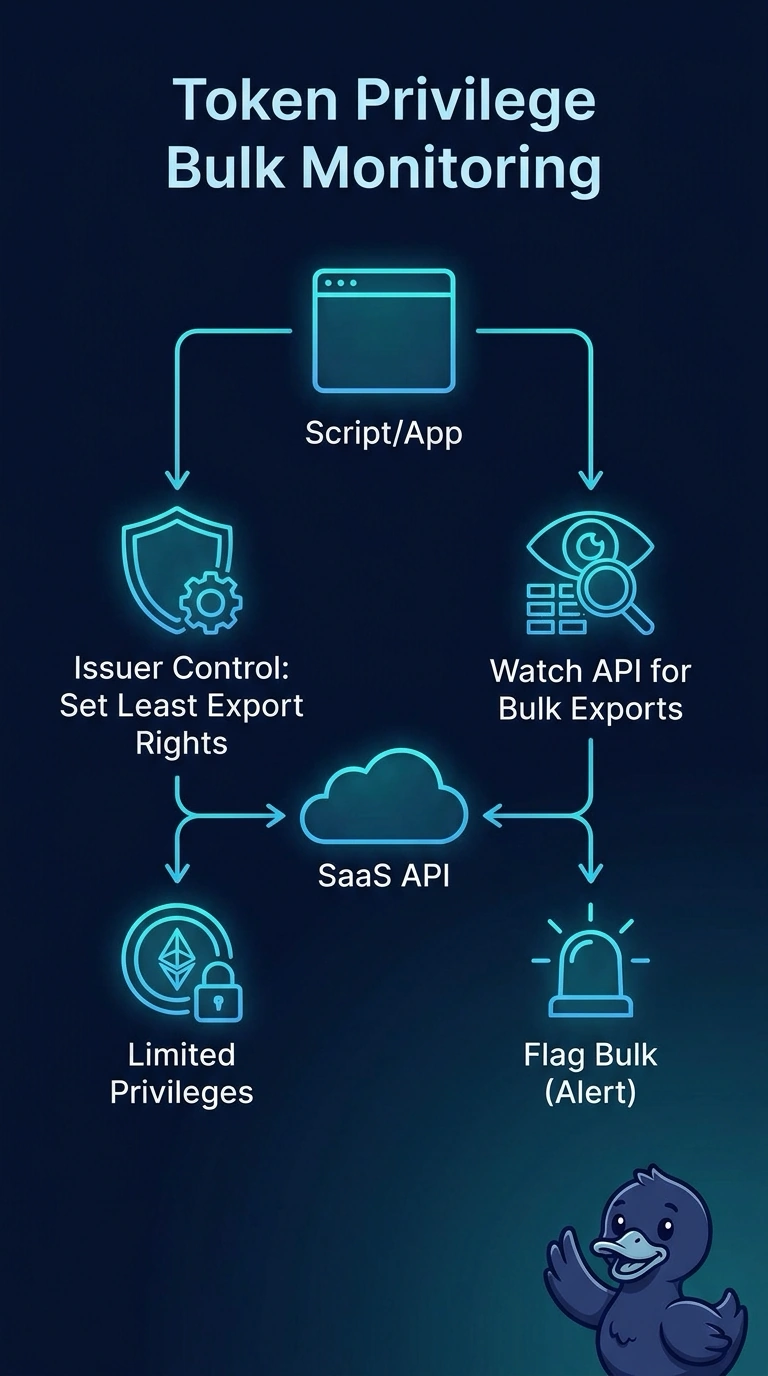
The front door already checks badges, and a script is still backing a truck up to the records room. You inspect the API and you narrow what that token can export. A product-name block, another sign-on prompt, or a vendor address allow does not see the bulk export.
Full Explanation
Single sign-on and the tenant lock are already in place, and they do not describe what a token may export. Set export privileges through authorization; use monitoring to detect attempted bulk use. Blocking the product name pushes people off the company tenant, while another sign-on prompt and a vendor address allow do not look at the export. Reduce the script’s privileges at the token issuer or SaaS API and use API activity monitoring to flag bulk exports is the design that meets this requirement. A block on the product name that pushes staff toward personal tenants the firm already forbids is the wrong fit because it fights the sanctioned tenant and recreates the closed personal-tenant path. Another single sign-on prompt, with no inspection of the API calls the scripts make is the wrong fit because staff already use the company tenant and another prompt does not see a script exporting the table. A firewall allow for the vendor address that does not read the export request is the wrong fit because it only proves network reachability and does not limit which API calls a token may make. Keep the company-tenant lock while adding this control, because the export control is an addition and is not a reason to drop single sign-on. Operational check: Test a full-table request and confirm monitoring flags it.