
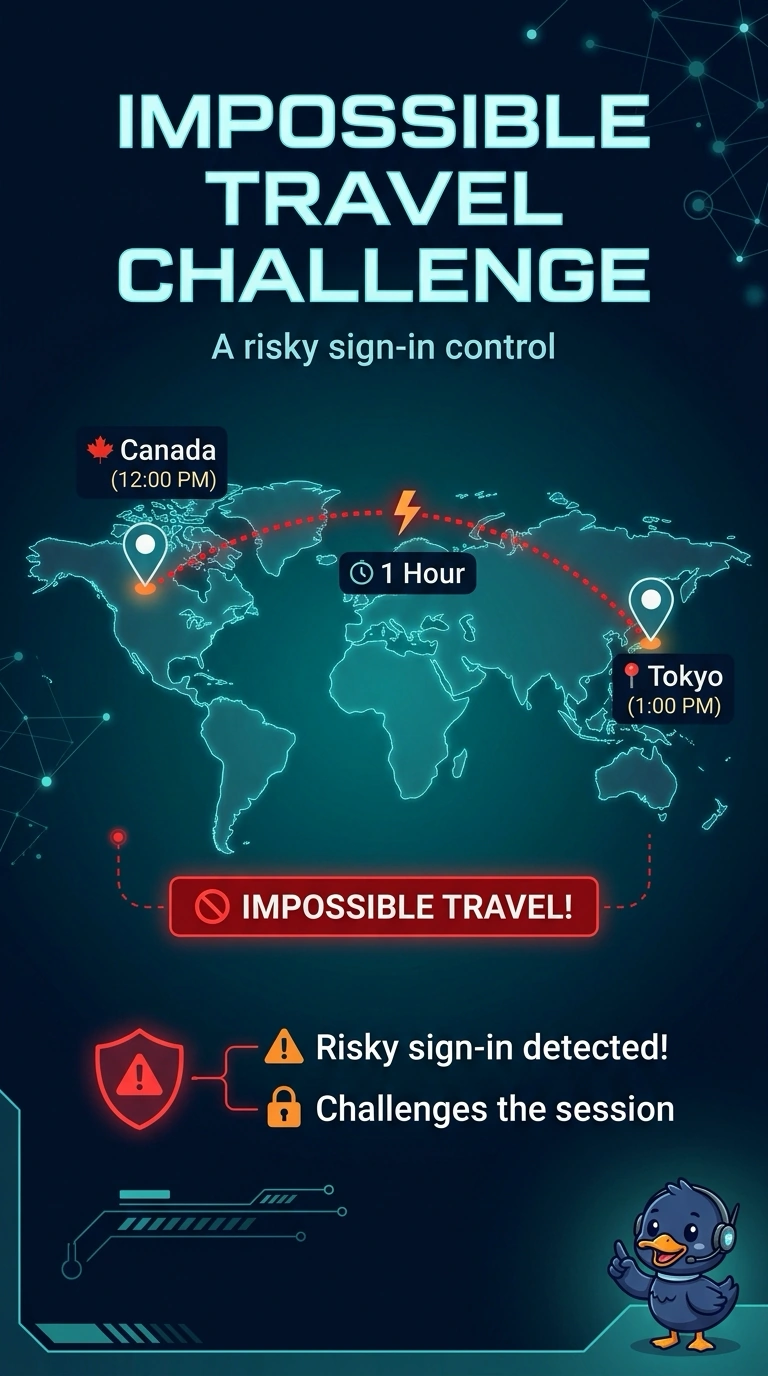
A mining firm's geologist account signs in from Canada and then from another country an hour later. The sign-ins originate in verified locations that are too far apart for an hour of travel. The identity team wants that pattern to challenge the session. Which design uses identity intelligence for this case?
Select an answer to reveal the explanation.
Short Explanation
Nobody flies across a continent in an hour, and the sign-in record is telling you someone claims they did. You challenge that session with a risky-sign-in control. SMS codes, security questions, or a longer password never look at the two places.
Full Explanation
Two verified locations too far apart for an hour of travel are not a secret the user can type, and a person cannot make that trip. Identity intelligence scores the second sign-in as risky and challenges or blocks it before the session continues. Use the verified impossible-travel signal to challenge the attempt under the configured identity policy. SMS one-time codes on every login that a live phishing site can relay in the same session is the wrong fit because an SMS code can be relayed and it never evaluates the travel signal. Security questions the geologist types into whatever page is asking for them is the wrong fit because typed secrets do not evaluate whether the two locations could be the same person. A longer password and no risk signal, so the distant second sign-in still succeeds is the wrong fit because with no risk check the correct secret still accepts the impossible trip. Exam caveat: If the only challenge repeats a secret the distant session already presented, the risk signal did not change who is allowed in. Operational check: In a lab tenant, confirm the distant second session is challenged while a normal local sign-in still proceeds.