
An architecture firm already uses a sanctioned drawing service in its own tenant with single sign-on. A script is downloading whole client projects through that vendor's API. Which control addresses the downloads without opening a shadow tenant?
Select an answer to reveal the explanation.
Short Explanation
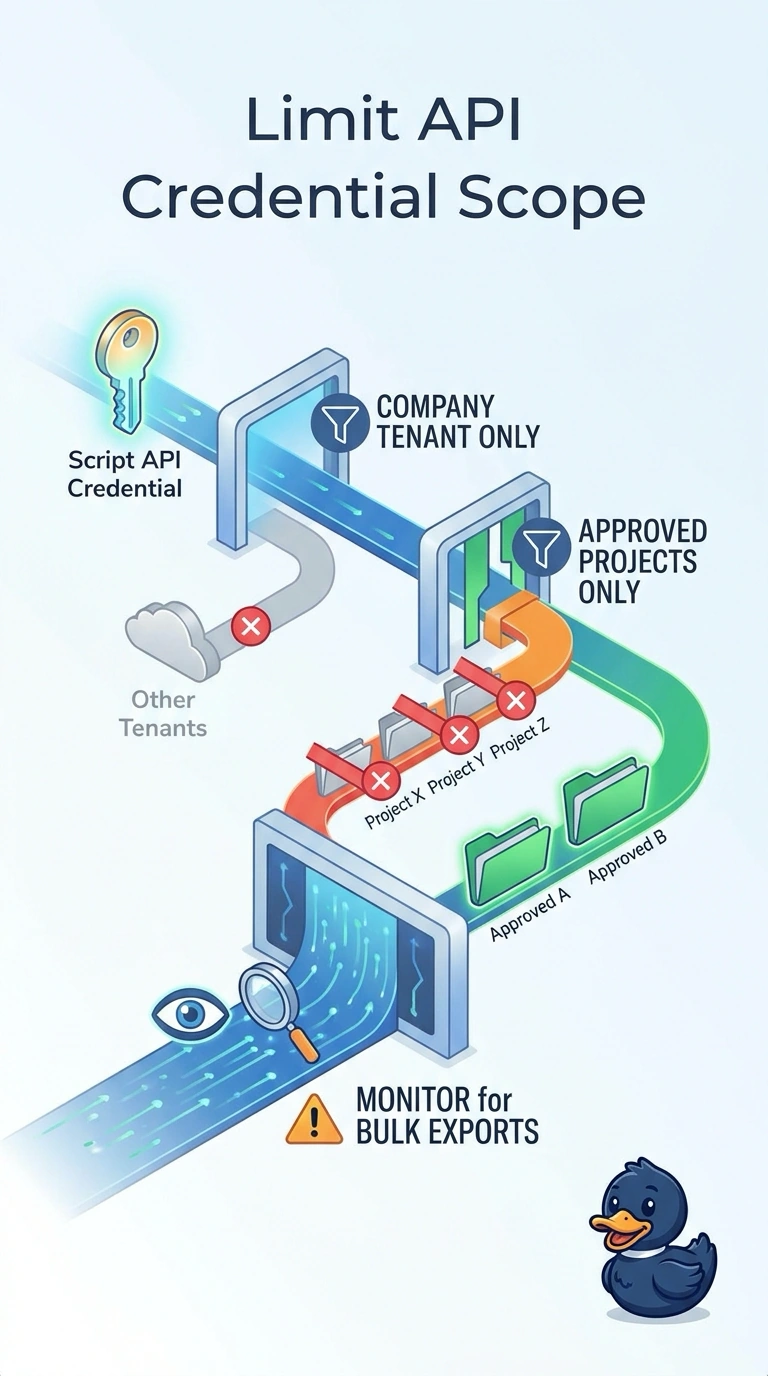
You already staffed the front door with single sign-on, so now you lock down what the script can touch. You restrict its API credential to approved projects in your company tenant and watch API activity for bulk exports. A name block, personal tenant, or website-only block leaves that API dock open.
Full Explanation
Single sign-on into the company tenant already decides who may open the application, while the new path is the vendor API pulling entire projects with no person in the browser. Tenant restrictions scope tenant access; the SaaS service’s API permissions determine which projects the credential may read. Restricting the script’s API credential to the approved projects in the company tenant, with monitoring of API activity for bulk exports, directly addresses that loading-dock path without creating a new tenant. A name-based block of the drawing product that also stops the sanctioned company application is the wrong fit because blocking the product name shuts the sanctioned application the firm already chose to allow in its own tenant. A move to personal tenants of the same product so the script keeps downloading projects is the wrong fit because personal tenants are the shadow path, and they sit outside the company tenant the firm can govern. A block of the vendor website that leaves the vendor API host open to the script is the wrong fit because the script uses the API host, so a website block does not see the download that is actually leaving. Exam caveat: API activity covers this integration path, while a link-shared project that bypasses this API needs its own control. Operational check: Test with one approved project allowed and one outside project denied in the API log.