
A law firm signs users in to its company tenant of a design suite, yet large client files still leave through the vendor API into personal accounts. Which design controls that export path?
Select an answer to reveal the explanation.
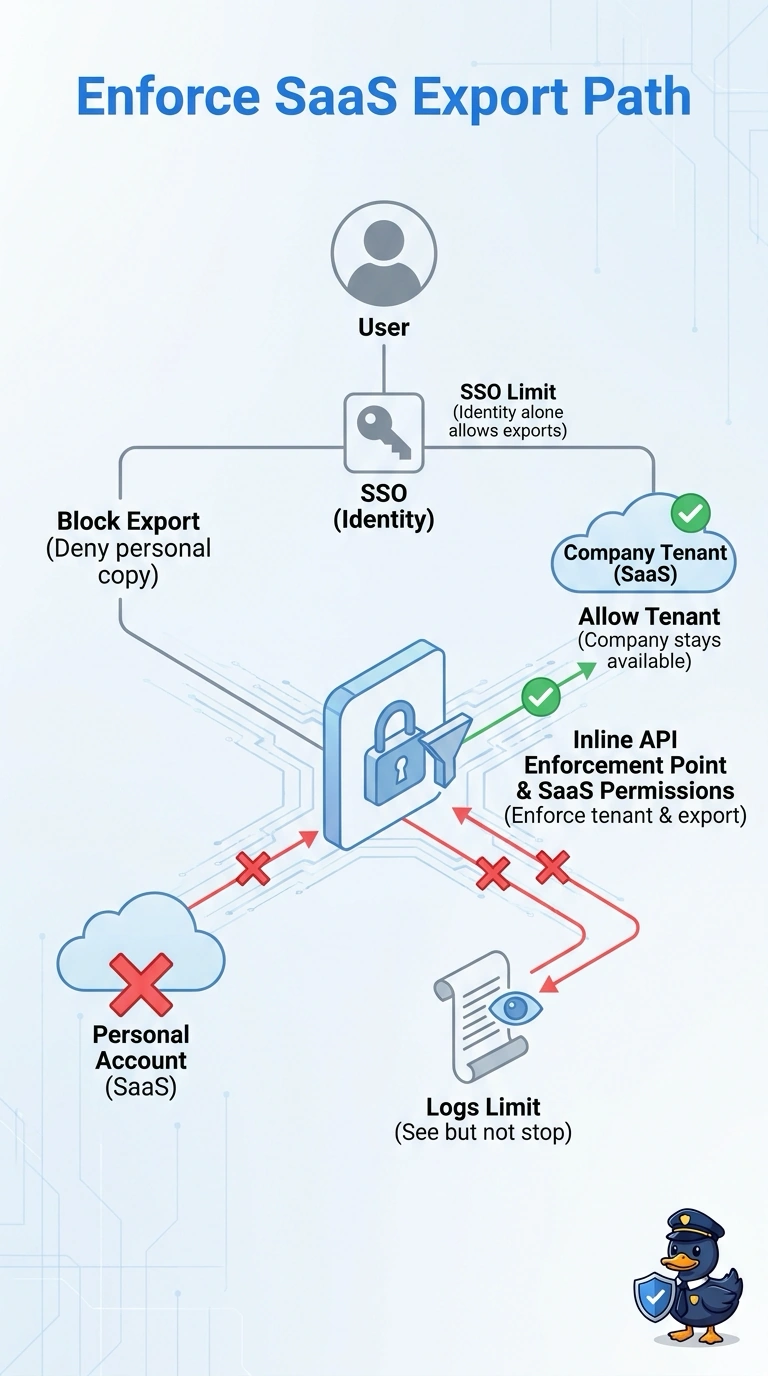
Short Explanation
A badge for the front door does not watch the loading dock. You need export enforcement in the SaaS platform or at an inline API enforcement point that covers the export request, so the company tenant stays available while personal-account exports are stopped.
Full Explanation
The firm already signs users into its company tenant, but the loss occurs after sign-in, when a user sends an export call through the vendor API to a personal account. Enforcing tenant and export permissions in the SaaS platform or through an inline API enforcement point that covers the export request controls that path: it can deny the client-file copy to a personal account while keeping the company tenant available. Single sign-on authenticates firm users, but it does not by itself authorize each export call, so a signed-in user may still send one to a personal account. A name-based block of the design product cannot distinguish company-tenant use from personal-account use; it also cuts off the sanctioned tenant. A site-to-site tunnel from the firm to the courthouse for a different application follows a different path and does not inspect the vendor API export call. Exam caveat: the enforcement must cover the actual export request; sign-in controls or controls for unrelated network paths do not establish that coverage. Practical check: test that an export to a personal account is denied while the same user can still use the company tenant.