
A payroll bureau receives macro-enabled invoices from a real partner whose mail passes sender authentication. The message does not change any bank account. Which control should inspect those files before delivery?
Select an answer to reveal the explanation.
Short Explanation
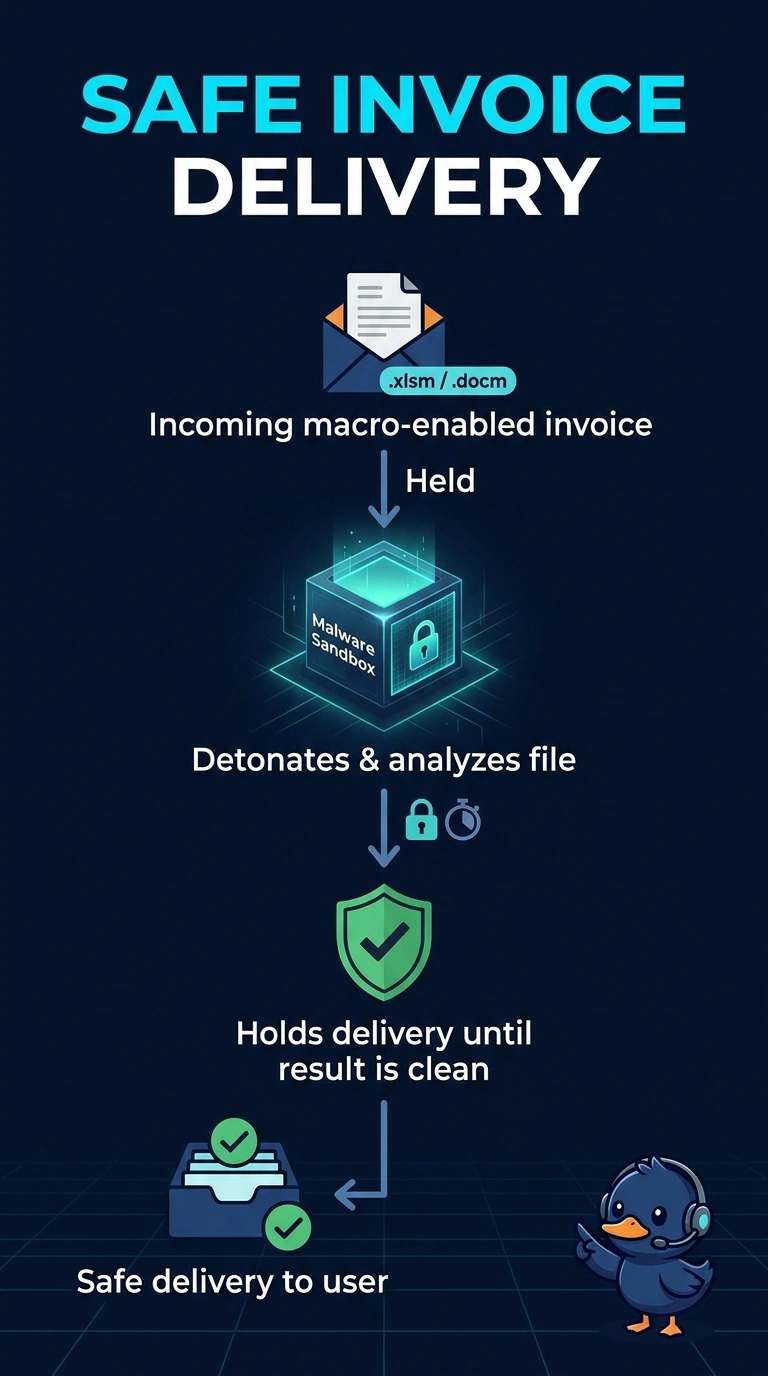
Even when you recognize the sender, a macro-enabled invoice can hide a threat, so you need a malware sandbox to detonate the attachment and hold delivery until it is clean. A bureau-domain spoofing reject, a payment-detail phone call, and lobby wireless each miss the file you need to inspect.
Full Explanation
A sender-authentication pass verifies an applicable authenticated domain; it does not establish that an attachment is safe. A macro-enabled invoice can be malicious even when it comes from a real partner and makes no bank-account change, so a malware sandbox should detonate the attachment and hold delivery until the result is clean. A reject policy aimed at spoofing the bureau’s domain addresses a different sender-identity problem and does not inspect a file arriving from the partner domain. An out-of-band phone call to confirm a payment-detail change addresses a fraud pattern the message does not contain; it does not analyze the attachment. A new lobby wireless network sits off the path carrying the partner mail, so it cannot inspect or detonate the file before delivery. The sandbox is the listed control that meets the requirement. Exam caveat: if the sandbox cannot open this macro type, an unknown result is not a clean result, so delivery should remain held. Practical check: send a lab invoice with a test macro from an authenticated partner domain and confirm delivery waits until the sandbox marks the file clean.