
A bookstore manager signs in at the shop, and six minutes later the same account signs in from another country and opens payroll. Both sign-in locations are verified, and their distance rules out travel in six minutes. Which identity design responds to that signal?
Select an answer to reveal the explanation.
Short Explanation
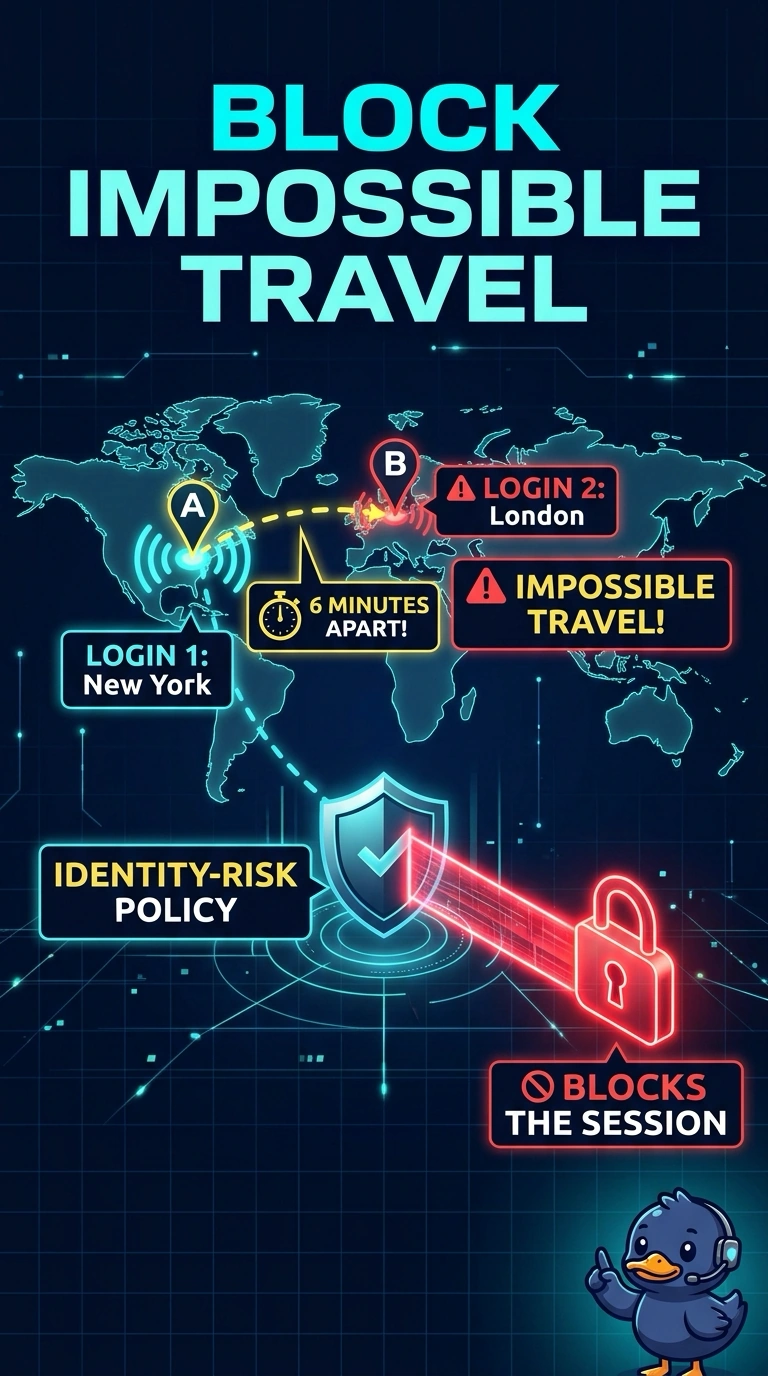
A person cannot be at the shop counter and in another country six minutes apart. You block the session when the identity service reports that impossible travel. A security question, a texted code, or a longer password still works from both places.
Full Explanation
Impossible travel is an identity-intelligence signal: the same account cannot be in the shop and in another country six minutes apart. A risk policy evaluates that signal and can block or step up the session before payroll opens. A security question checks memory, an SMS code checks possession of a number, and a longer password checks a secret, and none of those compare the two locations. An identity-risk policy that blocks the session when impossible travel is reported is the design that meets this requirement. A security question the traveler can satisfy with facts taken from a public profile is the wrong fit because public facts are not a risk signal, and a question does not compare the two sign-in locations. An SMS code that a real-time phishing site can relay in the same sign-in attempt is the wrong fit because a relayed text code can complete the foreign sign-in without evaluating the travel between places. A longer password that remains valid from both countries during the same hour is the wrong fit because password length does not notice that one account was used from two distant places in one hour. Exam caveat: A block on travel should still allow a real trip that was declared in advance, or the control will lock out managers who are actually on the road. Operational check: In a test tenant, sign in from two distant locations minutes apart and confirm the payroll session is blocked and the risk event names the impossible-travel rule. Review suspected false positives using verified sign-in context before adjusting the risk policy.