
A law firm lets remote staff reach a file service and must limit that path by user and by application, not only by address and port. Which firewall design matches?
Select an answer to reveal the explanation.
Short Explanation
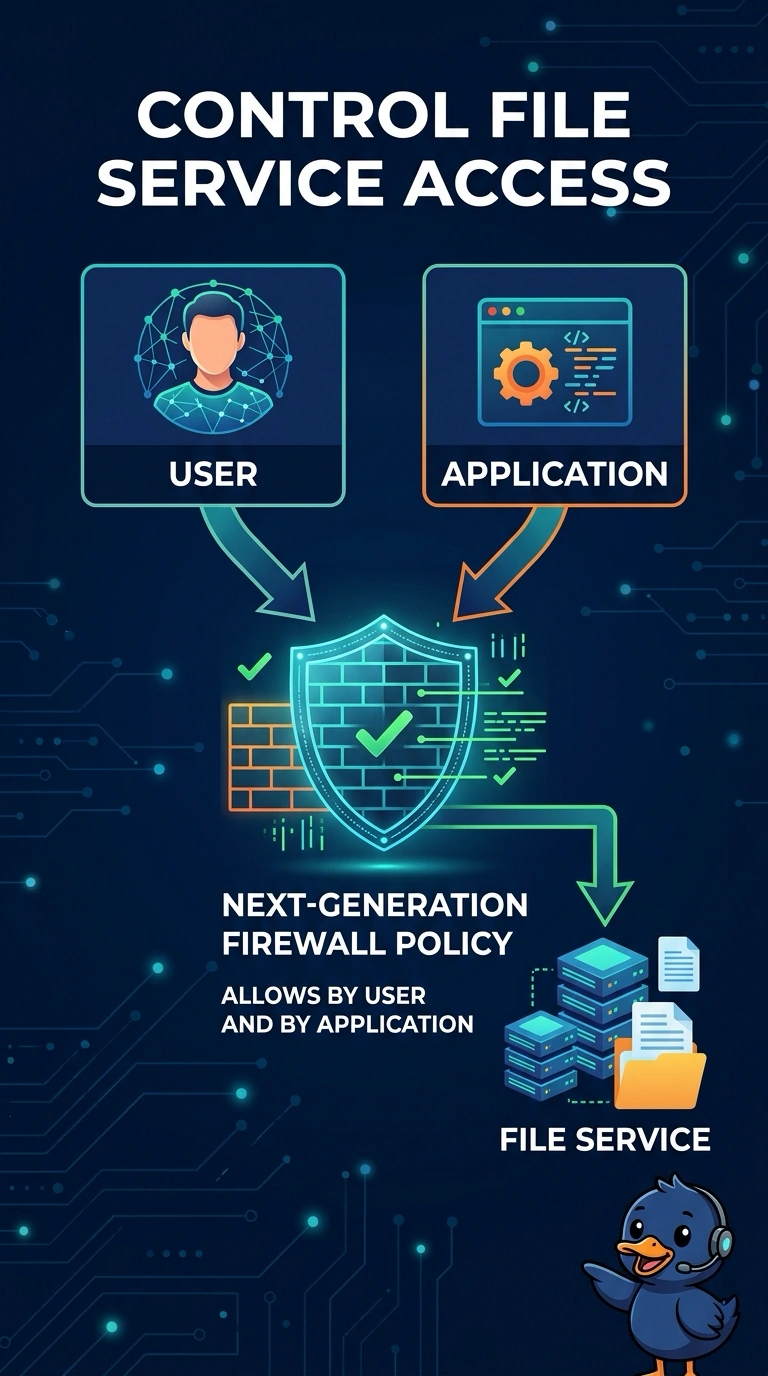
A door policy that only checks the street address lets anyone from that block through. You allow the file service by user and by application. A port rule, a website firewall, or a log-only sensor does not enforce that limit.
Full Explanation
The requirement is an allow decision based on identity and application, which a next-generation firewall can attach to the session. A traditional stateful rule stops at address and port, so anyone on the remote subnet who reaches that port is allowed. A web application firewall inspects HTTP for the public site, not this file service, and an intrusion detection sensor can log the session and cannot enforce the allow the firm asked for. A next-generation firewall policy that allows the file service by user and by application is the design that meets this requirement. A traditional stateful rule that allows the remote subnet to the file-service port for anyone is the wrong fit because a port allow cannot tell which person or which application is using the permitted file-service port. A web application firewall on the firm's public website rather than the file service is the wrong fit because the public website is a different application, and its HTTP filter does not see the file service. An intrusion detection sensor that logs the file session and does not enforce the allow is the wrong fit because a detect-only sensor records the session and still lets an unauthorized remote user through. Exam caveat: User identity on the firewall is only as good as the directory feed behind it, so a stale group will allow a person who has already left the firm. Operational check: From an account outside the file-service group, attempt the session and confirm the firewall denies it, then confirm a member session is allowed and logged with the user.