
A city library account signs in with the correct password, and that same password is in a public breach dump tied to the librarian's old personal mail. Which identity control fits?
Select an answer to reveal the explanation.
Short Explanation
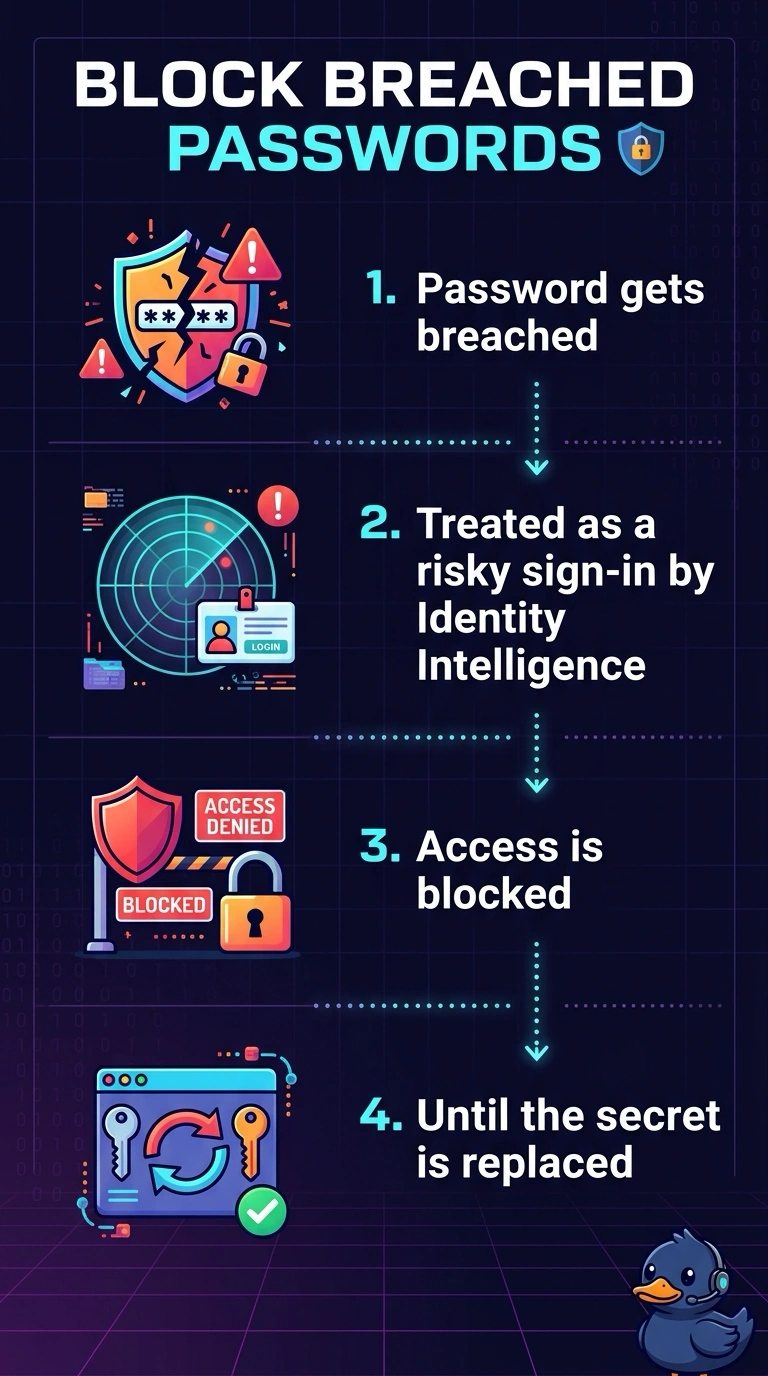
A house key that already turned up at a flea market should not open your door tonight. You block the library sign-in with identity intelligence until that published password is replaced. A text code to the front desk, questions on the bulletin board, or a length rule that ignores breach dumps misses the exposed secret.
Full Explanation
The password works, and it is already public. Use a verified compromised-credential signal in the identity provider’s access policy to block this sign-in and require password remediation. Identity intelligence that treats the breached password as a risky sign-in and blocks it until the secret is replaced is the design that meets this requirement, because the control must notice that the password is published, not merely that it was typed correctly. A text-message code sent to the library front-desk phone for the clerk to read aloud is the wrong fit because a relayable text code does not tell you that this password is already published in a breach dump. Security questions whose answers are already posted on the staff bulletin board is the wrong fit because readable questions are not a check against a password found in a public dump. A longer-password rule that checks length and mix but ignores known breach dumps is the wrong fit because a length rule can accept a long password that is already published, which is the risk the dump created. Exam caveat: A dump match is a signal about this secret, and replacing it still leaves the account exposed if the password is reused elsewhere.