
A regional airline's pilots receive crew-schedule mail whose office files have carried ransomware, and each file must be exercised before the inbox is trusted. The files are eligible for sandbox analysis, and pending or inconclusive results must be withheld. Which email control fits?
Select an answer to reveal the explanation.
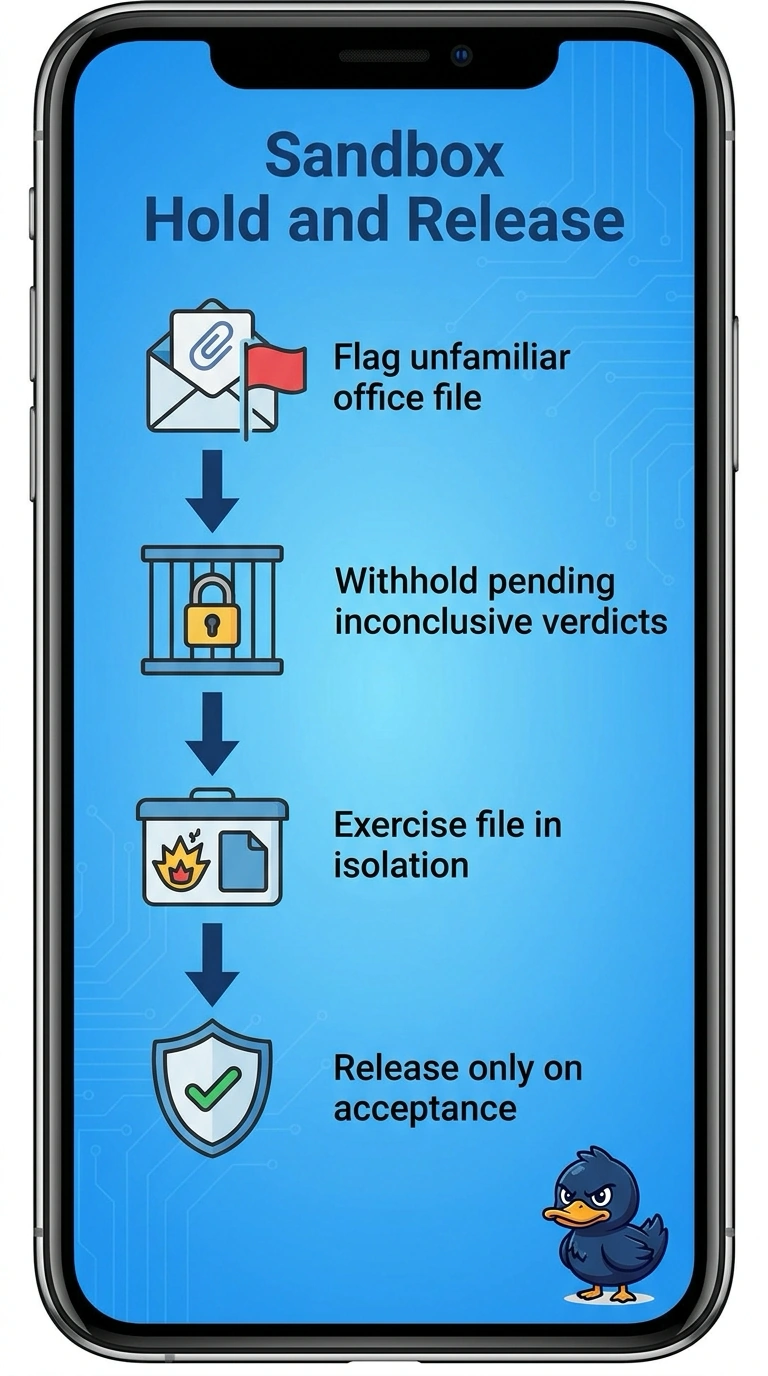
Short Explanation
An unopened attachment is like a package you should open in the alley before it reaches your desk. You detonate the crew-schedule file in a sandbox and deliver it only after that run looks clean. A reject rule for your own domain, a payment phone call, or letting the pilot open the file locally leaves the payload untested.
Full Explanation
Crew-schedule ransomware succeeds when a pilot application executes the attached file. A malware sandbox opens that file in isolation and withholds it from the inbox, releasing only when the mail policy accepts the verdict. Domain authentication and a payment callback do not execute the attachment, and handing it straight to the pilot is the path the malware expects. Sandbox eligible unfamiliar attachments, quarantine pending results, and release only when the mail policy accepts the verdict is the design that meets this requirement. An inbound reject rule for mail that fails authentication of the airline's own sending domain is the wrong fit because a partner mailbox can pass authentication and still attach ransomware, so a domain reject never exercises the file. An out-of-band phone call to a known number before anyone pays an invoice mentioned in the mail is the wrong fit because this is a file the pilot would open, not a payment change that a callback would catch. Straight delivery of the attachment so the pilot's own application is what first opens the file is the wrong fit because the crew laptop is where that ransomware is built to execute. Exam caveat: a sandbox can miss a file that waits for a password or later click. Operational check: send a lab message with a known test file and confirm the inbox stays empty until the verdict accepts release.