
A pension desk lets retirees recover access by answering personal questions whose answers appear in public records. Callers have completed that recovery by phone. Retirees can use a separately enrolled backup passkey through the pension portal for a recovery request. Which sign-in change fits?
Select an answer to reveal the explanation.
Short Explanation
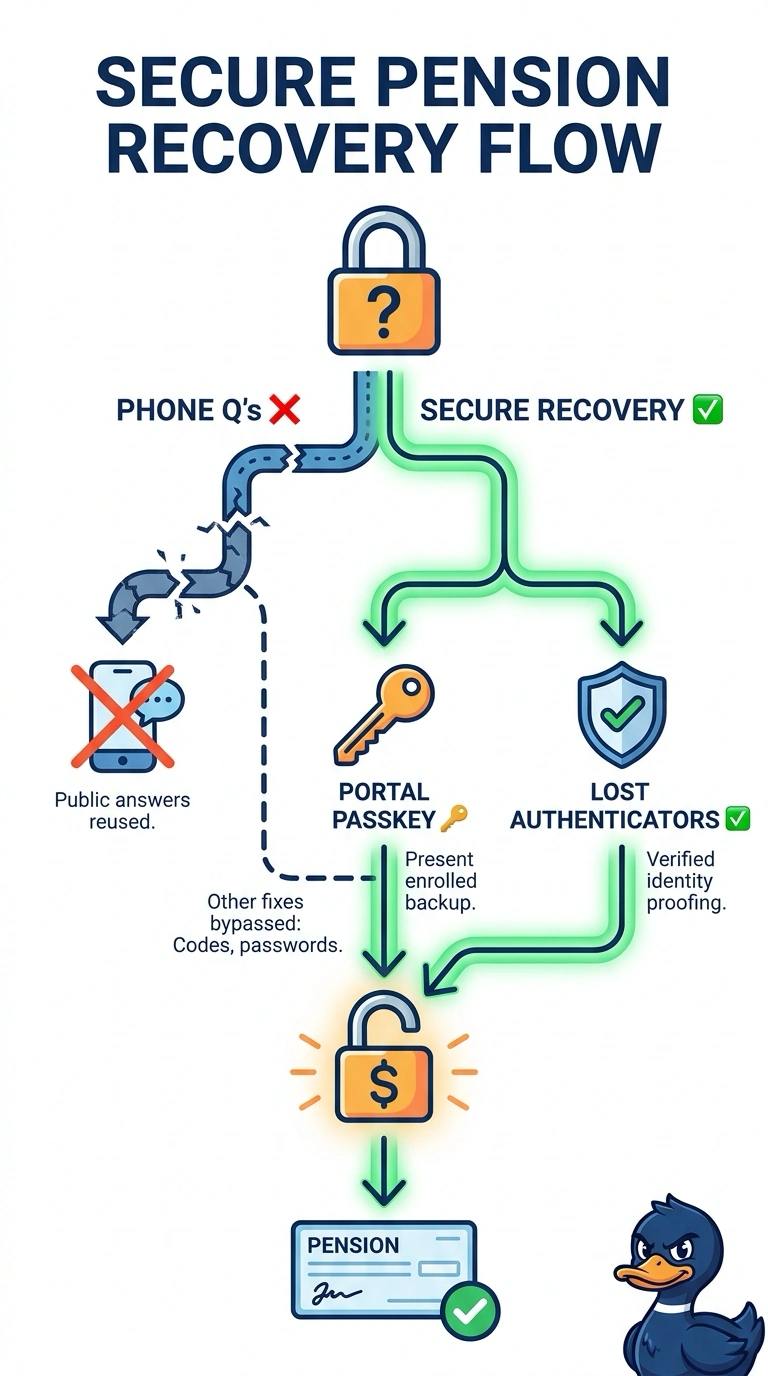
You can see why answers printed in public records are not a secure lock. Require the enrolled backup passkey or approved identity proofing before recovery. More public questions, a text-message code the caller can ask the retiree to read aloud, or a longer password this recovery path ignores leaves the phone trick working.
Full Explanation
Attackers are completing recovery by phone with answers taken from public records, so the recovery factor that needs to change is the one used in that sign-in path. Requiring the enrolled backup passkey or approved identity proofing before recovery meets the requirement because the proof must be presented through the enrolled authenticator, not spoken as a public fact. Route the caller to the legitimate portal for passkey verification; use a separately verified identity-proofing path if all authenticators are lost. More personal questions drawn from the same public records fail because they are the same class of public facts, and a caller can collect them the same way. A text-message code the caller can ask the retiree to read aloud during the same call fails because the caller can obtain the code and enter it in real time, preserving the phone trick. A longer account password that this recovery path does not ask the retiree to enter fails because it leaves the question-based recovery path unchanged and never constrains the attacker path.