
Staff at a pottery studio receive mail, with no attachment, whose link points at a fake sign-in for the studio payroll site. Authentication rejects mail that spoofs the studio's own domain. Which email control fits?
Select an answer to reveal the explanation.
Short Explanation
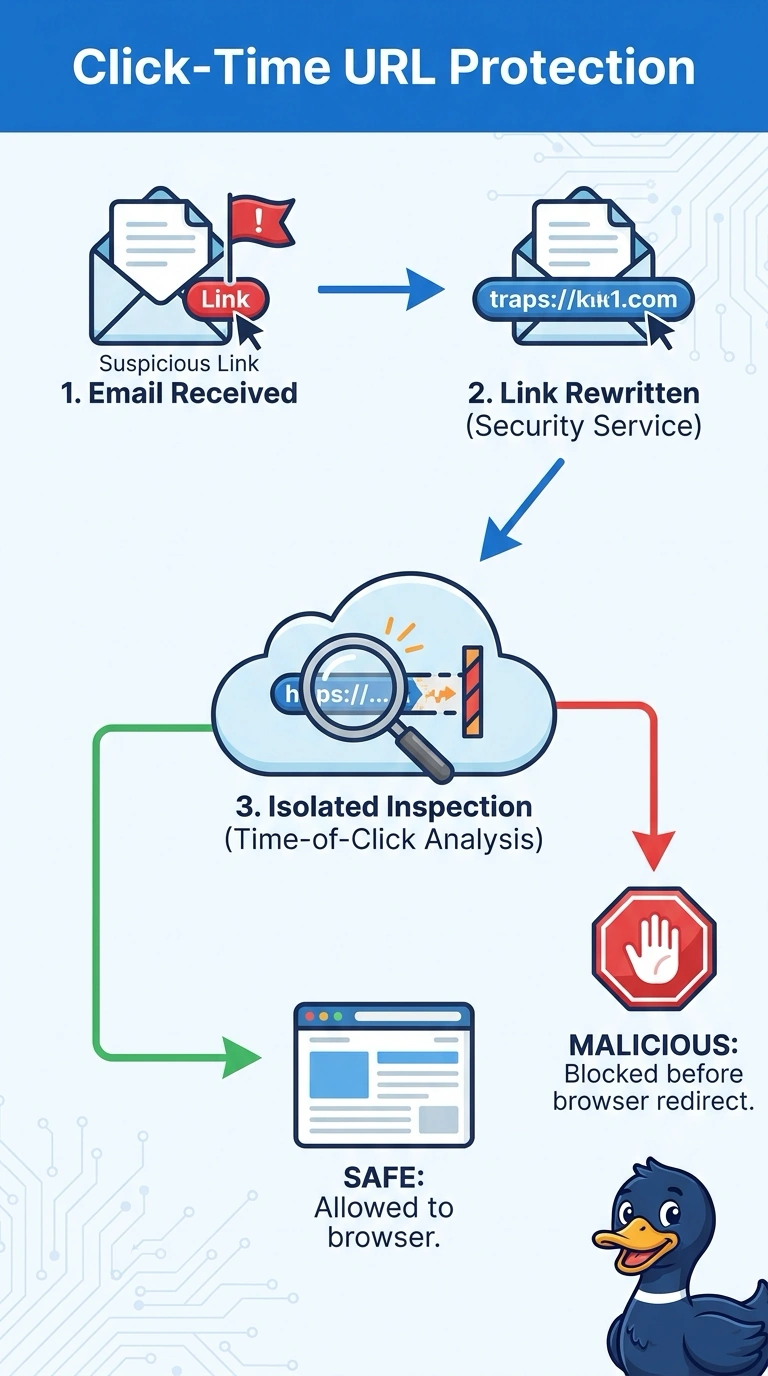
The danger is the link you could click, not a file. Rewrite the link for click-time URL analysis so the email security service can block a known malicious destination before redirecting the browser. You keep staff off the fake payroll page while real payroll links still work.
Full Explanation
The message carries a link to a fake payroll sign-in with no attachment and uses a lookalike domain, so authentication that rejects mail spoofing the studio's own domain does not select it. Rewrite the link for click-time URL analysis so the email security service can block a known malicious destination before redirecting the browser. That rewrite lets the service check reputation at click time and stop a known malicious host while still opening a genuine payroll link. An attachment sandbox for messages that carry a file is the wrong fit because there is no file to detonate, so sandboxing never evaluates the link a clerk would click. An out-of-band phone check used to confirm a sender's request to change a bank account is the wrong fit because that callback controls payment-change fraud, while this note requests sign-in rather than a bank change. A reject policy aimed only at mail that claims to be from the studio's own domain is the wrong fit because the sender uses a lookalike domain, so the own-domain reject does not trigger. Exam caveat: test a real payroll link from the genuine domain and confirm staff can open it. Operational check: click a lab message to the fake hostname and confirm blocking.