
A freight broker receives real customer mail that passes sender authentication and sometimes includes an unfamiliar spreadsheet. Which email control fits those attachments?
Select an answer to reveal the explanation.
Short Explanation
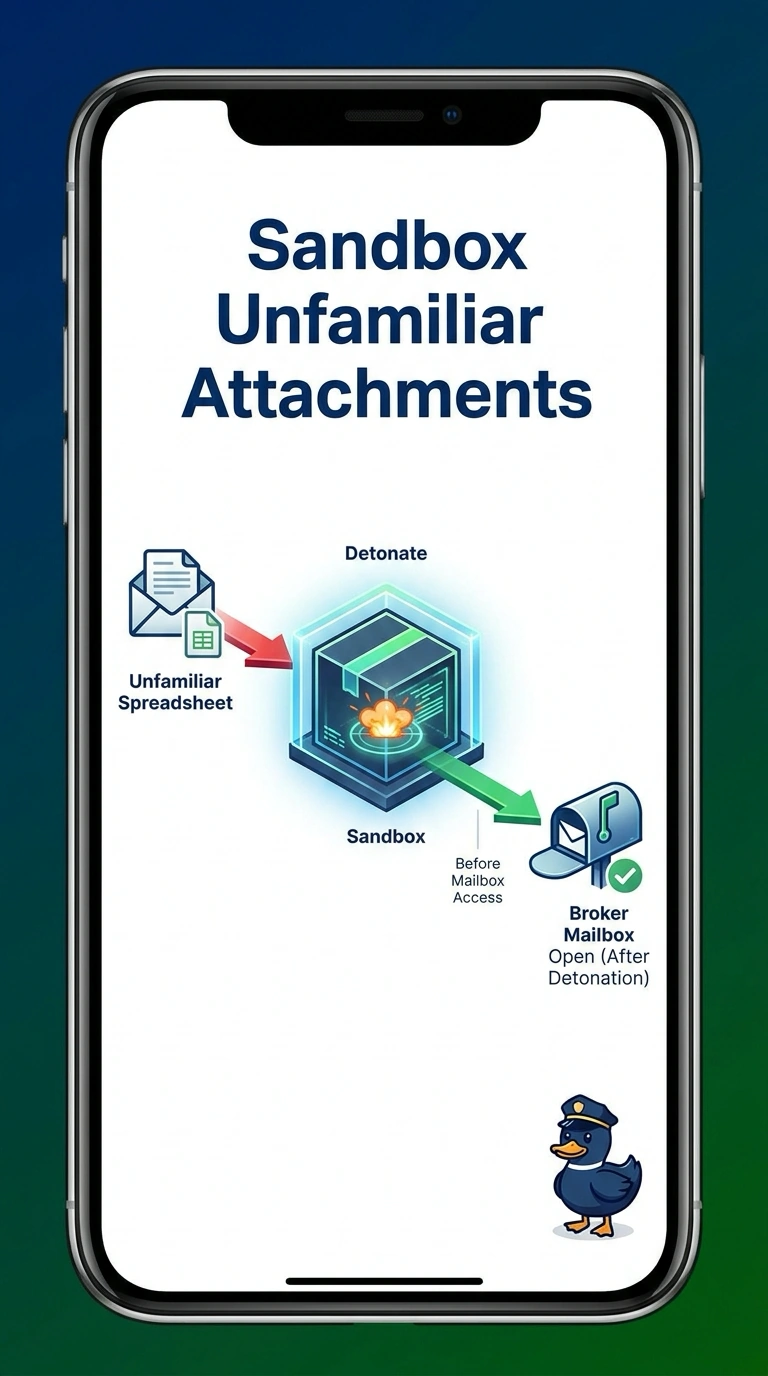
You’ve got genuine customer mail, but an unfamiliar spreadsheet still needs checking before a broker opens it. Detonating it in a sandbox lets you inspect the attachment first; a reject rule for your own domain, a payee phone check, or a banner that delivers the file intact does not.
Full Explanation
The customer’s mail passes sender authentication, but that does not establish whether an unfamiliar spreadsheet is safe to open. Detonating the attachment in a sandbox before it reaches a broker’s mailbox lets you examine its behavior in isolation and hold it until the result is known. A reject rule for mail that fails authentication of the broker’s own domain does not fit because the customer’s message already passes authentication, and that rule does not inspect the spreadsheet. An out-of-band phone check when a sender tries to change a payee account addresses payment-change fraud, which is not what this message requests. A warning banner above a message while delivering the spreadsheet intact warns the broker but leaves the untested file available to open. Exam caveat: Sandboxing can delay delivery, so agree on any permitted exceptions without exempting unfamiliar spreadsheet types from detonation. Practical check: Send a test spreadsheet that would be harmful if opened and confirm it reaches the inbox only after the sandbox marks it safe, or remains held if the sandbox does not.