
Residents are receiving mail that claims to be from the county tax office, sent from the county's real domain, without the county's approval. The county already signs its own legitimate mail. Which email control stops the forgeries?
Select an answer to reveal the explanation.
Short Explanation
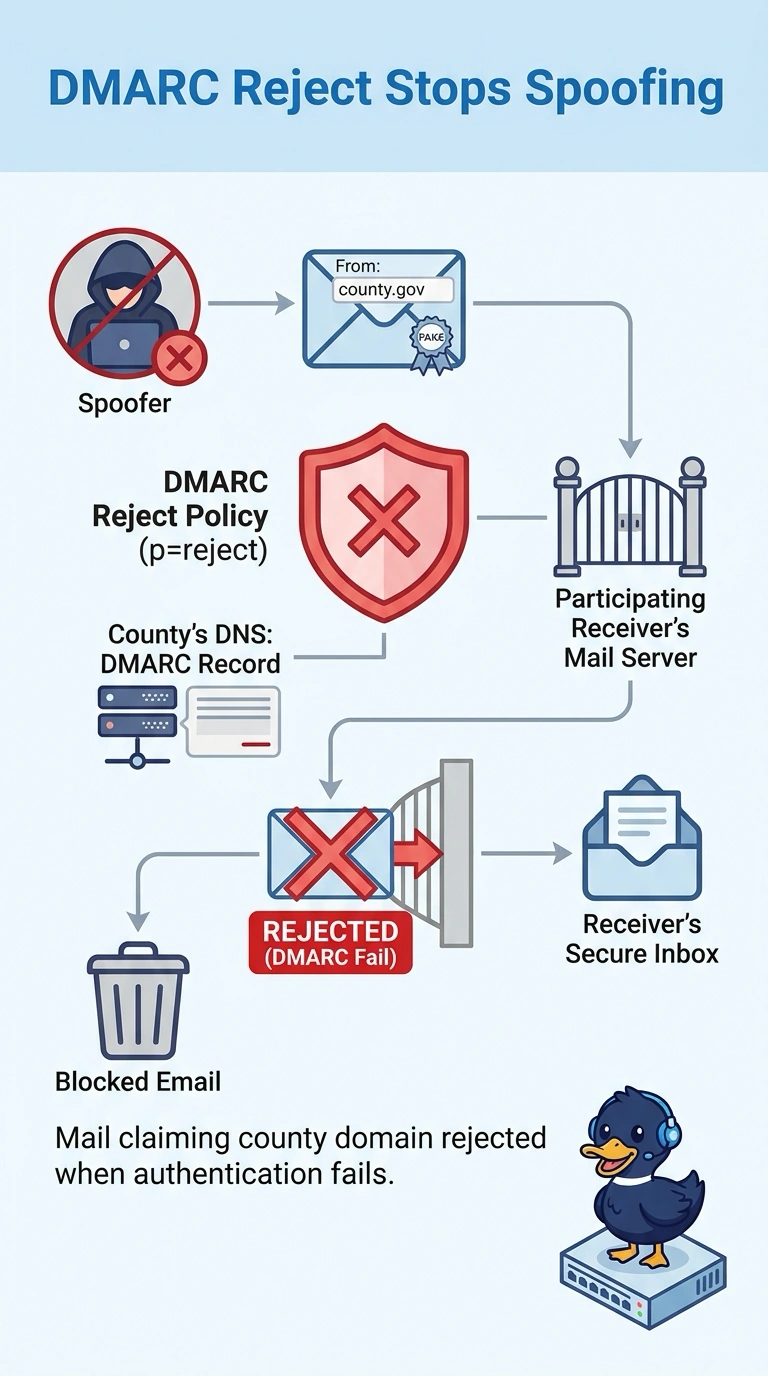
You already sign your legitimate mail, so you can publish a reject policy telling receivers to discard messages that claim your domain but fail authentication. A sandbox that only handles attachments, a block on all inbound mail, or an image stripper that leaves the text intact will not stop these forgeries.
Full Explanation
The county already signs legitimate mail; what is missing is a published domain policy telling receiving systems to reject messages that claim the county domain but fail authentication. Receivers that honor the policy can then drop the forgeries. A sandbox that detonates attachments and ignores messages with no file is not effective here: a text-only fake gives it nothing to detonate, so the message can still arrive. A block on all inbound mail, including mail the county sends to residents, would also block legitimate county mail and is not a targeted spoofing control. An image stripper that leaves the forged text in place does not remove the readable fake tax notice. The domain policy that rejects unauthenticated messages claiming the county domain is the control that meets the requirement. Exam caveat: An aligned SPF or DKIM pass can satisfy DMARC; validate legitimate sending sources before enforcement. Practical check: send an unsigned test message using the county domain and confirm a test receiver rejects it, then verify that a signed county message is delivered.