
A hospital's domain administrators are targeted by real-time phishing sites that relay passwords and one-time codes. Access to the identity console must resist that relay. Which identity design meets the requirement?
Select an answer to reveal the explanation.
Short Explanation
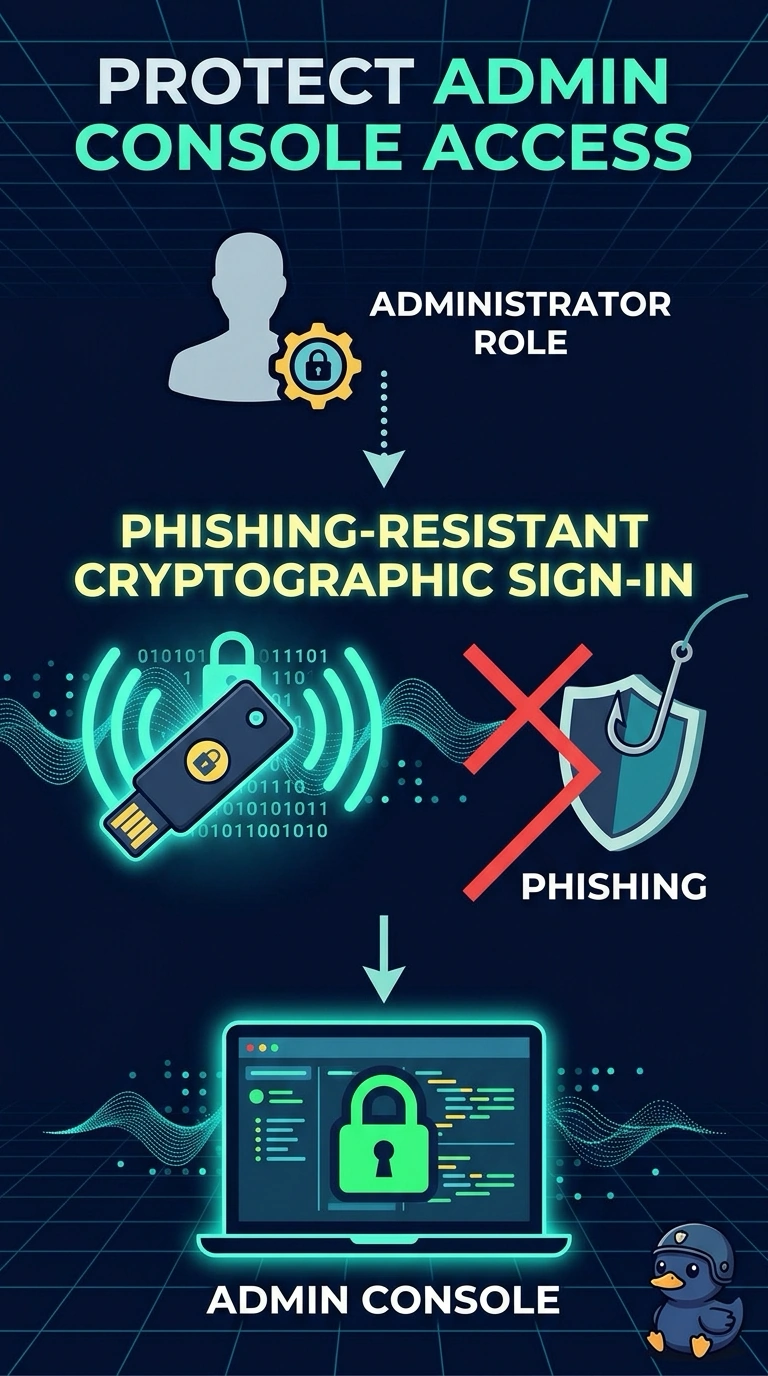
A fake sign-in page can relay any code you type, so you need phishing-resistant cryptographic sign-in for the administrator role. SMS codes, a longer password changed every 30 days, and security questions can all be entered into the wrong site.
Full Explanation
A real-time relay attack works because you type a secret that the phishing site can immediately reuse. Phishing-resistant cryptographic sign-in for the administrator role meets the requirement: a hardware-backed passkey bound to the real site name does not give a fake site a reusable code. Requiring this protection for administrators is especially important because they can change other users’ access. SMS one-time codes added in front of the same administrator password do not stop the attack: a real-time phishing site can relay the SMS code in the same session. A longer password changed every 30 days with no second factor also fails because password length and rotation do not stop you from entering the secret on a fake page. Security questions stored in the identity directory and asked at login fail because answers may be guessable or researched, and you can still type them into the fake page. Exam caveat: phishing-resistant sign-in still needs a recovery path that does not rely on a relayable code sent to the same inbox an attacker may be watching. Practical check: attempt an administrator login on a lab phishing hostname and confirm that the cryptographic prompt names the real site and refuses to complete on the fake one.