
A manufacturer's accounts payable team receives an email, from a domain that looks like a real supplier, asking to change the bank account for a large invoice. The message has no attachment and no link. Which control addresses this fraud?
Select an answer to reveal the explanation.
Short Explanation
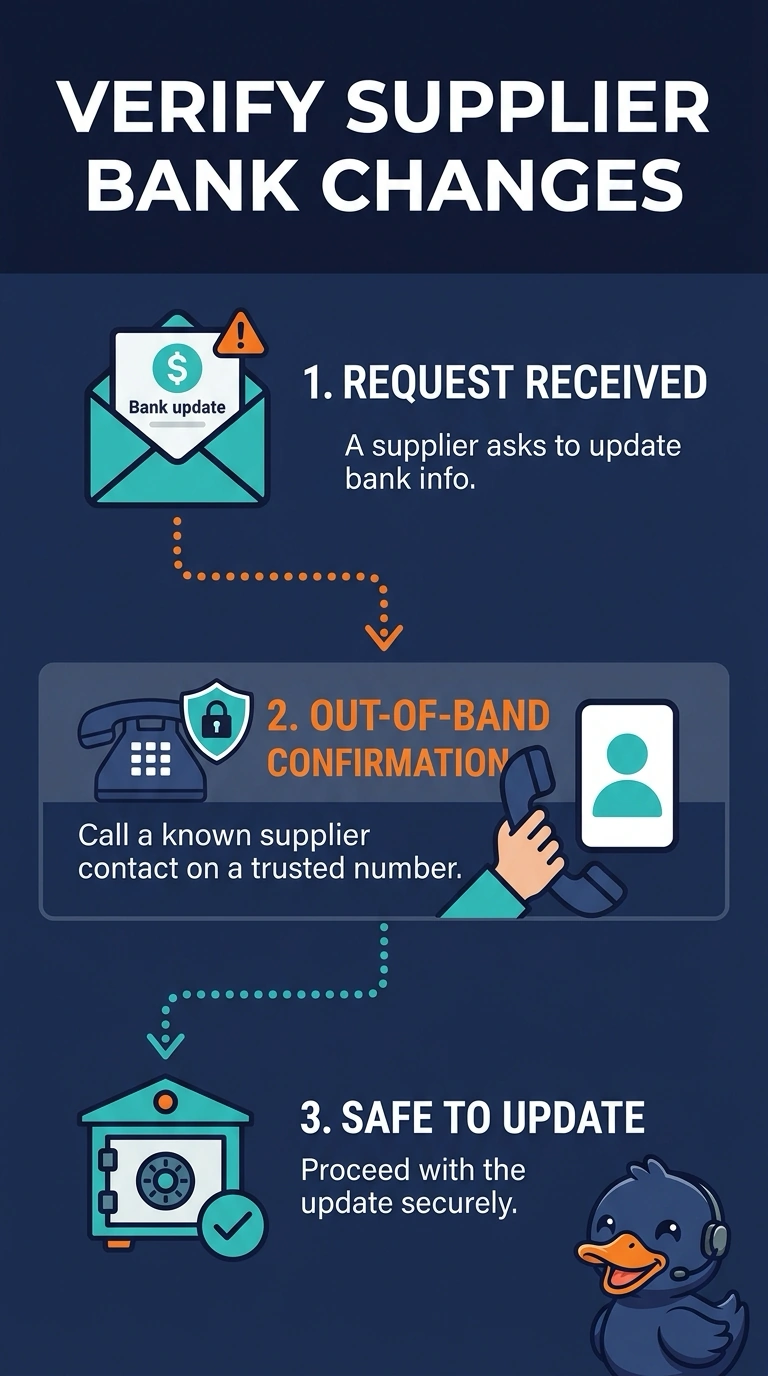
A fraudster can send a convincing payment-change request without an attachment or link, so you should verify the change through a supplier contact you already trust—that’s out-of-band confirmation. A malware sandbox, bulk-spam score, or image-stripping filter won’t verify the payment instruction itself.
Full Explanation
Business email compromise targeting a payment change is a social request. The message can be grammatically clean, free of malware, and sent from a lookalike domain that the manufacturer’s own sender policy does not govern. Use a second channel the attacker does not control: call a supplier number already on file, or use a portal the supplier already uses, before changing the bank account. Out-of-band confirmation with a known supplier contact meets this requirement. A malware sandbox that detonates attachments and drops messages with no file is a poor fit: there is no file to detonate, so it does not address the payment instruction. A spam score that only thresholds bulk unsolicited mail volume is also a poor fit: this is one targeted message, not a bulk campaign, so a volume score will not catch it. A filter that strips images from HTML mail and then delivers the message is a poor fit because the bank-account request remains in the text the clerk reads. Exam caveat: sender authentication on the manufacturer’s own domain does not stop a lookalike domain; publish it anyway to make it harder for attackers to forge the real domain. Practical check: put a test payment-change email in the lab mailbox and confirm the payable process blocks the update until the out-of-band call is recorded.