
Attackers used a stolen registrar password to change a newspaper's nameservers, and the paper has since reset that password. Which redesign follows from the incident?
Select an answer to reveal the explanation.
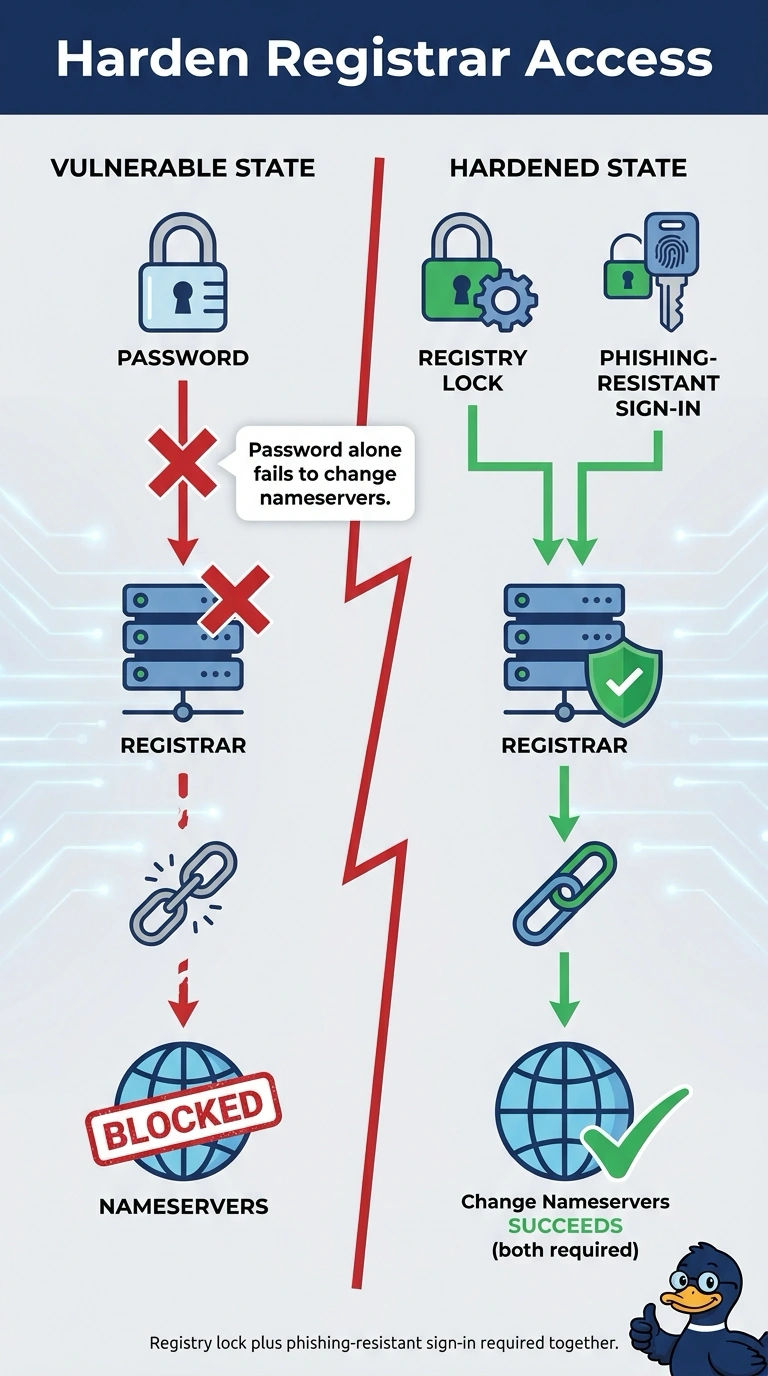
Short Explanation
Changing the door code is weak if a phone call can still retarget every sign on the street. You lock nameserver changes at the registry and you require phishing-resistant sign-in at the registrar. Another password reset, a website restore, or a newsroom web filter leaves the street signs movable.
Full Explanation
The incident succeeded at the registrar, where a password alone could change nameservers, and a reset removes one stolen secret while leaving that same kind of account. A registry lock makes a nameserver change need an out-of-band unlock, and phishing-resistant sign-in means a typed password is not enough. Restoring the website or filtering newsroom laptops does not protect the registrar account. A registry lock plus phishing-resistant sign-in at the registrar, so a password alone cannot change nameservers is the design that meets this requirement. Another password reset on the same registrar account with no second factor and no lock is the wrong fit because resetting the password again leaves a password-only registrar account, which is the control the attackers already beat. A restore of last night's website files while the registrar account stays password-only is the wrong fit because restoring website files puts the pages back and does not stop the next nameserver change at the registrar. A web filter for the newsroom laptops that did not hold the registrar login is the wrong fit because the newsroom web filter is not the account that is allowed to change the newspaper's nameservers. Exam caveat: A registry lock also slows a legitimate nameserver change, so the unlock path has to be written down and tested before the next planned cutover. Operational check: In a lab registrar, attempt a nameserver change with password-only credentials and confirm the lock blocks it, then confirm the documented unlock path succeeds.