
Attackers reached a grocery chain through a backup appliance that answered on the internet with a local password, then encrypted file servers. Which redesign follows from that incident?
Select an answer to reveal the explanation.
Short Explanation
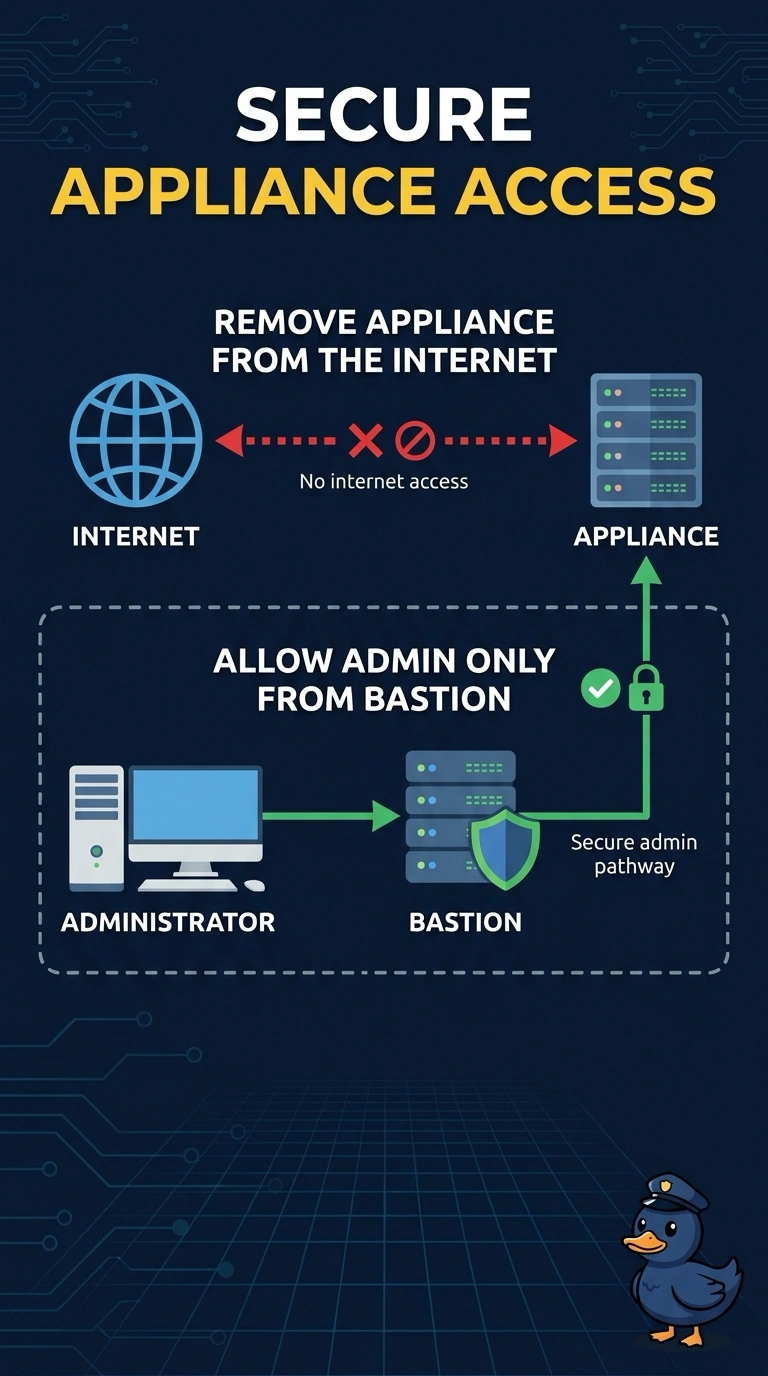
Boarding up the door the thief used matters more than repainting the room. You take the backup appliance off the internet and you administer it from the bastion. A restore onto the same public port, a password reset, or a mail filter leaves that door open.
Full Explanation
The incident succeeded because administration of the backup appliance was reachable from the internet. Closing that exposure, and keeping administration on the bastion, removes the path that was actually used. Putting the same public port on a restored box, or only changing the password, repeats the design, and mail filtering addresses a door this incident did not come through. Remove the appliance from the internet and allow its administration only from the bastion is the design that meets this requirement. Restore the latest backup onto a replacement that keeps the same public admin port is the wrong fit because a restore onto the same public admin port puts the new appliance back on the path the attackers used. Reset the local password and leave the appliance addressable from the internet is the wrong fit because a new local password does not change the design that let the internet reach the admin service. A mail filter for invoice attachments on a path that did not reach this appliance is the wrong fit because invoice mail was not the entry path, so a mail filter leaves the public backup appliance untouched. Exam caveat: Bastion access still needs its own strong sign-in, because taking the port off the internet is the redesign and a weak bastion password would be a new hole on that path. Operational check: From an outside address, confirm the appliance admin port no longer answers, and from the bastion confirm an administrator can still open the session.