
A harbor SOC already has one correlated case with the asset owner filled in, yet each analyst types a different firewall block by hand. Which practice fits?
Select an answer to reveal the explanation.
Short Explanation
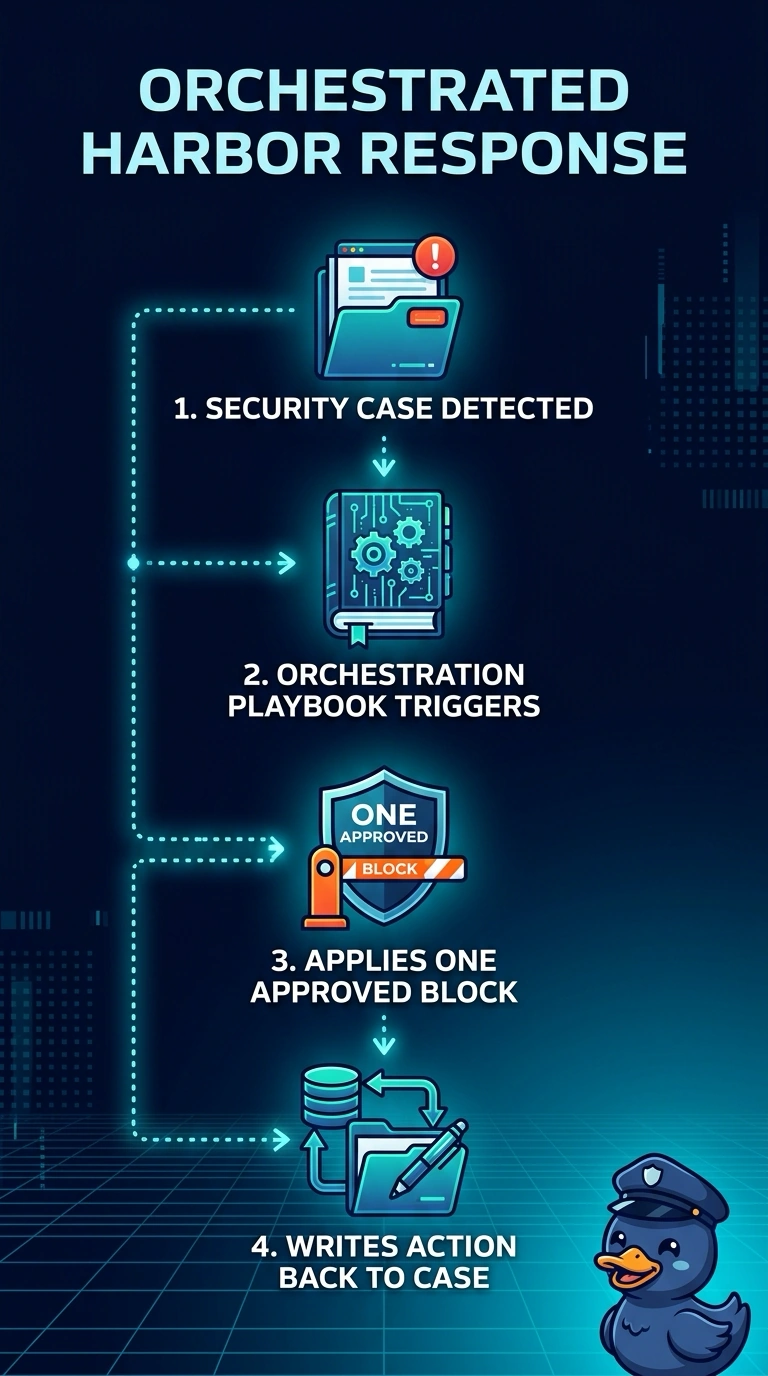
You already have the case context, so the gap is consistent action. An orchestration playbook applies the approved block and records it on the case, while a brighter dashboard, another threat-intel feed, or a second case system that only copies notes leaves the firewall block manual.
Full Explanation
Correlation and enrichment have already produced one case with an asset owner and context, so the remaining gap is execution: analysts still type different firewall blocks by hand. An orchestration playbook applies the one approved block and writes that action back on the case, making the response repeatable and visible to the next shift. A brighter dashboard that still leaves each analyst to remember the block may display the case, but it does not carry out the firewall action or prevent inconsistent manual changes. Another threat-intel feed adds information to a case that already has its owner and context; it does not make the containment step repeatable. A second case system that only copies the same notes into another queue transfers information but does not apply the approved block consistently. The playbook fits because it executes and records the required action. Exam caveat: A playbook that blocks without writing the action back to the case hides what changed from the next analyst who opens the record. Practical check: Run the lab playbook against a test address and confirm that the firewall shows the approved block and the case record shows the same action and time.