
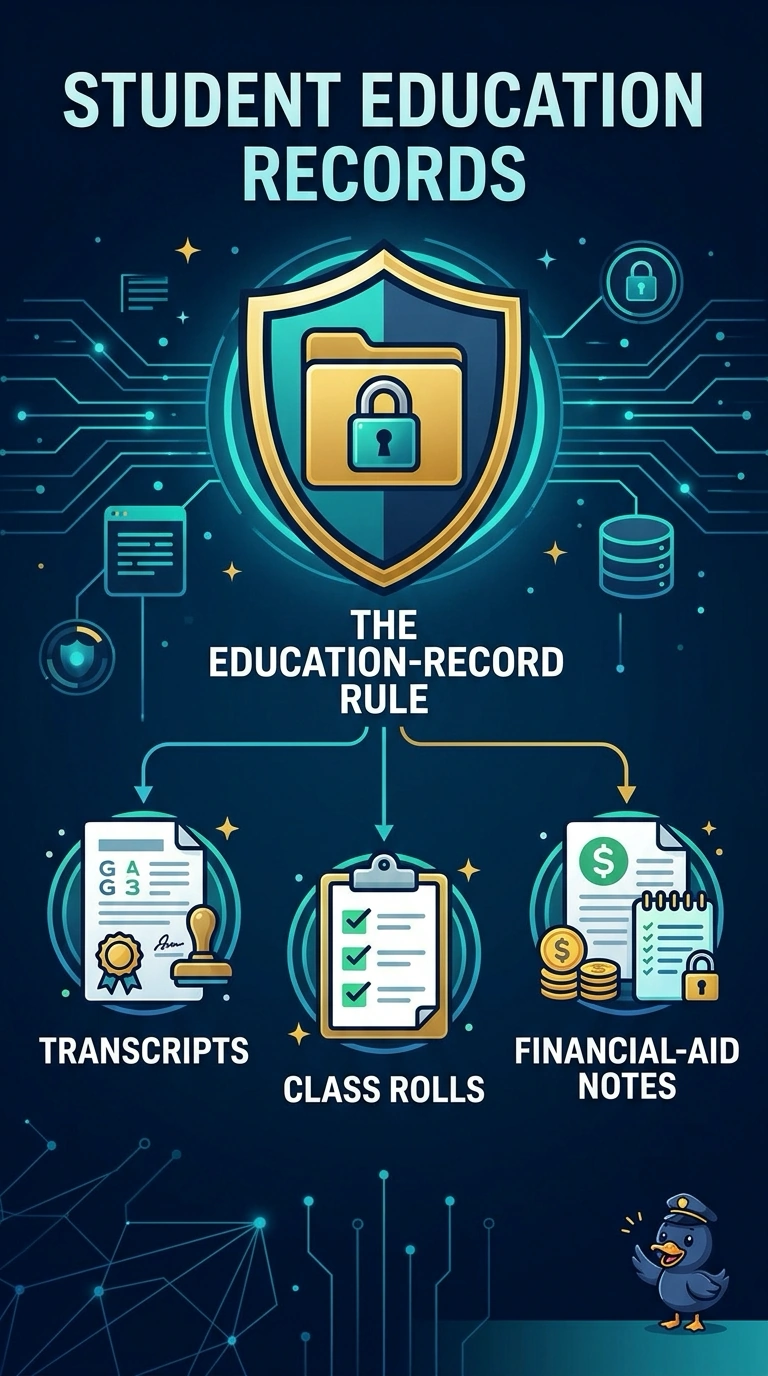
A medical school stores transcripts, class rolls, and financial-aid notes for enrolled students. A teaching clinic next door stores patient charts on a different system. Which document matches the transcript system?
Select an answer to reveal the explanation.
Short Explanation
Two buildings can share a sidewalk and still keep different filing cabinets. You match the transcript cabinet to the student education-record rule. The clinic chart rule, the payment-card standard, and the grid standard belong to other cabinets.
Full Explanation
The transcript system holds education records of enrolled students, including rolls, grades, and aid notes, so the student education-record document is the match even with a clinic next door. Patient charts, card numbers, and grid controls each belong to a different document. Matching this one system to its document is the task, and it is not legal advice. The student education-record rule that covers transcripts, class rolls, and aid notes is the design that meets this requirement. The health-information rule that covers patient charts in the teaching clinic is the wrong fit because the health-information rule matches the clinic charts, and this question is about the transcript system instead. The payment-card standard that covers primary account numbers at a register is the wrong fit because the payment-card standard matches cardholder data, which the transcript system does not store. The bulk-electric reliability standard that covers grid control-center systems is the wrong fit because the bulk-electric standard matches grid operations, and a student transcript system is not a control center. Exam caveat: Apply FERPA to the transcript system. Assess any student treatment records under the separate FERPA treatment-record and HIPAA scope rules before classifying them. Operational check: Point the inventory entry for the transcript database at the student education-record document, and point the clinic chart system at its own document.