
A cereal plant reimaged a labeling server after malware called out to an arbitrary internet host, and the server VLAN still allows outbound sessions to any destination. Which redesign follows from that incident?
Select an answer to reveal the explanation.
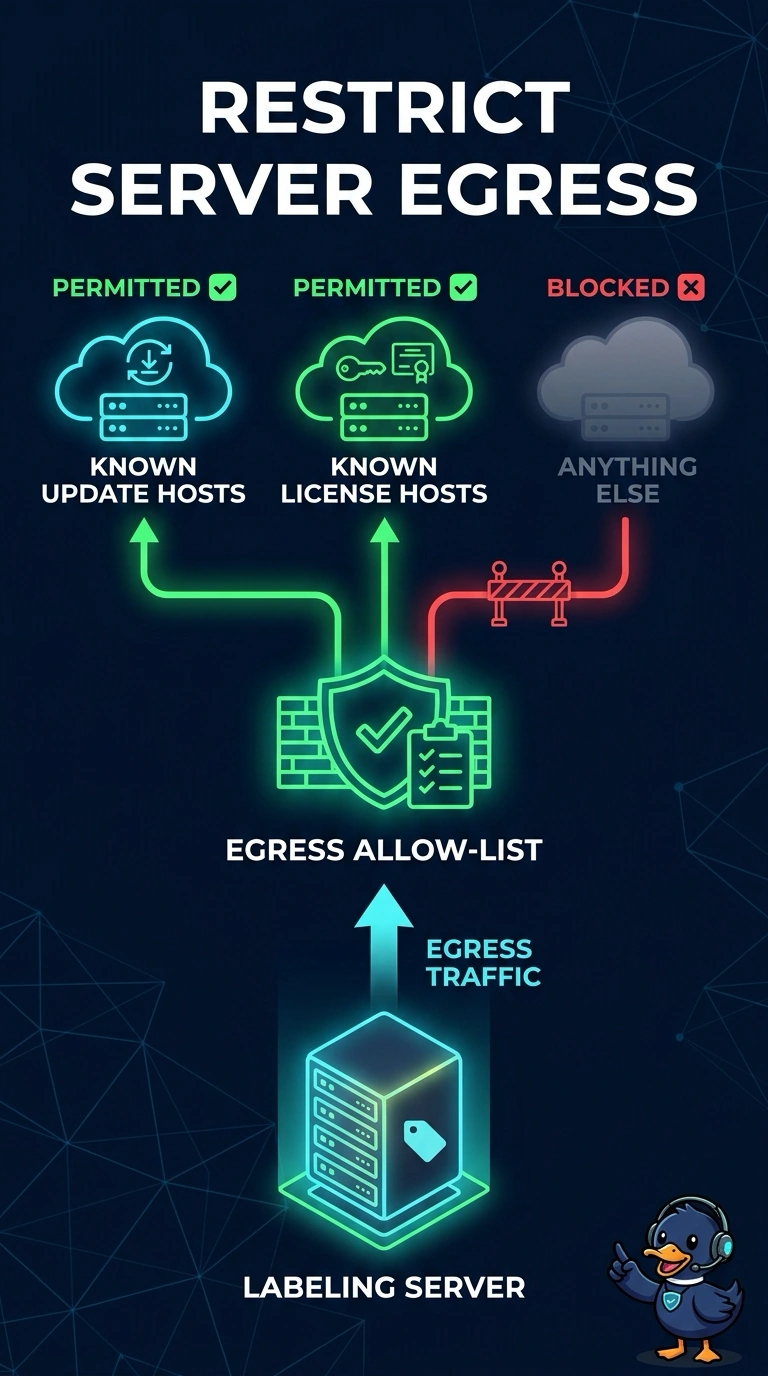
Short Explanation
A door that opens toward every street lets the same visitor return after you sweep the room. You limit the labeling server to the update and license hosts it actually needs. Another reimage on the open outbound rule, an office web filter, or a firewall on the recipe site leaves that street door open.
Full Explanation
The malware left through an outbound rule that let the labeling server open sessions to any destination. Reimaging the host removes one copy of the malware and puts the next foothold on that same open path. An allow-list keeps only the update and license destinations the plant can name, so an arbitrary command host is no longer reachable from that server. An egress allow-list that permits the labeling server to reach only its known update and license hosts is the design that meets this requirement. Another reimage that puts the labeling server back on the same any-outbound rule is the wrong fit because a fresh image on the same any-outbound rule restores the server and leaves the command path open. A web filter on office laptops, a browsing path the labeling server does not use is the wrong fit because office laptop browsing is not the path the labeling server used to reach an arbitrary host. A web application firewall on the public recipe site the malware did not use is the wrong fit because the public recipe site was not the outbound channel, so filtering it does not close the command path. Exam caveat: An allow-list that forgets a legitimate license host will stop labeling, so name those destinations with the plant before you enforce the list. Operational check: From a lab labeling host, connect to an unlisted internet address and confirm the attempt fails, then confirm the known update host still answers.