
A gift-card company wants a standard name for the way attackers enumerate card numbers against the balance API, so tests can reuse that pattern. Which reference fits?
Select an answer to reveal the explanation.
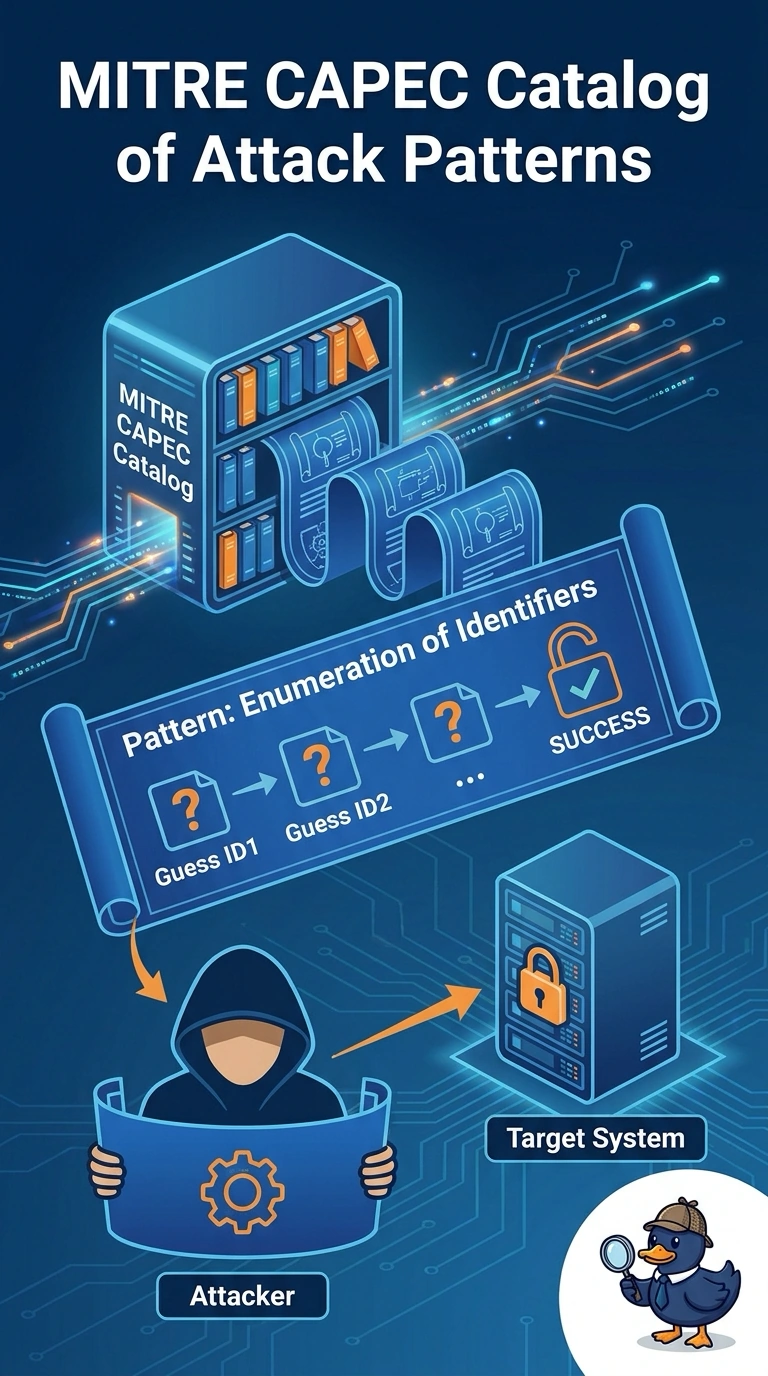
Short Explanation
You are naming the trick, not licensing the system. You take the name from the attack-pattern catalog so every test calls the enumeration the same thing. The risk lifecycle, a flow-placement guide, or a product-flaw list does not name that pattern.
Full Explanation
The company needs a reusable name for guessing or walking identifiers against an API, which is what the attack-pattern catalog is for so tests can cite the same pattern. The risk lifecycle authorizes systems, and a placement guide maps controls onto flows. A flaw list records specific product defects, and this pattern can exist when no single defect entry applies. MITRE CAPEC, the catalog of attack patterns such as enumeration of identifiers is the design that meets this requirement. NIST SP 800-37, the lifecycle that categorizes a system and authorizes it to operate is the wrong fit because the risk lifecycle authorizes systems and does not name how an enumeration attack is carried out. Cisco SAFE, a guide for placing security capabilities along a business flow is the wrong fit because a placement guide shows where controls sit on a flow and does not catalog the enumeration pattern. The CVE list, a set of specific product flaws rather than a reusable attack pattern is the wrong fit because a flaw entry names a specific product defect, and enumeration of identifiers can be tested with no such defect. Exam caveat: A pattern name is not a finding by itself, so the test still has to show the balance API behaves as the pattern describes or the label is only a title. Operational check: File a lab test that walks card numbers against a test balance API and confirm the report cites the enumeration pattern rather than a product-flaw id.