
A ceramics studio's case already carries a threat-intel score for a beaconing address, and that address is the kiln controller. Analysts are about to isolate it like a laptop. Which practice fits first?
Select an answer to reveal the explanation.
Short Explanation
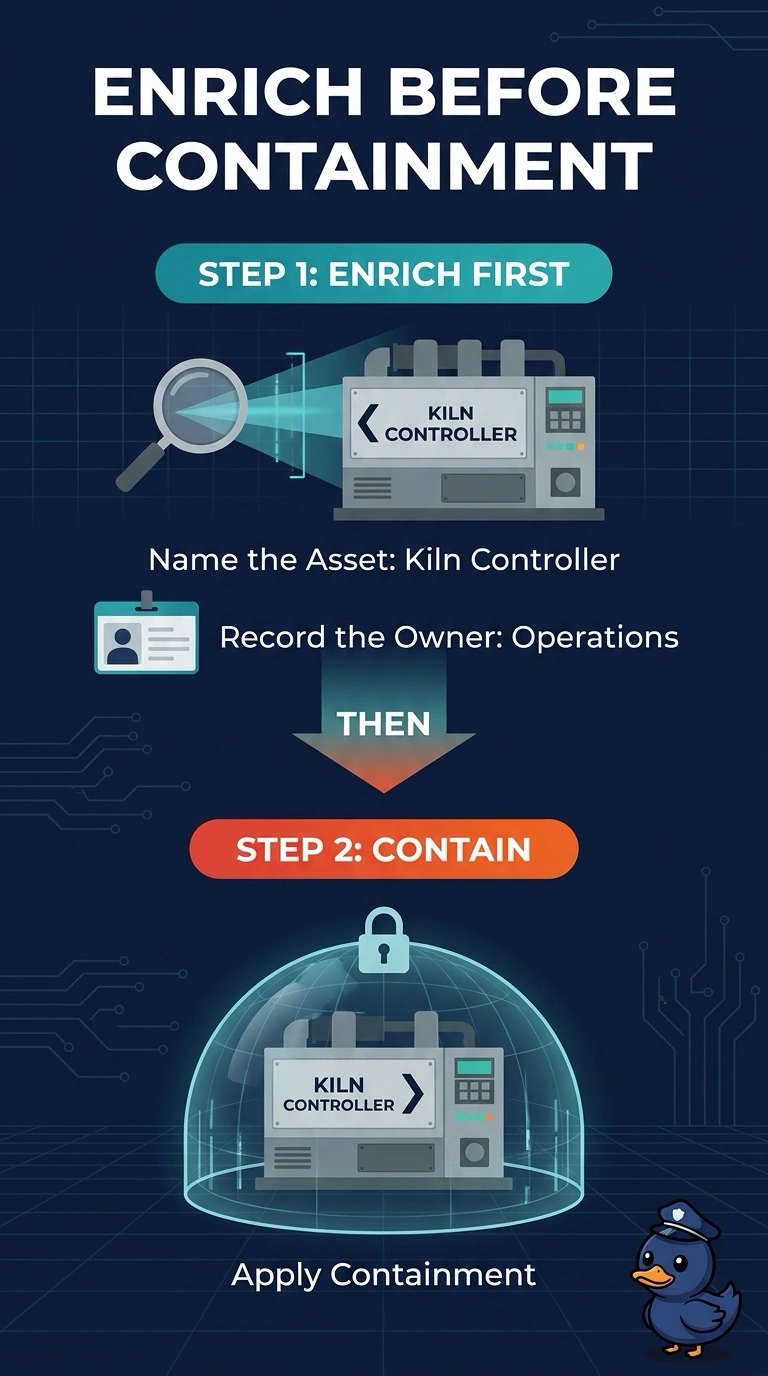
The score tells you the smoke is real and not which room is on fire. You add the kiln's identity and its owner to the case before anyone isolates it. A counting tile, a second copy of the same score, or the laptop isolation playbook skips that fact.
Full Explanation
The intel score says the address is suspicious and does not say what the address is. Enrichment from the asset record names the kiln controller and its owner before anyone cuts that host off the studio network. A dashboard count and a duplicate score repeat what the case already has, while the laptop playbook would isolate a safety-related controller. Asset enrichment that names the kiln controller and its owner before any containment step is the design that meets this requirement. A dashboard tile that counts kiln alerts and does not name the controller's role is the wrong fit because a count of alerts does not tell the analyst this host is a kiln controller that must not be dropped like a laptop. A second copy of the threat-intel score that is already attached to the case is the wrong fit because the case already has the threat-intel score, so another copy adds no owner and no safety role. The laptop isolation playbook, started immediately on every alerting address is the wrong fit because the laptop playbook isolates first and can stop a kiln the studio cannot safely take offline. Exam caveat: Enrichment helps only when the asset record is current, because a controller missing from that record still looks like an ordinary host to the analyst. Operational check: Open the lab case, confirm the asset field shows the kiln controller and its owner, and confirm the laptop isolation action is not available for that record.