
A state parks agency has not assigned security roles or agreed how it will manage risk, and a vendor wants a signature to let a new booking system operate. Which framework step comes first?
Select an answer to reveal the explanation.
Short Explanation
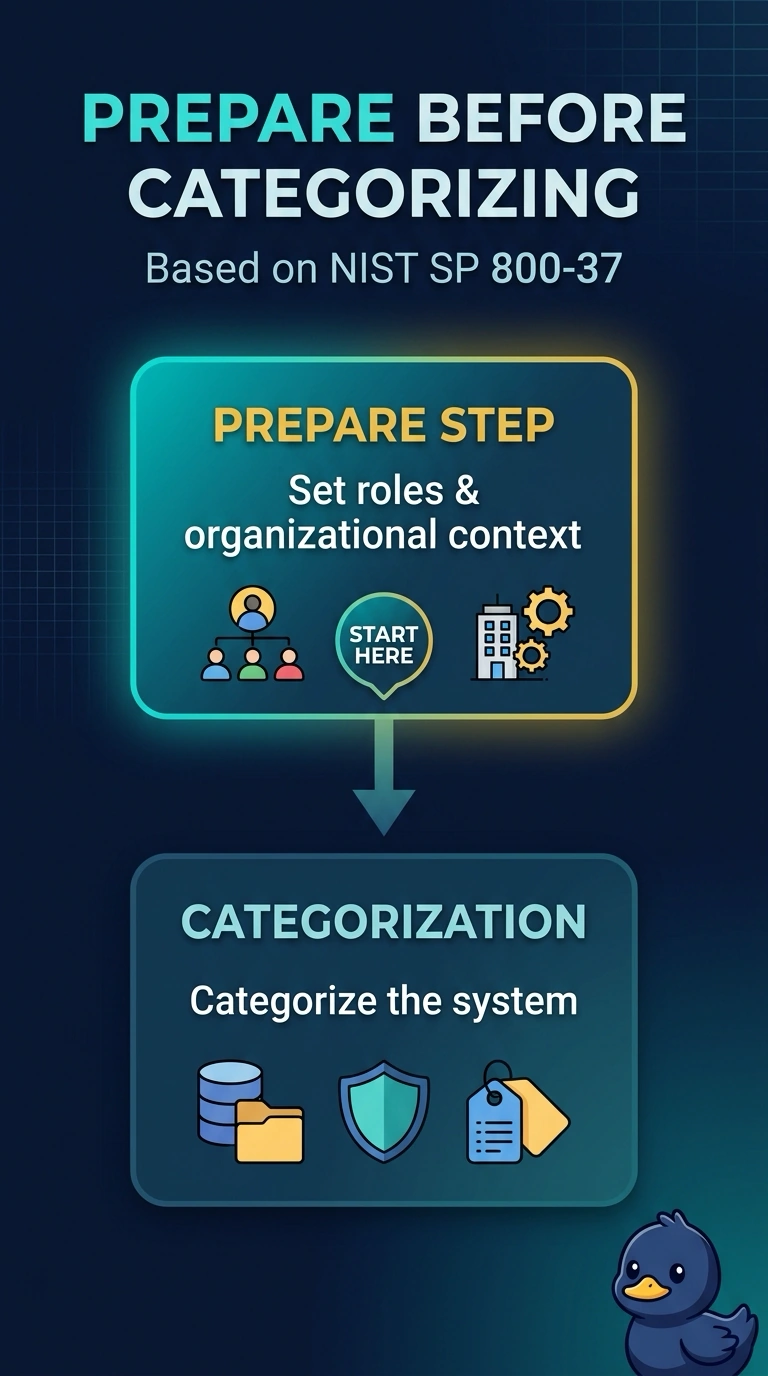
You do not hang a sign that says open on a building whose owner and rules are still blank. You start with the prepare step that sets roles and context. An attack-pattern catalog, a flow-placement guide, or an operate signature skips that groundwork.
Full Explanation
NIST SP 800-37 orders the work as prepare, categorize, select, implement, assess, authorize, and monitor. Prepare establishes roles and the organizational context the later steps use. The parks agency has not done that preparation, so an operate signature would skip the lifecycle, an attack catalog would describe threats without authorizing anything, and a flow-placement guide would arrange capabilities the agency has not yet scoped. NIST SP 800-37's prepare step, setting roles and organizational context before categorization is the design that meets this requirement. MITRE CAPEC, a catalog of attack patterns for how attacks are carried out is the wrong fit because an attack-pattern catalog describes adversary behavior and does not prepare the agency to manage risk. Cisco SAFE, a guide for placing security capabilities along a business flow is the wrong fit because a placement guide shows where capabilities sit on a flow and does not establish roles or risk context. An operate decision for a booking system that has not been categorized or assessed is the wrong fit because an operate decision comes after categorization, control selection, and assessment, none of which can start yet. Exam caveat: Prepare includes organization-level and system-level tasks. Set the risk context and roles, then categorize the booking system. Operational check: Check the agency risk file for named security roles and a stated risk approach, and confirm no operate signature is dated before those exist.